Vetted Episodes
New episodes are released on YouTube daily at 12pm CST and will be published here and on Spotify within 24 hours. Watch on YouTube now.
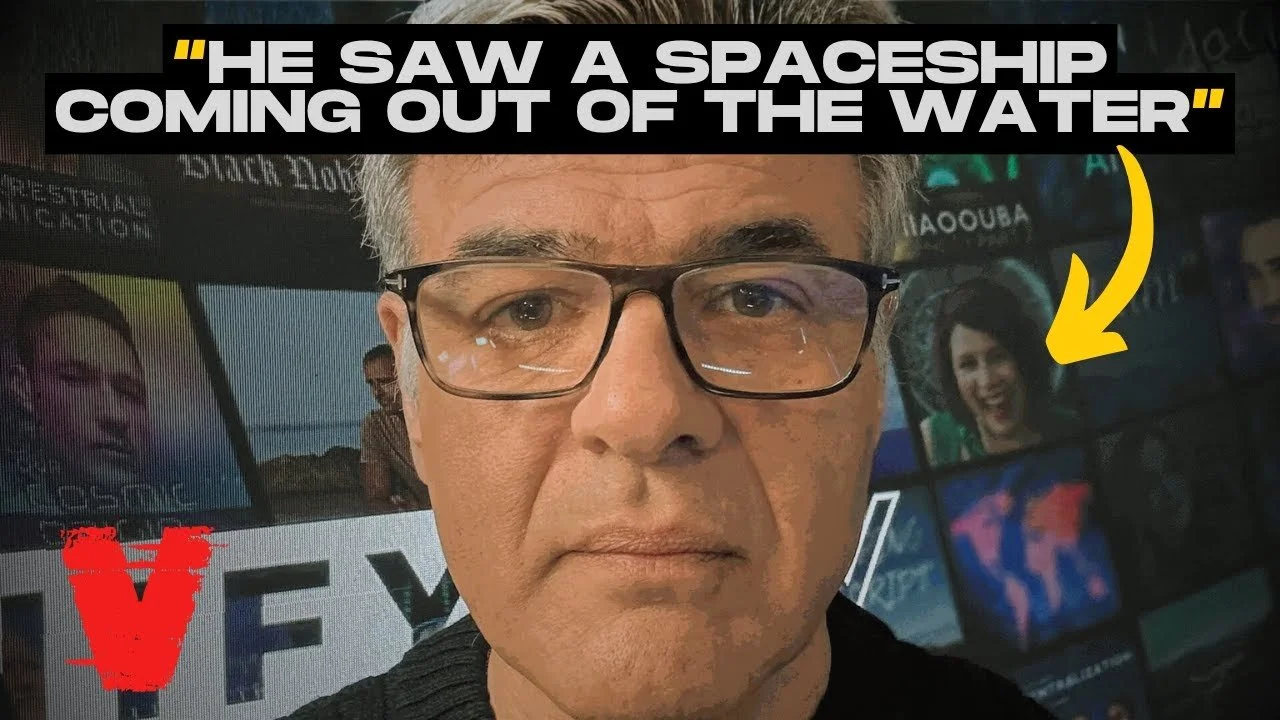
CIA Whistleblower John Kiriakou Reveals Personal UFO Sighting
What if one of the most compelling UFO encounters didn’t come from a conspiracy theorist—but from a former CIA officer trained to separate fact from fiction? In a quiet stretch of Amish countryside, whistleblower John Kiriakou witnessed a silent, glowing craft that defied physics and left a permanent mark on his understanding of reality. From military pilots reporting objects emerging from the ocean to the deep secrecy surrounding “non-human intelligence,” this story explores firsthand encounters, government silence, and the unsettling question of how much we’re really being told about what’s in our skies.
Picture this: You’re driving in the pitch-black silence of the Amish countryside, the world around you only a dark blur of cornfields and abandoned barns. Suddenly, the sky erupts with pulsing orange light—a glowing, silent trapezoid hovering high above, shattering your sense of normalcy. If you’ve ever dismissed UFO stories as flights of fancy or wild imaginations, let’s take a trip down this very real highway of doubt and wonder… because sometimes, the truth is stranger than fiction.
A Night in Amish Country: The Unforgettable Encounter
John Kiriakou isn’t your average storyteller. A former CIA officer and whistleblower, he’s built a life around facts, secrets, and facing uncomfortable truths. But the story he recently recounted in an interview with Ross Coulthart takes us far beyond international intrigue—it’s the tale of a night he and his father drove through rural Pennsylvania and witnessed the unexplainable.
Kiriakou describes the moment vividly: Late at night, at just 17 years old, he and his father saw three brilliant flashes light up the sky. An orange trapezoid hovered noiselessly, its edges pulsating, casting an unreal glow across the landscape. Another driver stopped beside them, equally awestruck. In that instant, there was no sound, no wind—just a profound sense that they were looking at something not meant for ordinary eyes.
In a split second, that orange shape launched into the distance at impossible speed, defying every law of physics either of them understood. The memory burned so deeply that John only confided in his mother the next day, convinced he would sound crazy to anyone else. Years later, his conviction hasn’t faded: "I know what I saw. It was clear."
From the Water to the Skies: More Than Just a Childhood Story
It’s tempting to write off these stories as misidentifications, but Kiriakou’s experiences don’t stop there—and neither does the testimony from the countless military pilots he’s known in his CIA career. According to John, almost every pilot he’s met has a story to tell: fast-moving, silent craft with flight characteristics that simply don’t fit our earthbound technologies. He recounted a particularly chilling account from a Navy pilot friend—about seeing a craft emerge from the Atlantic Ocean off Norfolk, Virginia, shooting skyward with a physics-defying grace that even Naval Academy training could not explain.
These stories weren’t told in the hope of fame or excitement. They were documented, classified, and sent up the chain of command—destined for top-secret government databases and files, often never to see the light of public scrutiny. John mentions how for many pilots, documenting such sightings became a standard operating procedure: routine, but always laced with a sense of awe and a little fear.
Skeptics and The Search for Truth
When stories like this surface, doubters often leap to classic explanations: was it a stray weather balloon, experimental aircraft, or perhaps too much moonshine on a dark country night? John is the first to poke fun at these theories, insisting that what he saw—and what so many other credible witnesses report—defies the explanations offered by skeptics. The speed, silence, and lack of even a sonic boom eliminate most conventional options. It wasn’t just a case of something odd in the sky; it was something truly outside the ordinary playbook.
And then there’s the question of government secrecy. As someone who’s worked on the inside, John has a keen understanding of how information can be compartmentalized—sometimes so tightly that only a handful of people in the world know the whole story. He underscores that when information is labeled with certain classifications, especially in specialized compartments, it can indeed remain hidden for decades or more. Thus, the idea that some realities—like knowledge of unexplained or non-human intelligence—have been successfully tucked away from public view is entirely plausible to him.
Why The Secrecy? Fear, Panic, and Protecting the Narrative
So why aren’t governments—especially the US—more open about what they know? John speculates that much of it comes down to fear of public panic. He points to historical incidents where even rumors of extraterrestrials have driven segments of the public to hysteria (think: the famous 1950s ‘alien panic’). There’s also the matter of control—if such phenomena are real, and the technology is far more advanced than anything on Earth, the implications for national security, geopolitics, and cultural beliefs are staggering.
Interestingly, even the language employed in official statements is careful and deliberate. The Pentagon may categorically deny knowledge of “extraterrestrial” engagement, but is conspicuously silent on terms like “non-human intelligence,” leaving a plausible ambiguity that keeps speculation alive among insiders and the public alike.
A Call for Openness and Curiosity
What’s perhaps most striking about John Kiriakou’s story is its human core. Here is someone grounded in reality—intellectually serious, well-educated, not prone to wild speculation—who nevertheless remains haunted, and even inspired, by what he has seen and heard. He’s not claiming to have met little green men. He’s not selling conspiracy. Instead, John stands as a voice urging curiosity over dismissal, and honesty over ridicule.
Many readers may still be skeptical, and that’s a healthy place to start. But consider this: for every story like John’s that makes it out into the public, there are hundreds, maybe thousands more, confined in confidential reports, pilot debriefs, and government databases. And they continue—to this day—to defy the laws of science as we know them.
Conclusion: Are We Alone? Or Just In The Dark?
Ultimately, John Kiriakou’s brush with the unknown is a tale of awe, mystery, and humility before the universe’s unanswered questions. It’s a prompt to keep our minds open, to listen carefully when serious people speak about impossible things, and to demand honest examination rather than easy skepticism. After all, the world’s full of mysteries—not all of which can be explained away with weather balloons and wild imaginations.
As you finish reading, take a moment to look up the next time you’re outside under the night sky. Sometimes, wonder is just a glance away… and perhaps, so is the truth.
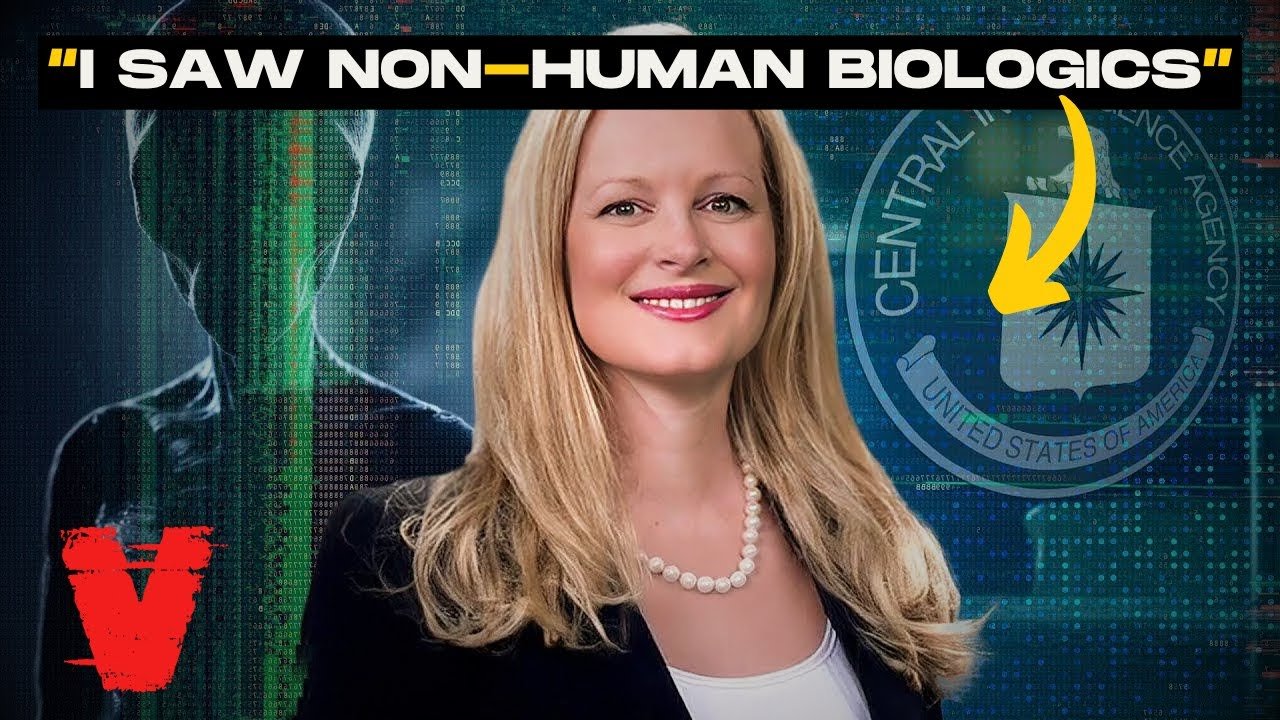
Mystery Doctor Comes Forward With Bombshell Testimony
Are claims of “non-human biologics” evidence of extraterrestrial life—or something far more complex? Recent UFO disclosures have reignited global curiosity, with testimony hinting at recovered materials, unfamiliar DNA, and advanced technologies beyond known human capabilities. In this deep dive, we break down what “exotic biologics” really means, why scientists urge caution before jumping to alien conclusions, and how transparency and skepticism play a crucial role in separating fact from speculation. From congressional hearings to whispered government briefings, this conversation challenges what we think we know about life, technology, and our place in the universe.
Every so often, a conversation bubbles up that captures the collective imagination, defies easy explanations, and leaves more questions than answers. That’s precisely what happened in a recent video where Patrick from Betted dove headfirst into the hotbed of UFO lore — specifically, the loaded term “biologics,” and the tantalizing claims around non-human entities and advanced technologies that may be beyond our current understanding. Whether you’re a casual enthusiast or a diehard UFOlogy follower, this is a journey you’ll want to join.
What’s Really Behind the Term “Biologics”?
The starting point for Patrick’s investigation was the now-infamous use of "biologics" in congressional hearings and UFO circles. We first heard this term in a viral exchange between David Grusch and Congresswoman Nancy Mace, when Grusch confirmed that recoveries from crashed crafts included “non-human biologics.” That careful phrasing became a lightning rod — why not just say "alien bodies" if that’s what is really meant?
This puzzle is unpacked by Dr. Anna Brady Estz, who appears in the discussed video clip. She points out the nuance behind the language: "Seeing something that is not human does not make it extraterrestrial." The term "biologics" is less about confirming alien visitors and more about emphasizing the following: whatever was observed or recovered has DNA that’s significantly different from humans, but that doesn’t automatically mean it’s from another planet.
For those tracking these stories, words matter — and so does ambiguity. "Exotic biologics" and "non-human entities" might conjure up images of little green men, but Dr. Estz is careful to avoid that leap, instead noting that such samples might share as little as 15% to 30% DNA with terrestrial life. While that’s highly suggestive, she cautions: errors, contamination, and misinterpretation are always possibilities with these complex genetic tests. Still, the fact remains: whatever was seen or studied is not human.
The Debate: Extraterrestrial, Intraterrestrial, or Something Else?
Here’s where things take a wild — and refreshingly honest — turn. If these "biologics" aren’t human, what exactly are they? Extraterrestrial life seems like an obvious explanation, but Dr. Estz stops short of confirming that. Could they be remnants of another intelligent species that once coexisted with humans? Or, as Patrick whimsically suggests, could they be "intraterrestrials" — life forms that evolved on Earth alongside us, possibly hidden or now extinct?
Rather than serve up easy answers, both Patrick and his guests encourage skepticism and curiosity in equal measure. There’s a persistent lack of unambiguous evidence — and both the interview and the transcript conclude that extraordinary claims demand extraordinary proof.
What’s the Truth Behind the Technology?
Another fascinating rabbit hole is the theory that technology breakthroughs — such as advancements in lasers and semiconductors — might have roots in the study and reverse-engineering of crashed UFOs. Dr. Estz references firsthand government briefings where credible witnesses suggested that technological leaps may have been catalyzed by analyzing materials from unknown origins. However, she doesn’t claim these stories as definitive truth — she simply argues that, given the stakes, investigating them further is worthwhile.
The historical context, too, is important. This isn’t just a post-Roswell phenomenon. According to Dr. Estz, there’s a longstanding pattern of such claims stretching back decades. Are all these claims credible? Not necessarily. But should we ignore them out of hand? She argues for curiosity and thorough investigation, not blind acceptance.
The Importance of Transparency and Live Conversation
Another powerful undercurrent of the discussion is the challenge of transparency. Dr. Estz mentions on multiple occasions that her previous attempts to discuss these topics have been edited out of pre-recorded segments, making live-streamed interviews invaluable for unscripted, uncensored discourse. Patrick echoes this sentiment, suggesting that live platforms could be the key to pushing these conversations into the open, where editing can’t sanitize uncomfortable truths.
Are We Chasing Shadows or Unveiling New Realities?
With every claim, counterclaim, and viral tweet, skepticism remains just as important as curiosity. Patrick acknowledges the envelope-pushing nature of these revelations—especially when evidence is scant and motives can be mixed (book sales versus genuine disclosure, for example). As a listener in New Zealand points out, “Extraordinary claims require extraordinary evidence,” framing the big question: Are we witnessing history in the making or just a new wave of myth-making?
What Can We Actually Conclude?
At its core, this conversation doesn’t proffer easy conclusions, and that’s by design. Maybe these claims about “biologics” and back-engineered alien tech are the first page in a revelatory new chapter of human history. Or maybe they’re simply stories and speculations fueled by a universal desire to solve the ultimate cosmic riddle: Are we alone?
What matters most is the approach. Patrick and Dr. Estz advocate for open-minded yet rigorous inquiry. Look under every rock, question every claim, and don’t be satisfied with easy headlines or ambiguous soundbites. Whether you lean toward belief or skepticism, you’re invited to join the search for truth — not to chase sensationalism, but to pursue answers that withstand the harshest scrutiny.
Curious to see for yourself? Follow the links, dig up the interviews, and join the discussion. The journey for answers is only heating up, and as Patrick signs off: “Every day is a gift, y’all. Peace.”
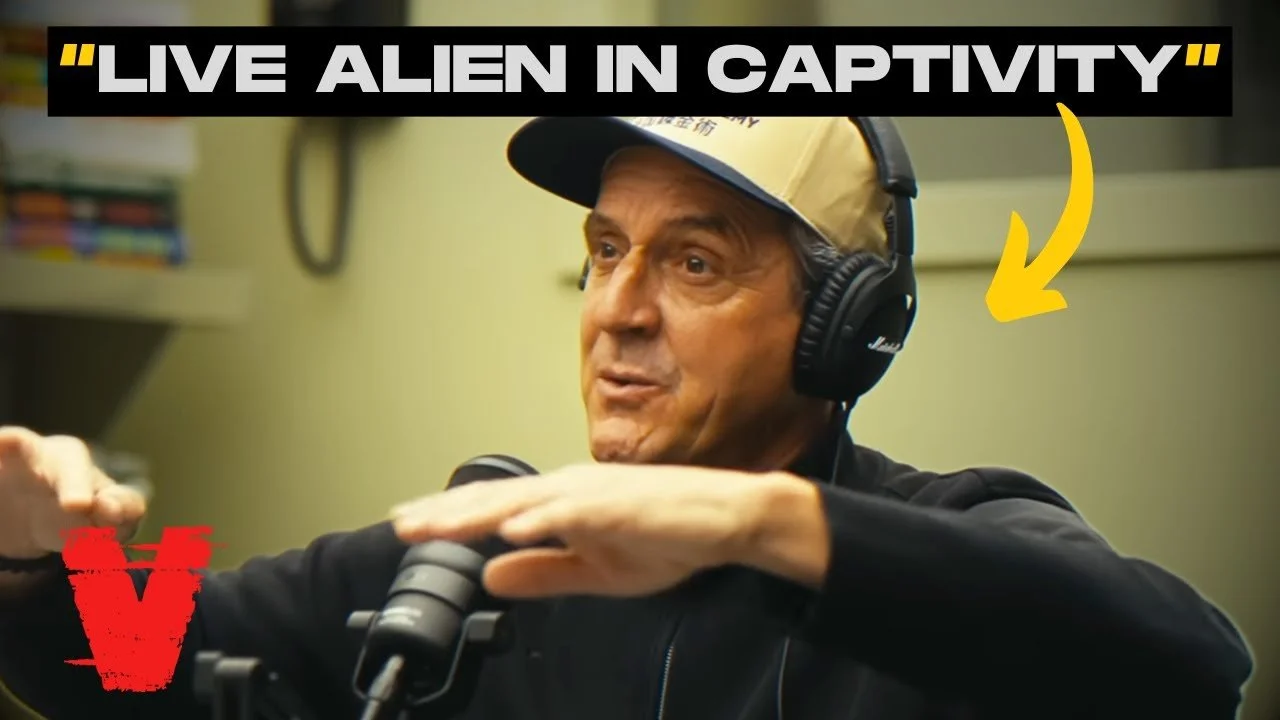
James Fox Drops UFO Nuke
What if one of the most credible UFO encounters in history involved not anonymous witnesses—but a respected neurosurgeon willing to risk his career to tell the truth? Moment of Contact dives deep into Brazil’s infamous 1996 Varginha incident, uncovering chilling new testimony, alleged non-human beings, and decades of military secrecy. With firsthand accounts from doctors, police, and military officials—and growing pressure for disclosure—this documentary may represent a pivotal moment in humanity’s search for the truth about extraterrestrial life.
What if the most extraordinary UFO encounter wasn’t a story from the fringe but a case so credible, even a prominent neurosurgeon put his career on the line for it? That’s the tantalizing question raised in the groundbreaking documentary "Moment of Contact: New Revelations of Alien Encounters," which has sent shockwaves through the UFO community and beyond. Whether you’re a lifelong believer, a hardened skeptic, or just UFO-curious, this new exploration of the famed 1996 Varginha incident in Brazil demands your attention. Let’s dive into the heart of this phenomenon and why so many say it’s the most significant development in UFO history.
The Incident That Changed Everything
Imagine a quiet Brazilian town transformed overnight by rumors of a crashed UFO and strange beings on the loose. Locals, police, military officials, and even top medical professionals reported their experiences—many of them going on the record, not hiding in anonymity. The film centers on the Varginha incident, where witnesses claim not only did a UFO crash, but that living non-human entities were captured and spirited away under a blanket of military secrecy.
What makes this case so compelling is not just the wide span of credible witnesses but the sheer consistency of their testimonies spanning decades. Add to this a fresh twist: for the first time, a practicing neurosurgeon, Dr. Italo Venturelli, comes forward publicly to say he had face-to-face, telepathic communication with a being in captivity for several minutes. His dramatic change of heart—sparked by a near-death experience and a deep resolve to do right by future generations—adds an unprecedented layer of authenticity and risk.
Credible Voices Step Into the Light
The film’s strength comes from the breadth of testimony. We’re not talking about hearsay or fleeting glimpses: police chiefs, pathologists, flight controllers, and even high-level hospital staff come forward. The most jaw-dropping development is Dr. Venturelli’s testimony. As the head of three hospitals, his reputation is beyond reproach. He initially claimed he’d only seen a video of the being, but after surviving life-threatening illness, he decided to reveal the entire truth: he was there, in the ICU, communicating through thoughts with a non-human lifeform.
His reasons for prior reticence are deeply human—fear of career damage, worries for his family, and the isolation that such claims can bring. After nearly dying, he felt he couldn’t take this secret to the grave. That’s a level of vulnerability and risk that’s nearly unheard of in UFOlogy, and it has left both believers and skeptics stunned.
New Evidence and Official Stonewalling
One of the most striking elements covered in "Moment of Contact" and the surrounding investigative work is the persistent presence of the United States Air Force in Brazil during the incident’s aftermath. Eyewitnesses, including Brazilian military officials and air traffic control staff, recount unauthorized U.S. planes landing—and soon after, metal boxes and what was believed to be biologics being flown out of the country under secrecy.
Official responses have only fueled curiosity. Freedom of Information Act requests filed with the U.S. government have been met with generic national security rejections, pointing to classified agreements dating back to 1949. Why all the secrecy, especially if, as some claim, it’s only a case of mistaken identity and tall tales?
What About the Video Proof?
Perhaps the most tantalizing prospect is the existence of video and photographic evidence. Multiple sources—doctors, military, fire and police departments—are said to have recorded footage and taken photos of the beings and the events that unfolded. While various alleged videos have surfaced online, most are easily dismissed as fakes. Still, reputable witnesses and journalists confirm that real footage does exist, though it remains tightly held.
The film’s creators, especially director James Fox, have put out public calls for help, urging anyone with authentic footage to come forward. The hope is that with mounting pressure and widespread interest—even potentially with Congressional involvement—the truth may finally be revealed.
The Stakes for Disclosure
Leslie Kean, the investigative journalist who was instrumental in the 2017 New York Times exposure of the Pentagon’s secret UFO program, points out something crucial: while governments cite national security to keep technologies under wraps, biologics—actual non-human bodies—are different. There’s a growing argument that hiding evidence of alien life is less about security and more about control. If the Varginha case can break through this wall of secrecy, it could become a springboard, not just for new legislation but for a wave of public, governmental, and even scientific inquiry into non-human life.
A Story That Refuses to Fade
What sets this case apart and keeps viewers, investigators, and whistleblowers coming back is its sheer resilience. Like the game of Jenga described in the documentary, you can poke at one piece—question a witness here, doubt a testimony there—but the overall structure is so robust, it refuses to collapse. The atmosphere surrounding "Moment of Contact" is one of cautious excitement: maybe, just maybe, we’re on the cusp of history.
If you’re hungry for more, the documentary is now available for rental (links typically provided on platforms like Apple TV and Amazon Prime, though geo-restrictions apply). Even for those who saw the earlier version, the newest installment brings fresh interviews and revelations that could change how we think about alien encounters forever.
The Ultimate Takeaway
At its core, "Moment of Contact" serves as a rallying cry for transparency, curiosity, and courage. Whether you’re a skeptic or a silent believer, the film is a testament to the power of ordinary people collectively seeking the truth. With new developments still unfolding—be it whistleblower events, follow-up investigations, or even the possibility of more footage surfacing—now’s the perfect time to pay attention.
Who knows what the next year will bring? What’s clear is this: the Varginha case and its remarkable witnesses invite us to question old assumptions and be braver about exploring the unknown. Sometimes, the truth really is stranger than fiction.
If you want to learn more or support ongoing investigation, check out the documentary, follow the latest press releases, and keep an open mind. The next big revelation could be just around the corner.
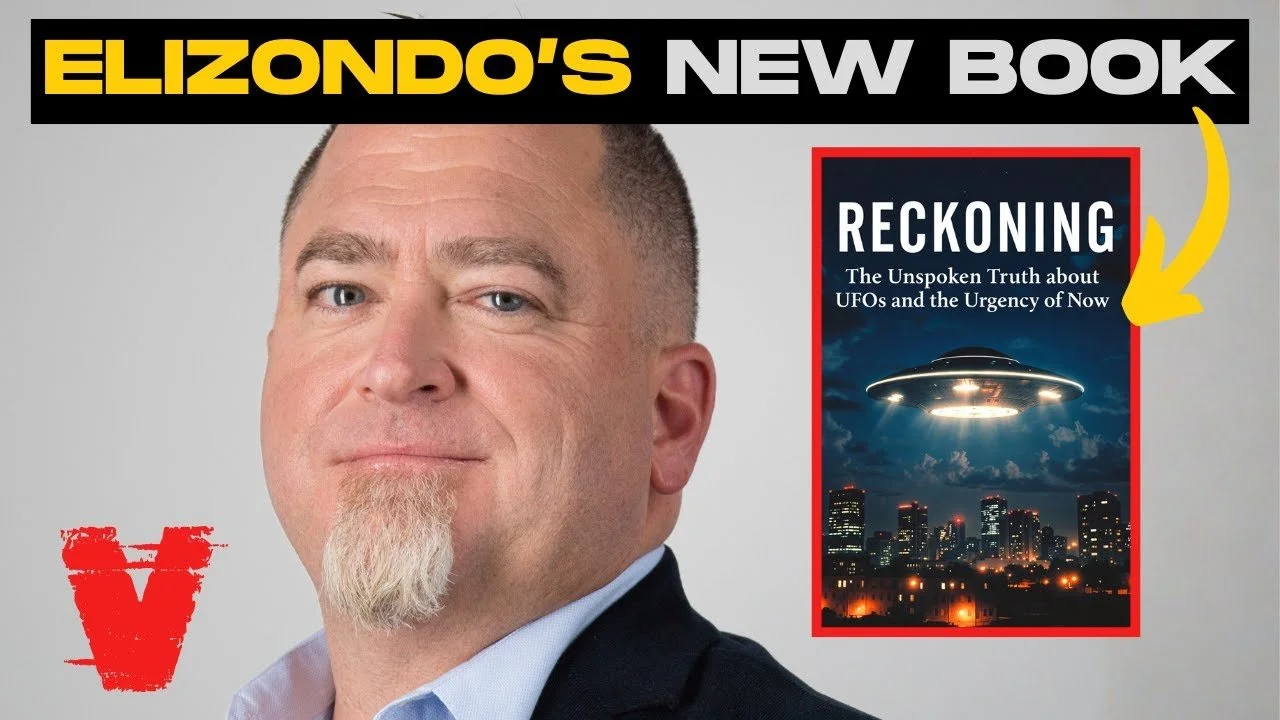
Lue Elizondo's New UFO Book Revealed
The fight for UFO “disclosure” is no longer just about mysterious craft in the sky—it’s about power, control, and who gets silenced for asking the wrong questions. In this deep dive, we explore the growing controversy surrounding Lou Elizondo, his fiction-labeled tell‑all books, and the increasingly toxic behavior plaguing the online UFO community. From coordinated harassment and doxxing to cult‑like groupthink, this article exposes the darker side of ufology and asks a critical question: is the disclosure movement really about truth, or about protecting narratives and egos at all costs?
If you’ve ever waded into the world of UFOs and government secrets, you know things can get weird—fast. But what happens when the debate turns toxic, and questions about our place in the universe lead to online harassment, silencing, and cult-like groupthink? In this post, we’re unpacking the latest controversies swirling around prominent UFO figure Lou Elizondo, the release of his new (and possibly fiction-labeled) book, the relentless drama of the UFO online community, and why the fight over “disclosure” says more about human nature than little green men.
Unmasking ‘Disclosure’ and the Messy World of Ufology
Let’s admit it — the UFO community is no stranger to drama, but lately, things have been reaching conspiracy-theory-within-a-conspiracy levels. The focal point? Lou Elizondo, the self-styled whistleblower and ex-military intelligence operative who claims the public conversation around UFOs exists largely because of him. His previous book, “Imminent,” promised world-altering revelations. Now, the upcoming “Reckoning: The Unspoken Truth about UFOs and the Urgency of Now” is already stirring the pot, even before it hits shelves in 2026—and perhaps no surprise, it’s being listed as fantasy fiction.
But why would a supposed tell-all about UFOs be published as fiction? According to Elizondo’s critics, this tactic might be used to skirt the Pentagon’s strict publication review system, or perhaps to dodge liability for sweeping claims. But as Patrick from Vetted astutely notes, the Department of Defense doesn’t care if your stories are true or not—as long as you don’t spill classified secrets. In other words, label it fiction or nonfiction—either way, the burden of truth falls on the reader. What matters, from the publisher’s perspective, is entertainment, not enlightenment.
The Paradox of Open Conversation and Manufactured Narratives
One of the standout moments in the ongoing saga is Elizondo’s claim that open discussions about UFOs exist ‘only because of me.’ This statement, from someone who claims to champion transparency, rings hollow for many long-term ufology researchers. As several critics point out, decades of UFO study and advocacy predate Elizondo’s emergence on the scene.
But the larger issue is who gets to control the narrative. In the transcript, Jay Anderson, a respected UFO researcher, reveals a chilling pattern: anyone questioning the accepted storyline around figures like Elizondo finds themselves under attack from seemingly coordinated online groups. Doxxing, harassment, and smear campaigns aren’t hypothetical—they’re painfully real. Even voicing skepticism can get you labeled ‘anti-disclosure’ and shunned, or far worse, personally targeted. It’s a stunning parallel to the very tactics ufologists accuse the government of: discredit, deny, and destroy.
Cult-Like Behavior: When Dissent is a Dangerous Act
What makes this dynamic especially alarming isn’t just the online vitriol—it’s how it warps community values. Instead of reasoned debate or open discussion, what emerges is a cult-like groupthink, where questioning the narrative is heresy. Some of the most vocal victims, like the researchers Red Panda Koala and Tupacabra, have faced not just ridicule but doxxing and real-world threats—allegedly from groups closely connected to Elizondo.
And here’s the kicker: Patrick from Vetted, the blog’s narrator, openly relates his own experience. When he began as a newcomer, he was immediately targeted simply for refusing to join “secret” groups or for expressing independent viewpoints. Accusations and threats followed, all designed to intimidate him into silence. This type of intimidation becomes a warning for others: “If you question the dominant voices, you’ll pay the price.”
Is UFO Disclosure a Smokescreen?
It’s not just about personality clashes. The transcript delves into a deeper question: what’s the real goal of so-called “disclosure”? Over the past few years, the UFO narrative has become muddied and convoluted, with information often trickling out in half-truths or outright contradictions. Are whistleblowers and government insiders trying to prepare the public for paradigm-shifting news? Or is the aim to sew confusion, cover up less savory activities, or even to lobby for amnesty for classified actions—whether related to UFOs or not?
Jay Anderson, in his Joe Rogan appearance, puts a fine point on it: “If there is no alien technology to disclose, then amnesty gets you nothing.” In other words, maybe the ongoing hype is not about bringing the truth to light, but about managing fallout, preserving reputations, or protecting those involved from legal consequences.
The Consequences of Silencing Skeptics
Why does this all matter? First, it highlights a dark truth about human behavior: passionate causes, even those grounded in curiosity or pursuit of truth, can devolve into exclusionary echo chambers when driven by ego or fear. The UFO field—ironically, obsessed with uncovering secrets and promoting transparency—too often mirrors the very institutions it criticizes.
Secondly, the silencing of dissenting voices has a chilling effect on real progress. If only the loudest, most aggressive groups get to decide “what’s true,” nuanced debate and genuine investigation vanish. And as more average enthusiasts or newcomers are bullied or driven off, the field becomes even more insular and self-referential.
Hope for a Smarter, Kinder UFO Conversation
Yet, not all is gloom and doom. As Patrick points out, these toxic dynamics are being called out, and the backlashes against orchestrated smear campaigns are growing. The advice he relates—“Just get bigger”—underscores that the more people are willing to speak up, the harder it becomes for bullies and gatekeepers to control the conversation. There’s also power in simply refusing to give oxygen to interpersonal drama and instead focusing on critical thinking and open inquiry.
If there’s one takeaway from all this, it’s that it’s okay to ask questions—even (and especially) when the answers threaten the status quo. You don’t have to pick a side, join a camp, or buy the latest doom-laden book promising “the secrets to everything.” Stay curious, independent, and skeptical. And above all, resist the urge to demonize or dox others just for thinking differently. After all, the truth — whatever it is — can withstand a little scrutiny.
Final Thoughts: Everyday is a Gift
The world of UFOs and disclosure will probably always attract strong personalities, wild claims, and the occasional charlatan. But the way we handle disagreements and skepticism speaks volumes about who we are and what kind of community we want to build. As Patrick signs off, remember: everyday is a gift. Let’s make these conversations a little more generous, sane, and worth having—for everyone involved.
David Grusch Drops UFO Nuke
From explosive whistleblower claims to carefully worded intelligence denials, the modern UFO debate is more complex—and confusing—than ever. As figures like David Grush and James Clapper offer overlapping yet conflicting accounts of government knowledge, questions about crash retrievals, secrecy, and real disclosure refuse to go away. This deep dive cuts through the noise to examine who’s saying what, why the stories don’t always align, and whether the truth about UFOs is finally within reach—or still buried behind layers of official silence.
UFOs. UAPs. Crash retrievals. Government secrecy. These words have ignited the imaginations of countless truth-seekers and skeptics alike, fueling an ever-growing debate that seems to always be on the edge of something earth-shattering. But what happens when those in the know — top military officials, intelligence insiders, and whistleblowers — all tell slightly different stories? And what can you, the average citizen or curious observer, hope to piece together from the tangled web of claims, denials, and whispered secrets?
Let’s dive into the latest developments, controversy, and, yes, confusion surrounding high-profile insiders like David Grush and James Clapper, the swirling talk of government cover-ups, and whether real disclosure is anywhere on the horizon.
Inside the Whistleblower Web: Who’s Saying What?
If you’ve been following the UFO and UAP (Unidentified Aerial Phenomena) saga, names like David Grush, General James Clapper, and Dick Cheney have become familiar. These are people who, by virtue of their intelligence and defense backgrounds, should know what’s happening behind the scenes. Yet, as recent interviews, documentaries, and podcasts reveal, their stories sometimes conflict, overlap, and raise as many questions as they answer.
David Grush, for example, is often put forward as a key whistleblower, claiming direct knowledge of secret crash retrieval programs, shadowy leadership (with figures like Dick Cheney at the top), and a pervasive government reluctance to tell the public the whole story. He’s worked closely with congressional offices to draft letters, interrogatives, and bring new witnesses to light, signaling that there are people ready — or almost ready — to blow the lid off what the United States knows about UFOs.
James Clapper, former Director of National Intelligence and a decades-long insider, has also opened up more than most. In both documentaries and public interviews, he’s admitted that the U.S. government has tracked unexplained objects over secret test sites like Area 51. Yet, Clapper also walks a fine line — acknowledging ambiguity, expressing regret about past lack of transparency, and stopping short of confirming the more extraordinary claims about non-human craft or crash retrievals. His openness is seen by some as too little, too late, or even as a calculated move meant to control the narrative rather than reveal the real truth.
Section: The Muddled Waters of Truth and Misinformation
What complicates everything is that for every statement made by a major player, voices from the military, journalism, and advocacy groups seem to either confirm, contradict, or contextualize it into oblivion. Lou Elizondo, another well-known figure in the UAP investigation world, claims to have worked alongside Grush in specialty programs focused solely on UAPs — contradicting government statements that such programs don’t exist.
Even highly respected journalists and politicians, like Marco Rubio, have found themselves inserted into the story via selectively edited documentaries and viral social media clips. When pressed, they frequently clarify that their comments were summaries of what others told them — not proof that they themselves had hard evidence.
And then there’s the persistent doubt cast by past actions and questionable credibility. Clapper, for example, has been accused (including by figures like Tulsi Gabbard) of toeing the government line or “playing team sports” when it came to sensitive topics — sometimes at truth’s expense. Add in other controversies, like attempts to fire fellow intelligence officials or questionable intelligence assessments, and it becomes hard to pin down who can be trusted, especially when it comes to something as extraordinary as extraterrestrial life.
Section: The Government’s Reluctance and the Whistleblower Conundrum
A key frustration for those watching this story unfold is the apparent lack of forward progress. Despite the noise, the hearings, and the tease of “major whistleblowers” waiting in the wings, little substantive evidence seems to make it to the public. Grush himself has been sidelined — stripped of his security clearances, subjected to an extensive investigation that, according to a new Department of Defense report, found his whistleblower claims to be unsupported and attributed his demotion to unrelated behavioral issues.
At the same time, lawmakers like Representative Anna Paulina Luna fight for better whistleblower protections — advocating for safe, legal, and immune pathways for those who do have information to come forward. Their push underscores a persistent belief among some in Congress that a genuine, ongoing cover-up exists inside the highest corridors of power, keeping explosive truths locked away from the public. Still, as investigations and FOIA requests continue, official responses — or the lack thereof — often only deepen the frustration and sense of conspiracy.
Section: Are We Chasing Shadows — Or Are We Close to the Truth?
The lack of clear answers begs an uncomfortable question: are we just chasing shadows? Every time the UFO community seems poised for a major revelation — a new report, a new whistleblower, a viral interview — what ultimately comes out seems to fall short, obscured by ambiguity, controversy, and a fog of competing narratives. The government’s tendency to withhold information (sometimes for legitimate security reasons, sometimes seemingly out of habit) only reinforces suspicions and leaves dedicated “betterers” combing through breadcrumbs.
But let’s not ignore something important: the UAP phenomenon itself is real. There are unidentified objects observed by credible witnesses, caught on military sensors, and discussed in briefings at the highest levels. The existence of something unusual in our skies is not in doubt. What remains mysterious is the extent of government knowledge, any potential “crash retrievals,” and, of course, the ultimate question — are we dealing with advanced human technology, foreign adversaries, or something not of this Earth?
Conclusion: The Ongoing Quest for Clarity
If there’s one takeaway from this convoluted maze of whistleblowers, intelligence officials, and secrecy, it’s this: The search for truth is both necessary and deeply frustrating. With every new claim, contradiction, or purported document, the story gets more tangled. Does that mean there’s nothing there? Not at all. But it’s a reminder to stay skeptical, to demand evidence, and to avoid leaping from plausible suspicion to certainty without solid ground.
For all the “betterers” out there seeking answers, keep asking questions, keep pushing for transparency, but don’t be afraid to admit what isn’t known. The truth, if it’s out there, deserves to be discovered — not constructed. Every day is a gift, and unraveling mysteries like this is part of what makes our world such a fascinating (if perplexing) place.
Check out all source links shared in this post for deeper dives, and let us know your thoughts. What do you believe? Are we closer than ever to UFO disclosure, or is this just another endless government rabbit hole?
Chris Bledsoe Comes Clean About 2026 Apocalypse
As 2026 approaches, the UFO community finds itself once again caught between hope and hard questions. At the center of the storm is Chris Bledsoe and his long-promised prophecy involving the star Regulus, the Great Sphinx, and a supposed unveiling of new knowledge for humanity. Once anchored to Easter 2026, the prediction has since shifted, raising concerns about moving timelines, unverifiable claims, and the blurred line between belief and evidence. This article dives into the growing skepticism, the power dynamics of “special knowledge,” and why questioning prophetic narratives isn’t cynicism—it’s essential for anyone genuinely searching for truth.
Let's be real—few things are as intriguing, divisive, and at times downright confounding as the world of UFOs and modern prophecy. In a world brimming with self-declared insiders, cryptic predictions, and charismatic experiencers, there’s one name that keeps coming up: Chris Bledsoe. Loved by many, doubted by more, his saga recently took center stage thanks to an in-depth, no-holds-barred look by Patrick at Vetted. The result? A roller coaster ride exploring prophecy, celestial events, skepticism, claims of special knowledge, and a sharp question: Who really owns the truth?
Bledsoe’s Big Prediction—And the Star of Regulus
For years, Chris Bledsoe has talked about a prophecy—one he received from a mysterious lady in a vision. The crux of this prophecy? That when the blue star Regulus appears red on the horizon at dawn, in the gaze of the Sphinx in Egypt, it will signal the arrival of new knowledge for humanity. Initially, Bledsoe pinpointed Easter 2026 as the date for this revelation, maintaining this prediction across interviews, tweets, and even in his book.
But here’s where things get murky. Recently, Bledsoe has started to shift the timeline. The predicted event date moved, with references to the fall instead of spring, and a new haze of uncertainty cast over the specifics. As the video transcript reveals, Bledsoe began emphasizing that “dates don’t matter,” implying a continuous flow of knowledge rather than one grand event. To many, this smelled suspiciously of moving the goalposts—something all too common in prophetic circles. When the big day inches closer and nothing happens, the date becomes slippery.
The Danger of Unverifiable Claims
In the UFO community, extraordinary claims require extraordinary evidence. Patrick lays out stark skepticism: why release predictions at all if the date is fluid? How can believers sift through tweets about mysterious orb videos, alleged hidden messages, and cryptic numerology when the original evidence is withheld or altered?
The concern here is not just about Bledsoe’s shifting prophecies, but the potential damage caused by unverifiable or unfalsifiable claims. When new predicted dates contradict the old, or when supposed videos of supernatural events have obvious mundane explanations (like zoomed-in stars or airplanes), the community is left in a state of confusion. More dangerously, these moments of fuzzy evidence can erode trust and foster a culture where skepticism is dismissed as close-mindedness.
Community, Cults, and the Problem with “Special Knowledge”
Perhaps the most troubling part of Bledsoe’s narrative isn’t his predictions. It’s the creation of a dynamic where his family and followers are positioned as having privileged, insider knowledge. This “us-versus-them” mentality—where dissenters are dismissed as non-believers who simply don’t ‘get it’—breeds a toxic atmosphere rife with cult-like behaviors. When other experiencers are labeled as crazy or ignorant, while Bledsoe’s group claims exclusive access to the truth, it sets the stage for division and distrust.
Add to this mix NASA connections that turn out to be more personal than institutional (no, visiting scientists on their own time doesn’t mean NASA’s officially investigating), and you have a narrative that’s rich in intrigue but poor in substance. When pressed for proof—like the promise to summon orbs on command—events consistently fail to deliver under scrutiny. Despite stories of miraculous healings, secret materials, or silent cosmic languages, objective evidence remains elusive.
The Courage to Question—And Why It Matters
It might be uncomfortable to question charismatic figures, especially in communities built on faith in the unexplained. Yet, as Patrick notes, sunlight is the best disinfectant. Healthy skepticism isn’t about wholesale dismissal, but about demanding clarity, accountability, and honesty.
Perhaps Chris Bledsoe sincerely believes in his experiences. Perhaps his visions have given hope or inspiration to others. But when belief becomes tangled in commercial opportunities, public platforming, and “chosen one” narratives, the ethical calculus changes. Those who claim special status must expect—and accept—scrutiny. Because belief isn’t the same as fact, and no one should be made to feel lesser for demanding evidence.
The Real Takeaway: We’re All in This Together
At the end of the day, Patrick’s critical take isn’t meant to shame those who find meaning in Bledsoe’s story. There’s nothing wrong with believing—whether in UFOs, spiritual awakenings, or paradigm shifts. What matters is the honesty with which those stories are told, and the humility to admit that, in the great cosmic mystery, none of us knows everything.
Beware anyone who claims otherwise.
Instead of letting hope be hijacked by prophets and insiders, let’s foster a community where skepticism and belief can coexist without animosity. Ask questions. Demand evidence. Hold your heroes to a high standard, but don’t treat them as infallible. Applause should be earned, not engineered.
As we move toward 2026 (or whenever the next date is set), remember: the real quest for truth isn’t about already having the answers. It’s about being willing to seek them—together.
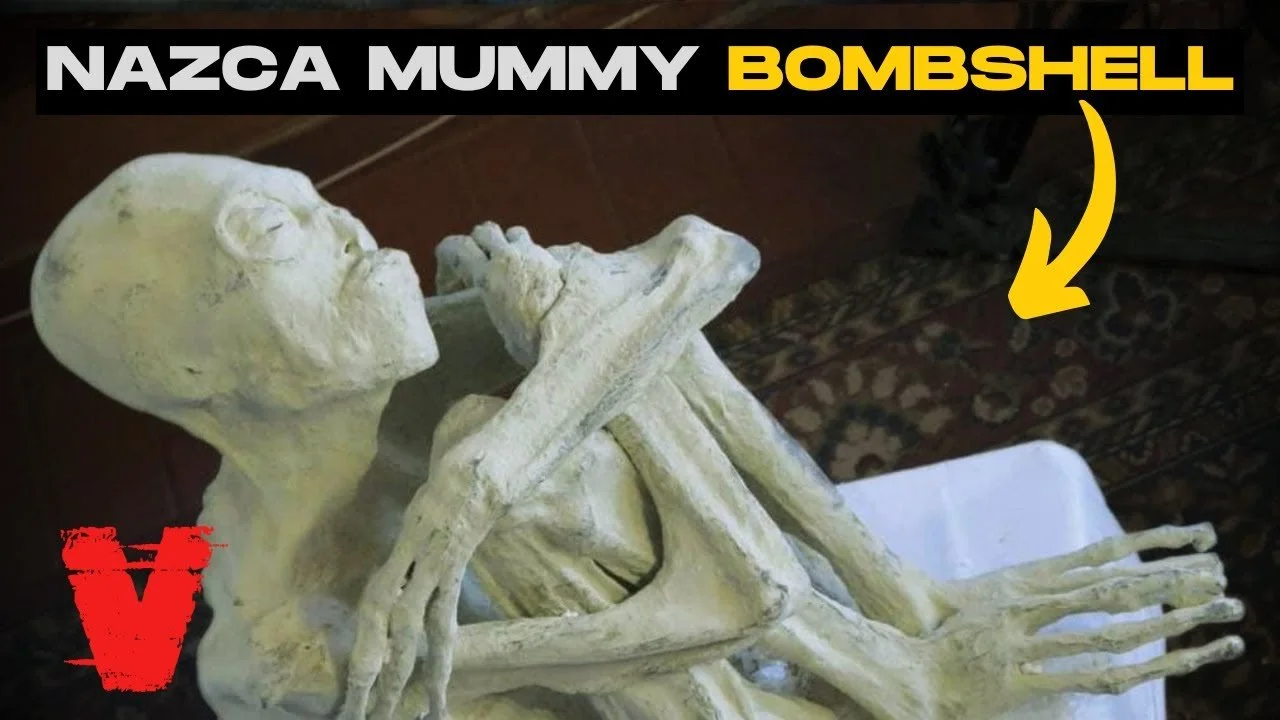
BOMBSHELL: The Nazca Mummies Are Still ALIVE
Deep beneath Peru’s iconic Nazca sands lies a mystery that has captivated scientists, skeptics, and believers alike. Are the Nazca mummies evidence of an unknown ancient species—or a carefully constructed hoax blending human bones, folklore, and modern sensationalism? Dive into the controversy, DNA debates, and haunting eyewitness claims behind one of the most provocative archaeological stories of our time.
If you love a good mystery with a side of controversy and ancient intrigue, it’s time to dig into the whirlwind saga of the Nazca mummies. What began as an archaeological curiosity in the Peruvian desert has exploded into an international debate involving world-famous podcast hosts, scientists, skeptics, government bodies, and a legion of passionate believers. Buckle up: this is far more than just faded bones and desiccated bodies. This is a story that could change your concept of human history—or at the very least, keep you up at night pondering what really lies beneath the sands.
The Origin of the Nazca Mummies: Discovery or Deception?
In 2017, a collection of unusual, small mummified bodies surfaced from the Nazca region, an area already well-known for its mysterious geoglyphs. These “Nazca mummies”—with their elongated skulls, large eye sockets, and three-fingered hands and feet—were immediately the subject of wild speculation. Initial supporters, including major media platforms and journalists, claimed the mummies dated back 1,500-2,000 years and boasted genuinely unexplainable anatomical features, like metal implants, unfakable bone and tissue structures, and in some cases, embryos or eggs nestled within.
As CT scans, X-rays, and DNA tests swirled, the mummies took on a life of their own—literally, according to some stories. Journalists and researchers organized high-profile analyses in labs from Mexico to Canada, and some results stoked the fires even further. Certain DNA sequences reportedly didn’t match any known terrestrial species. If you’re starting to get sci-fi chills, you’re not alone—pop culture icons, podcast hosts, and even government officials have weighed in.
The Skeptic’s View: Science Grapples with the Extraordinary
Of course, not everyone’s convinced. From the start, Peruvian authorities and many academic archaeologists raised serious red flags. Their research told a very different story. According to reports from the National University of Ica and Peru’s Ministry of Culture, most of the mummies were recent fabrications—composite creations made from a mishmash of human and animal bones held together with modern glues and covered in powder or fake skin. The skulls, in fact, were said to be real human skulls modified by ancient Peruvians through deliberate head-shaping techniques.
Carbon dating of some components placed the original bones in the third to fifth centuries AD, but the overall construction was much more recent. For skeptics, the so-called revelations were nothing more than an elaborate, if creepy, hoax—a violation of cultural heritage laws at best and an affront to science at worst.
The Ongoing Debate: DNA, Controversies, and Congressional Displays
Regardless of official statements, public fascination and controversy refuse to die. New specimens pop up, hearings are held (even in the halls of the Mexican Congress), and a diverse collection of scientists and enthusiasts keep pushing for more open, cross-border study. For every skeptic waving lab results and contamination concerns, there’s a passionate advocate arguing the anatomical differences and elusive DNA results prove we’re looking at something beyond human.
A notable lab analysis in 2017 by Canada’s Lakehead University found the remains tested were simply 100% human. Others claimed contamination, logistical issues, and questionable sample handling made any definitive result nearly impossible. At least one U.S. biosciences company, Colossal Biosciences—famous for de-extinction projects—has voiced willingness to conduct thorough DNA sequencing, as long as proper permits and state approval are obtained. But cooperation between governments, scientists, and promoters remains stubbornly elusive.
Stories That Won’t Die: Are the Nazca Mummies Still Alive?
Now, let’s get to the real plot twist: some of the most intriguing voices in this saga claim that at least some of these mysterious beings are not only ancient—but still alive. Eyewitness stories from local tomb-robbers, researchers, and indigenous oral traditions allude to three-fingered beings sightings, living in underground tunnels, emerging at night, and occasionally playing haunting music in the desert darkness. The accounts are captivating and sometimes straight-up surreal, featuring glowing orbs, UFO encounters, telepathic messages, and legends of entire subterranean civilizations.
One interviewee described being contacted by two extremely tall, three-fingered beings during an archaeological project, delivering an almost cosmic welcome and confirming their species had lived in the region for thousands of years. Oral traditions collected from local tribes and historical testimonials sometimes echo these claims, even including references to these beings controlling the moon and surviving ancient cataclysms by going underground or into the sea.
Turning Legend into Science: Where Do We Go From Here?
So where does all this leave us? If you’re feeling both skeptical and intrigued, you’re not alone. Several points keep the debate alive:
1. Lab analyses disagree dramatically, often plagued by contamination, questionable handling, and disputes about sample origins.
2. Dramatic claims of live beings and hidden civilizations rest largely on oral tradition, eyewitness stories, and sometimes second- or third-hand accounts.
3. The Peruvian government and most mainstream archaeologists remain firm: these are recently manufactured bones and artifacts, not evidence of lost civilizations or non-human species.
4. Yet, the scientific community remains divided. Some call for more transparent, international research—allowing neutral, accredited labs to analyze the remains under documented chain-of-custody.
But perhaps the greatest allure of the Nazca mummy mystery is that tantalizing feeling that, just maybe, there’s a grand story yet to be fully uncovered—one that bridges science and folklore, ancient secrets and modern skepticism.
The Takeaway: A Mystery That Endures
Whether you lean toward believing in subterranean civilizations or side with the scientists calling out fakes, there’s no denying the Nazca mummies make for a story full of wonder, debate, and deep cultural fascination. For now, they challenge us to reconsider the thin boundaries between the possible and impossible, legend and evidence, history and imagination.
As more research is proposed and new voices enter the debate, one thing seems certain: the last word on the Nazca mummies has yet to be written. Until then, perhaps the best advice is to keep both an open mind and a critical eye—and, if you ever find yourself in the Nazca desert at 3 AM, maybe keep your window closed.
So, should the next step be a trip to Peru, boots on the ground, to see if the legends hold any water—or is this another case of ancient bones telling modern lies? Only time, science, and a bit of courage will tell.
James Fox Drops UFO Bombshell
One of the most infamous UFO cases in history just took an unexpected turn. The 1996 Varginha, Brazil incident—long cited as a cornerstone of modern UFO lore—is back in the spotlight after a key witness dramatically altered his testimony. In this deep dive, Patrick from Betted examines James Fox’s latest revelations surrounding a respected neurosurgeon who now claims face-to-face contact with a mysterious being after decades of saying he only saw video evidence. Is this long-delayed honesty driven by fear, secrecy, and mortality—or a troubling contradiction that raises new red flags? As testimonies shift and questions multiply, the search for truth behind Varginha becomes more compelling—and more complicated—than ever.
What if everything you thought you knew about one of the most explosive UFO cases in history suddenly changed? In the ever-evolving world of UFO investigations, few incidents stir as much passion, skepticism, and intrigue as the 1996 Varginha, Brazil case. And it just got even more complex. Patrick from Betted returns, this time to break down James Fox’s latest interview and address a bombshell: a key neurosurgeon’s testimony about an encounter with a being—not just via video, but allegedly face-to-face—has dramatically changed. Is this a revelation, a red flag, or something in between? Let’s dig deep into the heart of UFO inquiry, shifting stories, and the undying pursuit of the truth.
A Story That Keeps Evolving
The Varginha case has captivated the imaginations of believers and skeptics alike for nearly three decades. At its core, the story revolves around claims that, in January 1996, something otherworldly crashed (or landed) in Varginha, Brazil, and was subsequently witnessed and even detained by Brazilian authorities. James Fox and other documentarians have poured years—sometimes decades—into unraveling what happened. Over the years, bits and pieces, video snippets, and new witnesses have emerged. But when a respected medical professional steps forward to claim direct contact with an alien being, and later changes the core of his story, the entire narrative teeters between revelation and doubt.
In Patrick’s analysis, he highlights the seismic shift in the neurosurgeon’s account. Initially, in a 2023 interview, this doctor (whose name many struggle to pronounce—Venturelli) stated he only saw evidence on video—a fact told in many places and with a confidence that went unquestioned for years. Fast forward, and suddenly the story morphs: now, Venturelli claims to have been in the room, telepathically communicating with the being itself. If you’re scratching your head, you’re not alone. Even Fox, when asked about the discrepancy, admitted it’s a legitimate question. Why did the testimony change so radically after 29 years?
Behind the Scenes: Stress, Secrets, and the Need to Come Clean
Through James Fox’s detailed response (thanks to a direct question from Patrick), we learn there is far more going on than a simple change of heart. Apparently, after a series of health scares—including a heart attack and cancer diagnosis—Venturelli thought deeply about his legacy and the burden of secrecy. He told associates he didn’t want to take the truth to his grave. Secrecy, self-preservation, and fear of ridicule—especially for a neurosurgeon operating at the highest level—make for powerful incentives to keep quiet. Coming forward wasn’t just a spontaneous act; it was, Fox explains, an emotional reckoning with mortality and truth.
But here’s where the story gets even juicier—and more confusing. The initial disclosure about having only seen a video was made on the record, on camera. Later, in a more private hospital walkthrough, Venturelli pointed to the exact bed where he claimed to have seen the being in person. Only afterwards did he acknowledge the change in his story, expressing overwhelming relief and even tears. He’s offered to take a lie detector test on camera, hand on a Bible, has never asked for money, and remains a respected hospital head. Dramatic? Absolutely. Inexplicable? Not entirely—but it still raises eyebrows.
The Importance of Asking Tough Questions
Patrick is right to highlight that demanding answers about these discrepancies isn’t about cynicism—it’s about the pursuit of the truth. Skeptics, believers, and the simply curious all deserve an honest account, especially when the stakes are this high. When a witness changes their story so drastically, especially after decades of secrecy, it’s only natural—and healthy—to question every angle. As Patrick says, “If we stop asking questions, we’re just going to get fed down our throats.”
In Fox’s recounting of events, he underscores that Venturelli has everything to lose—his reputation, his career, the trust of his patients. No matter how passionate or sincere the account, we must also remember: lying for years about a smaller version of the story doesn’t guarantee the full truth now, either. Human motivations are layered—protection, pride, fear, and sometimes the need to finally get something off your chest all factor into how and when revelations come to light.
Red Flags and Realities: Should We Believe?
Patrick is candid that while some want to take the neurosurgeon’s new testimony at face value, it doesn’t erase legitimate red flags. Is the offer to take a lie detector test meaningful if he never actually does it? Was the risk to his job truly as high as implied, or mitigated by his seniority and respect among peers? And most importantly—why change the story in such a dramatic, public manner without directly addressing the contradiction in the moment?
Being open to new information is crucial, but so is healthy skepticism. The world of UFO investigations is rife with half-truths, cover-ups, and wild stories. But sometimes, it’s the most convoluted and human elements—fear, health scares, approaching one’s twilight years—that provide an explanation for why a story shifts. Maybe Venturelli’s decision to come clean was cathartic, motivated by years of internal conflict after seeing something inexplicable during his medical career. Or perhaps it’s something else entirely. As always, the quest continues.
The Search For The Elusive Video
A recurring theme in this ongoing saga is the hunt for photographic proof—a video that, if revealed, could forever change how the world sees the Varginha case. Multiple leads point to doctors and officials who may have been shown footage. Yet, despite decades of searching, that holy grail remains just out of reach. James Fox insists that giving up the hunt would only guarantee failure, and Patrick agrees: investigation must persist until all avenues are exhausted.
The Takeaway: Truth Demands Persistence
In the end, what can we learn from this tangled saga? Stories can and do change, sometimes for understandable reasons. But the duty of the investigator, the journalist, the audience—is to keep digging, keep questioning, and keep demanding clarity. Silence, after all, is the enemy of truth.
As Patrick wraps up, he reflects on the importance of community, courage, and transparency in solving mysteries. He’s grateful James Fox responded candidly to the tough questions and urges the UFO research community to remain bold, inquisitive, and respectful. The Varginha case may never be fully solved, but by refusing to accept convenient answers, we give ourselves the best shot at uncovering what really happened—and maybe even at learning something greater about belief, truth, and the human condition.
So, as we start another year of curiosity and investigation, remember: every day is a gift, and every unanswered question is an invitation to look deeper. Keep watching. Keep questioning. And above all—keep searching for the truth.
Jacques Vallee Drops UFO Bombshell
What if humanity's first conversation with aliens happened decades ago—and no one told you? Legendary ufologist Jacques Vallée claims a secret government program established direct communication with nonhuman intelligence over 20 years ago—not random UFO sightings, but structured dialogue with advanced entities. While skeptics demand proof, Vallée describes repeatable interactions in controlled environments, suggesting we're not waiting for first contact—we may already be in an ongoing extraterrestrial dialogue hidden behind official secrecy. The revelation raises explosive questions: What was discussed, who authorized it, and why was humanity left in the dark?
It’s not every day you stumble onto hints that humanity might already have held conversations with nonhuman intelligence. Still, that’s exactly what the holiday-themed episode explores—decked out with Christmas cheer and tinged with extraordinary revelations. Imagine, in between stringing up plastic reindeer and sipping cocoa, the news drops that, decades ago, there might have been secret communications between government specialists and otherworldly beings. Cue the record scratch—say what?
For those who are new to this conversation, the subject recently resurfaced through an interview with the legendary ufologist Jacques Vallée on the Weaponized podcast. Vallée spoke of a sophisticated government program, possibly dating back 20 years or more, that purportedly established direct communication with nonhuman entities. Not the sort you might read about in folklore or even in the more famous UFO landing cases—but with entities that could be at the very top of some mysterious hierarchy.
A Holiday Bombshell: Are We Already in Contact?
The core of the buzz here isn’t your garden-variety lights-in-the-sky story. Rather, it’s the claim that, behind closed doors and under controlled conditions, experts once communicated with a nonhuman intelligence—potentially something that ranks above the so-called aliens commonly mentioned in conspiratorial circles. Vallée, citing trusted sources, describes this as a complex, ongoing process, wrapped in so much secrecy that even the world’s most devoted UFO researchers had no idea.
Why was this program ever kept quiet? Vallée suggests that this silent approach could be intentional—an attempt to roll out reality slowly, to avoid a shockwave to our culture. If true, what do these shadowy conversations mean for humanity? Are we being shielded from world-changing knowledge, or are our leaders waiting for the right moment (or the right questions) before letting the truth out?
Belief, Skepticism, and the Weight of Evidence
Eric Berles, another commentator in the field, adds another layer to this saga. He explains that while he’s spoken to people convinced they’ve had telepathic interactions with entities, belief doesn’t necessarily equal proof. This recurring theme—“I don’t know if I believe them, but they believe what they’ve experienced”—reminds us that personal conviction is only half the story, and objective evidence remains elusive.
Yet Vallée’s account stands apart because it talks of specialists, laboratories, and structured, repeatable interactions. Not the tales of late-night lights, but of government-sanctioned contact. The burning questions multiply: What was talked about? Who decided the conversation agenda? Is this still happening, and, critically, was it real contact—or might it have been a simulation, a trick, or even an experiment with emerging technologies?
Who’s Deciding—and Who Gets To Know?
Here’s where the issue stretches beyond “are they out there?” to questions of power and protocol. If such a program existed, who authorized it? Should global society have a say in how or whether we communicate with entities that could, potentially, upend everything we know about life, the universe, and our own place in it?
The comparison is made to religion: You don’t need permission to pray, but when it comes to official, scientific contact with an intelligence beyond humanity, does that responsibility increase tenfold? Should there be debate, laws, or safeguards? And—if the claims are true—why weren’t we all brought into this monumental encounter?
Layers of Secrecy: Hierarchies Among the Unknown
Vallée refers to these beings as potential “controllers” or higher-level entities—hints of a hierarchy among nonhuman intelligences. If contact has taken place, was it with front-line explorers, or with something more advanced pulling cosmic strings? And how do we discern the true nature of these entities when all we have are filtered reports and deep, official secrecy?
Let’s not ignore the comparison to artificial intelligence, either. Vallée underscores that our society already wrestles with creating AI—our own version of a nonhuman intelligence. What if the “others” have already noticed? Or, even wilder, what if our leap into AI is what triggers this contact?
What Comes Next? Wrestling with Awe and Uncertainty
Suppose the narrative Jacques Vallée shares is true: that we’ve already made first contact, and that a handful of experts, not civilians, have led the charge. What happens now? Are we spectators to a process that could redefine reality, or should we push for accountability and transparency? The “big if true” factor looms large here; sensational claims like these stir imaginations but also demand careful, skeptical scrutiny.
Ultimately, this would mean humanity isn’t waiting for a flying saucer to hover over New York City—we may already be in an extraterrestrial dialogue, just out of public view. Should we be excited, nervous, or adamant about demanding more truth? The story, shrouded in secrecy and “what I was told” disclaimers, asks more questions than it answers. Still, it invites us to contemplate: What would you do if you learned humanity’s first true, official alien conversation happened, and you missed it?
Merry Mysteries and Holiday Reflections
As the episode wraps up with festive goodbyes and a quirky Christmas song, we’re left marveling at the possibility that this holiday season, the biggest gift under the tree might be the realization that we’re not alone in the universe. Until we unwrap the full story, maybe the best we can do is remain curious, respectful of the unknown, and always open to the next revelation—no matter how outlandish it may sound.
So, as you sit by your blinking Christmas lights this year, let your mind wander to the starlit mysteries. Keep asking questions, keep seeking answers, and remember: Every day is a gift, and sometimes, the universe has stranger presents in store than we could ever imagine.
James Fox Reveals Bombshell UFO Witness
A neurosurgeon claims he witnessed a living alien at a Brazilian hospital in 1996. But there's a problem: his story has completely changed in just two years. Dive into the controversial new evidence surrounding the legendary Varginha UFO case.
Key Takeaways
Dr. Italo Venturelli now claims he spent 3-4 minutes with a living alien at Hospital Regional in Varginha, Brazil
In 2023, the same doctor said he only saw a 15-20 second video shown by a colleague
James Fox is offering $200,000 for the alleged hospital video footage
The story change raises serious questions about witness credibility in the famous 1996 UFO case
Fox's updated documentary releases December 2025, marking nearly 30 years since the incident
The Varginha Case: A Brief Introduction
The 1996 Varginha UFO incident remains one of the most compelling cases in ufology. On January 20, 1996, in the small Brazilian city of Varginha, multiple witnesses reported seeing strange creatures. The case gained international attention when three young women claimed they encountered a brown, oily-skinned being with red eyes and V-shaped ridges on its head.
What made this case particularly intriguing was the alleged military response—reports of army trucks, hospital visits, and a subsequent cover-up operation that involved threats to witnesses.
James Fox's 2022 documentary Moment of Contact brought renewed attention to the case, featuring extensive interviews with original witnesses, military personnel, and medical professionals. Now, Fox is releasing an expanded version in December 2025 to coincide with the 30th anniversary in January 2026.
But there's a problem with one of his newest star witnesses.
Meet Dr. Italo Venturelli: The Neurosurgeon Who Changed His Story
Dr. Italo Venturelli is not just any witness. He's:
Head neurosurgeon at Hospital Regional in Varginha
A respected medical professional with decades of experience
A concert pianist
Someone who runs a chain of hospitals
In other words, he has impeccable credentials and everything to lose by coming forward with an extraordinary claim.
The 2025 Story: Face-to-Face with an Alien
In Jesse Michaels' recent interview promoting Fox's new documentary, Dr. Venturelli provides an emotional, detailed account:
He was on duty in the ICU when the being was brought in
He spent 3-4 minutes in the room with the creature
The being was alive and lying in a specific bed he can point to
He made direct eye contact with the entity
They had telepathic communication
The being had red, teardrop-shaped eyes and white skin
The creature communicated: "I am okay. I've received care."
His colleague, Dr. Marcos Venicio Neves (who died in 2018), performed surgery on the being
The military burst in, took the being, and threatened hospital staff to remain silent
Dr. Venturelli becomes emotional during the interview, even crying as he recounts holding this secret for 29 years.
The 2023 Story: Just a Video Clip
Here's where things get problematic.
In April 2023—just two and a half years earlier—Dr. Venturelli gave a completely different account in an interview produced by James Fox Productions (the same team behind the new documentary).
In that interview, titled "The Video I Saw," Dr. Venturelli stated:
He never saw the being in person
A colleague showed him a 15-20 second video clip on WhatsApp
He couldn't identify the location—didn't even know if it was in his own hospital
He couldn't see below the being's waist in the video
The quality was poor and showed very little detail
He described it as a colleague's account, not his own experience
His demeanor was calm, rational, and matter-of-fact
The interviewers even speculated that Dr. Venturelli might have been shown the famous 1995 Roswell alien autopsy hoax video (which was released just one year before the Varginha incident).
The Dramatic Differences: A Side-by-Side Comparison
2023 Account
Saw a 15-20 second video
Didn't know the location
Poor quality video, couldn't see much
No mention of telepathy
Calm, rational demeanor
Described as colleague's account
Didn't know if it was even in his hospital
2025 Account
Was physically present for 3-4 minutes
Points to the exact bed in the exact room
Made direct eye contact, observed red teardrop eyes
Detailed telepathic communication
Emotional, crying, visibly affected
Described as personal firsthand experience
Specific details about Hospital Regional ICU
This isn't a minor discrepancy or translation error. This is a fundamental transformation of his testimony.
Why This Matters: The Credibility Question
The Court Case Analogy
James Fox claims in the Jesse Michaels interview that if this were a court case, "you would have an overwhelming amount of evidence" and "you could sway any jury."
But here's the problem: no jury would accept testimony from a witness who completely changed their story.
In any legal proceeding, when a witness gives contradictory accounts, their credibility is destroyed. Defense attorneys would have a field day with this discrepancy.
The Original Interviewers Were Skeptical
Even the team that conducted the 2023 interview expressed doubts. At the end of that video, they admitted:
They weren't sure he had actually seen a real video
They suspected he might have been shown the Roswell hoax footage
They were investigating whether the alleged video existed at all
These same researchers helped produce Moment of Contact and worked with James Fox on this new documentary.
The $200,000 Video Hunt
What makes this story even more intriguing is James Fox's aggressive pursuit of the alleged hospital footage.
The Reward Offer
In May 2023 (just days after Dr. Venturelli's first interview), Fox appeared on a Brazilian YouTube channel called "Paranormal Experience" and made an extraordinary offer:
Tier 1: Anonymous Submission
$100,000 USD for the video
$20,000 finder's fee
Anonymity guaranteed
Tier 2: Public Revelation
$200,000 USD for the video
Must come forward publicly with provenance
Must provide context and background
Bonus Offer
$50,000 USD for photographic evidence
Why This Amount Matters
$200,000 USD is an enormous sum in Brazil due to currency exchange rates. This kind of money could attract:
Legitimate witnesses with actual evidence
Opportunists with fabricated material
People willing to say whatever Fox wants to hear
The researchers on the Brazilian show openly discussed concerns about fraud and how this reward might bring false claims "out of the woodwork."
The Mystery of Dr. X
During that same Brazilian broadcast, one of the show's hosts revealed he had already seen a video—but described something entirely different from Dr. Venturelli's account.
They referred to the source as "Dr. X," someone whose identity they knew but wouldn't reveal publicly.
Here's where it gets interesting: Dr. Venturelli is from the same town mentioned in connection with Dr. X.
Could Dr. Venturelli be Dr. X? Did Fox's team convince him to upgrade his story from "I saw a video" to "I was there"?
The Unexplained Questions
1. Why Did the Story Change So Dramatically?
There are a few possible explanations:
Theory A: Fear Initially Prevented Full Disclosure
Perhaps Dr. Venturelli was afraid in 2023 and only admitted to seeing a video
After health scares (mentioned by Fox), he decided to tell the "full truth"
Problem: Why come forward at all in 2023 if he was afraid? Why not wait?
Theory B: Financial Incentive
The $200,000 reward might have motivated an "enhanced" account
A person who merely saw a video isn't worth much to a documentary
Someone who was physically present is a bombshell witness
Problem: This undermines his credibility entirely
Theory C: Memory or Confusion
Perhaps he genuinely confused his memories over time
Problem: Two years is not enough time for such a radical memory transformation
He's a neurosurgeon—someone trained in cognitive function
Theory D: External Pressure or Coaching
Perhaps Fox's team encouraged him to "remember more"
Problem: This would be deeply unethical documentary filmmaking
2. Why Isn't This Discrepancy Being Addressed?
This is perhaps the most troubling aspect. James Fox and his team:
Produced both interviews (the 2023 video was made by James Fox Productions)
Must know about the contradiction
Haven't publicly addressed it in any promotional materials
Continue to present Dr. Venturelli as a straightforward witness
In the Jesse Michaels interview, there's no mention of:
The previous 2023 interview
The video-only account
Why the story changed
How to reconcile the differences
3. What About the Alleged Video?
According to Dr. Venturelli's 2023 account:
Dr. Marcos Venicio Neves (the surgeon who allegedly operated on the being) had the video
Dr. Neves died of a heart attack in 2018
His wife supposedly has a hard drive with the footage
Dr. Neves was allegedly showing the video to many people
Fox claims to have spoken with:
Dr. Neves' wife
Dr. Neves' mistress
Dr. Neves' daughter from that relationship
But the video still hasn't surfaced, despite:
A $200,000 reward
Nearly 30 years since the incident
Multiple people allegedly having access to it
Dr. Neves supposedly sharing it widely
4. Why Point to a Specific Bed Now?
In the 2025 footage, Dr. Venturelli takes the camera crew to Hospital Regional and points to:
The exact room
The exact bed
The exact ICU location
But in 2023, he explicitly stated he didn't know where the video was filmed—couldn't even confirm it was in his hospital, let alone in Varginha.
How does someone go from "I don't know where this was" to "It was right here in this exact bed"?
The Supporting Cast: Other Doctors Weigh In
Fox has assembled a group of medical professionals who have known Dr. Venturelli for decades:
Dr. Janini: 48 years
Dr. Armando: 35 years
Others: 35+ years
In a video Fox posted on X (formerly Twitter), these doctors are asked if they believe Dr. Venturelli's account of seeing the creature in captivity at Hospital Regional.
They all express belief in him.
But the crucial question isn't asked: Do they know his story has changed? Have they been told about the 2023 video-only account?
Character witnesses are valuable, but they can only speak to someone's general honesty—not to the accuracy of contradictory specific claims.
The Broader Varginha Case: Still Compelling?
It's important to note that Dr. Venturelli's problematic testimony doesn't discredit the entire Varginha case.
The 1996 incident includes:
Strong Original Witnesses
The Three Girls (Liliane, Valquíria, and Kátia)
Gave consistent, detailed accounts
Never changed their stories
Faced ridicule but maintained their testimony for decades
Described a being with brown/red skin, red eyes
Garry Nolan Drops UFO Bombshell
Psionics sits at the crossroads of belief and science. From telepathy and mind powers to Dr. Gary Nolan’s cautious skepticism, this article explores why personal experiences fuel fascination while hard evidence remains elusive—and why the mystery of human consciousness is still very much an open question.
If you’re even a little bit tuned in to the wild world of UFOs, mind powers, or unexplained phenomena, you’ve probably come across the term "psionics." But what exactly is psionics, why is it such a hot topic right now, and does science support its existence? Patrick from Betted takes us deep into this intriguing—and often controversial—topic. His recent video recap surrounding Dr. Gary Nolan's nuanced commentary on psionics is both thought-provoking and refreshingly grounded, making us question what we know about human potential and the invisible threads that might connect us all.
Let’s unpack the main ideas, the science (or skepticism) behind them, and why personal proof just might be enough for some believers, even in the absence of hard evidence.
What Is Psionics—and Why is Everyone Talking About It?
Psionics, simply put, refers to hypothesized paranormal abilities of the mind—think telepathy, psychokinesis, and similar phenomena. In recent years, the term has gained steam in both online communities and among UFO enthusiasts, with some groups (like Skywatcher, mentioned in the transcript) going as far as conducting field studies to test claims.
Yet, as Patrick sums up, while stories and personal accounts are plentiful, mainstream science maintains a healthy skepticism. Even Dr. Gary Nolan, a renowned geneticist and past participant in Skywatcher's experiments, calls psionics a hypothesis—not an established fact. He admits he knows credible people who claim these abilities, but he’s yet to see scientific studies convincing enough to submit to his peers. That honesty and curiosity set the stage for a sincere, open exploration: Is psionics something real just waiting to be discovered, or is it the product of wishful thinking and social contagion?
The Allure (and Problem) of Anecdotes
A recurring theme from both the transcript and Dr. Nolan’s position is the tension between extraordinary personal stories and the requirements of scientific proof. On one hand, stories from those claiming direct experience are powerful, moving, and sometimes even life-changing for those involved. On the other hand, as Dr. Nolan points out, science demands evidence that can be studied, replicated, and validated by the wider community.
The issue of “social contagion” is particularly relevant here. According to Nolan and many psychologists, even hearing about experiences secondhand can shape or even create new memories. That’s why he and experts like Jacque Vallee urge caution—especially when hypnosis or memory regression is used, as it's easy for media, suggestion, or prior stories to contaminate recollections.
Skywatcher and The Field Studies: Data, Doubt, and Mystery
For those unfamiliar, Skywatcher is a group that mixes field research with technology to track and, supposedly, summon unexplained aerial phenomena. Participants use psionic "assets"—individuals thought to possess mind-based abilities—to interact with these unknowns. Technology like “dog whistles” is then employed for validation.
But here’s the catch: The project appears to have gone silent, shifting from public field studies to private data analysis. Even insiders don’t fully know what’s happening, and NDAs are commonplace. Patrick recalls attempts to interview key players, only to have them decline—often due to these legal restrictions. Rumors swirl, excitement builds, but—so far—verifiable proof remains elusive.
DNA, Genetics, and the Potential for Inherited Abilities
A fascinating thread in the discussion is whether psionics could run in families, hinting at a genetic component. Dr. Nolan, as a geneticist, floats the idea that, just as physical or athletic talents often cluster in families, so might psychic abilities—if, and it’s a big if, they exist.
He cautions, though, that DNA isn’t just about individual genes “turning on or off.” The architecture of our DNA is fantastically complex, shaping our brains and, potentially, our capacity for certain abilities. Changing DNA purposefully (or even by accident, as in sci-fi stories about aliens altering humanity) would require a level of understanding far beyond current human science.
Psionics: Magic, Technology, or Something Else?
One of the most refreshing takes from Dr. Nolan is his refusal to lump psionics in with “magic” or pure fantasy. Instead, he leans toward thinking of it as technology we simply don’t understand yet. He notes that physics is filled with phenomena—like quantum entanglement—that were once considered impossible, but eventually proven (even if we still don’t fully grasp them).
In other words, what seems supernatural today may be tomorrow’s science. Humanity has repeatedly moved the bar for what’s “possible” as understanding grows. Maybe, just maybe, psionics will one day join that list.
Personal Proof vs. Scientific Evidence: What Matters Most?
The closing thoughts in Patrick’s discussion circle back to the value of personal experience. Dr. Nolan shares that even in his own scientific work, he trusts the effects of DNA without ever "seeing" it directly—proof comes from its impact, not direct observation. This leads to a powerful insight: In some realms, especially those involving consciousness and subjective experience, personal proof may be all that’s available.
Of course, this falls short for scientific consensus. For psionics to be embraced by the wider world, reproducible, peer-reviewed studies are essential. Yet for many, personal conviction is enough—and that’s okay. As Patrick says, respects to anyone living fully by their beliefs, even if the rest of the world isn’t convinced.
Conclusion: The Door Remains Open
So where does this leave us? The debate over psionics is far from settled. While science hasn’t validated the phenomenon, it hasn’t completely closed the door, either. Pioneers like Dr. Gary Nolan encourage curiosity and open-mindedness—alongside critical thinking and healthy skepticism.
Whether you’re on a quest for the next scientific breakthrough or simply wonder about the hidden powers of consciousness, keep asking questions. As Patrick reminds us, the story of psionics, much like the mysteries of our own minds, is just getting started. And if nothing else, these conversations remind us that every day is a gift—full of unknowns, possibilities, and maybe, just maybe, something extraordinary waiting to be discovered.
If this deep dive piqued your curiosity, check out Patrick’s upcoming Psionics documentary and stay tuned for more interviews, updates, and honest conversations about the extraordinary. Who knows? The next great discovery might begin with someone just willing to ask the right question.
NEW UFO WHISTLEBLOWER Coming Forward
UFO disclosure in 2024 is caught between rising public interest and a lack of hard evidence. As Congressional hearings and whistleblower claims fuel speculation, advanced human technology and government secrecy often blur the line between fact and fiction. This article explores why skepticism, transparency, and verifiable evidence are essential in the ongoing search for UFO truth.
There’s a particular energy that ripples through conversations about UFOs—part skepticism, part wonder, a little frustration, and a deep underlying curiosity. In the latest Vetted episode hosted by Patrick, that multifaceted excitement came alive in all its complexity. From Congressional hearings to technological rabbit holes, today’s landscape of UFO and UAP (Unidentified Anomalous Phenomena) investigation is a wild ride, and Patrick brings it to the surface with honesty and wit.
Let’s dive into what’s really going on with the pursuit of UFO truth, the politics, the whistleblowers, the speculation, and the science—laying bare the messy, fascinating chase for answers in an era when anyone with a camera, a story, or a theory can add to the noise.
The Hope and the Hype: A New Chapter?
The episode launches with Patrick recounting his experience at a recent Psionics documentary screening, illustrating a contagious passion for the topic. In the world of UFO disclosure, hope runs high. After all, Congress has now aired its first hearings on the subject in decades, and documentary makers, podcasters, and journalists are on the frontlines, promising new answers and eye-opening revelations.
But as Patrick candidly points out, the journey from anticipation to action is rarely straightforward. Representative Eric Berles, a key figure in the recent interview that forms the episode’s backbone, discusses ongoing efforts to track leads, reassess progress, and keep figures like whistleblower David Grusch engaged—even as the prospect of another hearing remains remote and the path forward unclear.
Congressional Hearings and Whistleblower Woes
Much of today’s UFO discussion centers on Congressional committees, behind-closed-door briefings, and whistleblower testimony. Are these government efforts inching us toward real disclosure? Maybe, maybe not. Patrick notes the frustration of disappointing delays and endlessly deferred promises—mirrored in his quest for 100,000 YouTube subscribers, playfully symbolizing the bigger challenge of achieving broad, meaningful movement.
New whistleblowers are teased, with claims that at least one might soon go public, but questions swiftly multiply: What happened to the promised parade of firsthand witnesses? Where’s the hard evidence? And why does each tantalizing new lead so often fade into unanswered questions or claims that “we just can’t share this with the public”? The answer, it seems, is an exhausting cycle of hope, disappointment, and starting over.
Hidden Technology or Hidden Truths? Science vs. Speculation
One of the episode’s most illuminating segments comes when Patrick steps back from the dramatic intrigue and looks at some of the scientific and technological realities that complicate UFO claims. For instance, when discussing rumors of “super-fast underwater UFOs” or USOs (Unidentified Submerged Objects), Representative Tim Burchett marvels at apparent impossibilities—craft moving underwater much faster than known technology allows.
Patrick deftly connects these seemingly inexplicable sightings to real, documented advances in “supercavitation” technology—a way of reducing drag and dramatically increasing speed for underwater vehicles (like Soviet torpedoes as far back as the 1970s). The punchline: just because something seems impossible or mysterious doesn’t mean it’s alien. Sometimes, it’s simply human ingenuity, military secrecy, and the limits of public knowledge conspiring to create a sense of awe.
The Limits of Anecdote and the Need for Evidence
As Patrick explores more sensational claims—secret moon bases, advanced healing “med beds,” and conversations with people who believe they can telepathically communicate with otherworldly entities—he strikes a crucial balance: respectful curiosity and clear-eyed skepticism. As Representative Berles insightfully observes, 99.9% of photos, eyewitness accounts, and personal stories likely aren’t evidence of extraterrestrial visitors. They may be misidentifications, advanced but terrestrial tech, or simply the natural result of people seeking patterns in the unknown.
And yet, the community’s passion is undeniable. People want to believe. People want answers—whether at Christmas parties, online forums, or chance encounters in airport terminals. Elected officials like Burchett and Berles, along with documentary makers and journalists, are asked constantly about the status of UFO investigations, the existence of secret bases, government coverups, and why—if there’s nothing to these stories—they’re still kept so secret.
Stonewalls, Gatekeepers, and the Call for Action
The roadblocks to progress are real. Multiple representatives recount being denied access to classified footage, UAP archives, and substantiating evidence. Patrick and guests like Jeremy Corbell express concern that, despite years of passionate inquiry and new congressional committees, the debate isn’t moving forward: too few willing whistleblowers, endless delays, and the sense that more public witnesses and more hearings may not fundamentally move the ball forward.
The next step, as Corbell argues, must be about obtaining direct evidence—not just stories. Subpoena power, transparency, and real investigative action are needed to move beyond the circular arguments that have defined UFO discourse for decades. Rep. Anna Paulina Luna makes a compelling point: why all the organized efforts to block, stonewall, or overclassify information, if there’s truly “nothing to see here”?
Reality Check: Advanced Tech, Crowd Psychology, and Honest Inquiry
Patrick delivers one crucial reality check after another. Technologies once thought to be science fiction—such as optical camouflage or hypersonic undersea propulsion—are real, documented, and actively being developed. Cloaking drones may not be mainstream, but they exist. Experimental subs and torpedoes that travel at dizzying speeds are a technological frontier. Even NASA’s new “disk-shaped” spacecraft fuel confusion by echoing the familiar flying saucer silhouette.
The difference between “I think” and “I know,” Patrick notes, is the heart of the problem. Too often, speculation and wishful thinking get laundered into certainty through repetition and community reinforcement—the classic game of telephone. What’s needed is an unwavering focus on evidence, open-minded skepticism, and a willingness to accept that most of the phenomena reported may have prosaic (albeit fascinating) explanations.
A Sensible Path Forward: Citizen Disclosure and Open Dialogue
Yet, Patrick stresses, this doesn’t mean the subject should be dismissed or ignored. Quite the opposite. He advocates for “citizen disclosure”: everyday people recounting their experiences respectfully, public investigations, and a willingness to listen to anyone with a potentially valuable perspective—as long as we can separate credence from credulity.
He lauds Rep. Berles’ approach: talk to everyone, sort the credible from the incredible, and maintain a sense of humility about what we know versus what we want to believe. After all, no matter how much has been dismissed, it only takes a single true case to change everything about our understanding of the cosmos.
Conclusion: Keep Digging and Stay Curious
The pursuit of UFO truth is, at its heart, a messy, collaborative, frustrating, and inspiring mission. As Patrick and his guests show, it combines science, politics, storytelling, psychology, and technology. For now, answers remain elusive, and much of what circulates in the public sphere will remain speculation or misidentification. Still, the urge to dig deeper, sort fact from fiction, and demand greater government transparency is not just healthy—it’s necessary.
So, keep your head on a swivel and your mind open, but let evidence—not just stories—be your north star. Disclosure, if it comes, will likely result not from a single dramatic revelation but from years of collective persistence and critical thinking. And as Patrick reminds us—every day is a gift. Let’s use them to keep asking bold questions and seek real answers, together.
UFO Researcher Reacts To Steven Spielberg Trailer 'Disclosure Day'
Steven Spielberg’s upcoming film Disclosure Day dives deep into the UFO mystery with a thrilling new trailer that’s already sparking excitement and debate. From eerie symbolism like red cardinals and alien eyes on billboards to Emily Blunt’s gripping performance, the movie explores humanity’s reaction to undeniable proof of extraterrestrial life. Set for release in June 2026, Disclosure Day promises to be a cinematic event that asks the big question: if the truth is revealed, are we ready?
What happens when Hollywood legend Steven Spielberg turns his lens on the age-old UFO mystery? The answer, according to the brand-new trailer for his upcoming movie, is a whole lot of chills, thrills, and more questions than answers. As a long-time fan of UFO lore—someone who’s tracked every saucer sighting from classic Sci-Fi flicks to real-life headlines—let me take you through what makes this movie, freshly titled “Disclosure Day”, one of the most anticipated releases of the decade.
Is Humanity Ready for the Truth?
The trailer wastes no time diving into the deep end: “If you found out we weren’t alone, if someone showed you—proved it to you—would that frighten you?” It’s a question at the heart of every UFO discussion you’ve ever had over late-night coffee or through wild YouTube rabbit holes. Spielberg doesn’t just dangle this question; he throws it right at your chest. With tension mounting—a radio DJ stirring up Kansas City and bizarre noises filling the sky—the theme is clear: The truth might be out there, but are we ready to see it?
The trailer teases us with just enough to keep our curiosity burning. From quick cuts of frantic townsfolk to cryptic dialogue (“People have a right to know the truth. It belongs to 7 billion people.”), “Disclosure Day” invites us all to step into the unknown together. And frankly, that communal sense of anticipation is part of what makes the UFO phenomenon so captivating in the first place.
Spielberg’s Fresh Take on UFO Symbolism
One of the standout moments in the trailer is its use of unique symbolism—those vivid red cardinals and brief flashes of a moose. These aren’t just random visual flourishes. In UFO circles, the red cardinal has been rumored as a code name in the Air Force for unidentified aerial phenomena. The moose—more often part of folklore than flying saucers—subtly harks back to ancient legends and real-world UFO encounters that allegedly occurred on hunting trips. It’s a creative twist, steering away from well-worn symbols like owls (which have their own rich ufology lore) and breathing new life into the narrative.
And let’s not forget the eye-catching billboards blitzing LA and New York—with mysterious, stylized eyes that are, on closer inspection, unmistakably alien in shape. Each features a different eye color, adding another layer of intrigue. Is this just clever marketing, or a nod to the diversity of experiences and perspectives when it comes to alien encounters? Either way, it’s classic Spielberg: blending cinematic spectacle with subtle clues for eagle-eyed fans.
Existential Chills and the Power of Performance
Beyond all the speculation, “Disclosure Day” looks to be an existential thriller at heart. Emily Blunt, who commands the screen in the trailer, plays a character whose bizarre behavior suggests a deeper, possibly otherworldly influence. (Is it a case of alien communication, possession, or just psychological unraveling? The trailer gives us only tantalizing breadcrumbs.)
The supporting cast looks stellar too—even if some faces, like Wyatt Russell, are only glimpsed (or perhaps intentionally withheld for later reveals). And you can’t talk about a Spielberg project without touching on his knack for the eerie and mysterious. Classic white-lit sets, enigmatic hand gestures—shades of “Close Encounters of the Third Kind” are all over this. Yet, “Disclosure Day” carves out its unique identity by threading modern anxieties about truth, cover-ups, and collective reckoning into its plot.
A Movie That Asks, What Would We Do?
What excites die-hard fans most isn’t just the prospect of eye-popping effects or celebrity cameos; it’s the movie’s central human question. If the world knew, beyond a shadow of a doubt, that we are not alone—how would we respond? The trailer teases public reactions in planes, on sidewalks, in quiet living rooms. Emily Blunt’s character might be the messenger, but the emotional journey belongs to all of us.
The choice of title, “Disclosure Day”, has sparked debate among fans—some prefer more evocative names, but the intent is clear. This film is about the moment humanity’s eyes are opened, for better or worse. It’s about the global event, not just the individual epiphany. Even if the name doesn’t win everyone over, the buzz is undeniable.
Spielberg Isn’t Dropping Classified Secrets—But That’s Not the Point
A few voices in the community have speculated: Does Spielberg have hidden knowledge? Is he about to blow the lid on real government secrets? The answer is almost certainly no. “Disclosure Day” is a work of art, not a documentary dump. Still, with Jurassic Park writer David Koepp on board and a powerhouse cast, the film promises emotional truth, if not literal disclosure. It’s Spielberg’s job—as he’s done with sharks, dinosaurs, and war horses before—to take us somewhere thrilling, haunting, and ultimately very human.
The Final Countdown—And Why You Should Be Excited
For any fan of the unknown—whether you’ve seen something in the night sky or just enjoy the chills of a good story—“Disclosure Day” looks set to scratch that itch and then some. What do the cardinals really mean? Will the big reveal come through a character, or the skies above? Will it, in classic Spielberg style, leave us with wonder or more questions?
With a release date set for June 12th, 2026, the countdown has begun. Expect more teasers, analysis, and fan theories to drop as the movie inches closer. And if the trailer is any indication, “Disclosure Day” could be the pop culture event that has everyone—from die-hard ufologists to casual moviegoers—asking what we’d do if tomorrow brought contact.
So, are you ready for a new kind of close encounter? Have your theories ready, your popcorn popped, and keep an eye on the skies—the truth is coming soon, and you won’t want to miss it.
James Fox Drops Bombshell UFO Revelation
The UFO debate is shifting from fringe speculation to mainstream urgency. Recent insider testimonies from whistleblowers like David Grusch, and revelations from filmmaker James Fox, reveal government involvement in secret UFO crash retrieval programs and firsthand accounts from credible witnesses. While skepticism remains, the growing push for transparency signals a turning point. With high-level officials and citizens alike demanding answers, we may be on the brink of a new “age of disclosure.” This blog explores the latest bombshells, ongoing debates, and what the future might hold for humanity’s understanding of UFOs.
Let’s face it: the UFO conversation has morphed from tinfoil hat territory into one of the most exhilarating and hotly debated subjects of our time. Whether you’re a hard-nosed skeptic or a devoted believer, something on the horizon feels different—and no one seems to be capturing that pulse better than Patrick from Vetted. In his latest breakdown, Patrick dives into newly released interviews and revelations, particularly those involving filmmaker James Fox, whistleblower David Grusch, and a host of high-level insiders clamoring for answers about what’s really going on out there. If you’re hungry for real talk about UFOs—the kind that goes beyond recycled hearsay—buckle up because we’re heading straight for the heart of the latest bombshells reshaping the discussion.
The Bombshell No One’s Talking About: James Fox Drops New Details
One of the most exciting revelations comes from filmmaker James Fox’s recent podcast appearance, where he unveils jaw-dropping new details about government involvement in UFO crash retrievals. According to Fox, high-level officials—senators included—have been provided with specific evidence: physical addresses, names of witnesses, and even laboratory locations related to alleged extraterrestrial technology. Fox doesn’t mince words. He claims that, at this very moment, between seven and twelve firsthand government witnesses are involved in classified briefings about these retrieved objects.
What does this mean for the public conversation? For one, it suggests that the debate is no longer relegated to shadowy corners of the internet but is being conducted in secure rooms with decision makers and scientists directly involved. Patrick highlights the urgency of the situation: why, with implications this profound, aren’t we—media, lawmakers, citizens—doing more to uncover or debunk these claims? Fox and others advocate for an environment that encourages whistleblowers to speak freely, potentially through immunity, so we can get to the bottom of what may be the most significant story of our lifetimes.
David Grusch: Testimony With Teeth
The story gets even more gripping with the testimony of David Grusch, a former intelligence official who rocked the world in mid-2023 by openly testifying about the existence of secret U.S. government crash retrieval and reverse engineering programs. Grusch didn’t simply drop vague hints; he provided names, addresses, and a litany of credible witnesses to Congressional leaders behind closed doors. Yet, despite four public congressional hearings since 2021 (something unprecedented since the 1960s), much of Grusch’s claims remain veiled behind classified sessions.
Patrick notes the deep frustration felt by the public and even members of Congress, who want more clarity—but he also reminds us that progress is being made. High-level staffers have admitted that encounters with Grusch and access to information in secure facilities have left them fundamentally changed. There’s a collective sense that the door to full disclosure is almost open—one final revelation away from changing everything.
The Varginha Incident and "Moment of Contact"
As if that weren’t enough, James Fox’s documentary work continues to stoke the fire. One story that refuses to die is the Varginha, Brazil case—often called "the Roswell of South America"—where witnesses, including police officers and doctors, claim to have handled a living extraterrestrial after a UFO crash. Fox’s new, revamped documentary, "Moment of Contact: New Revelations of Alien Encounters," promises bombshell testimony, most notably from a neurosurgeon who says he sat face-to-face with the alien (and claims telepathic communication!).
Is this the smoking gun? The emotional gravity of eyewitness interviews—people visibly shaken decades after the fact—lends weight to these extraordinary claims. While there’s still healthy skepticism around the motivations behind paid testimonials or absence of definitive physical evidence (like unreleased video footage), Patrick underscores the complexity: would a neurosurgeon, or military officials, risk their careers and reputations if there wasn’t at least a kernel of truth?
Between Skepticism and Hope: Navigating the Gray Area
Not everyone is ready to buy in, of course. Even Senator Marco Rubio, whose old interviews are featured in the press, reins in expectations by saying most of his knowledge comes secondhand—from pilots, admirals, and intelligence officers who insist there are advanced programs and technology unknown to even presidents. Rubio cautions viewers to remember that "extraordinary claims require extraordinary evidence" and that some unexplained phenomena might be advanced enemy surveillance, not aliens.
Patrick artfully acknowledges this perspective while keeping hope alive. He recognizes that some in government might be leveraging UFO discussions to refocus national security concerns on new technologies—like drones and balloons—rather than extraterrestrials. But he’s not ready to dismiss non-human intelligence outright, citing centuries of global encounters and phenomena that defy prosaic explanations.
The Big Picture: The Age of Citizen Disclosure?
One of the transcript’s standout messages is a call for broader, “citizen-driven” investigation and dialogue. With more people than ever coming forward and revealing firsthand accounts—doctors, military, intelligence officials—Patrick suggests we’re on the verge of a grassroots era of discovery. Maybe it won’t be a government press conference or leaked footage that blows the story open, but collective, relentless curiosity from viewers, researchers, and citizens worldwide.
Conclusion: What Comes Next Is Up to Us
Will the next seismic shift in the UFO inquiry come from new public hearings, a tell-all documentary, or everyday people refusing to back down in the search for truth? Patrick leaves us with a sense of anticipation and empowerment. He urges everyone to ask hard questions, push for transparency, and—in his signature style—“stay hopeful, stay optimistic.” Disclosure isn’t just a government or shadowy insider affair anymore. It belongs to all of us, and maybe the real revelation isn’t what’s hidden in some government vault, but the collective will to keep digging, questioning, and demanding answers about humanity’s place in the universe.
Ready to be part of it? Keep watching, keep reading, and never stop asking, "What if it’s true?"
Lue Elizondo Drops Bombshell UFO Warning
The debate over UFOs—now called UAPs—has moved from fringe to mainstream, raising big questions about government secrecy, national security, and political risk. Are we on the verge of a groundbreaking disclosure about extraterrestrials, or is the mystery a cover for advanced defense technologies? This blog unpacks the complex mix of claims, denials, and strategic messaging, revealing how officials balance transparency with caution. With high stakes for presidents and the public alike, the truth remains elusive—but the conversation is far from over. Stay skeptical, demand evidence, and prepare for whatever may come.
For decades, talk about UFOs—now known as UAPs (Unidentified Anomalous Phenomena)—has languished in the background of public conversation. But lately, that conversation has leapt into the mainstream, drawing together politicians, whistleblowers, military officials, and an ever-curious public. One interview sparking renewed debate involves Luis Elizondo, former military intelligence officer and a central figure in the modern UAP discussion, and his recent memo to President Trump.
Today, we dig into this whirlwind of claims, denials, memes, and the real-world risks of disclosure. What’s actually at stake for the U.S. government, national security, and the average person? Is the great reveal about aliens around the corner, or is what we’re being sold just clever packaging of good old-fashioned defense concerns? Let’s unpack the hype and the hard truths, with an eye on the broader implications for us all.
The Unending Tease: Are We On the Brink of Disclosure?
It’s the question reverberating everywhere: Will a sitting U.S. president finally step to a microphone and confirm that we are not alone? There’s a sense of anticipation—some say inevitability—that Washington is about to spill the cosmic beans, thanks to increased political pressure, leaks, and relentless interest from the media and public. But as highlighted in the conversation between Patrick from Vetted, his guest experts, and snippets from congressional and media discussions, there’s a canyon between hoping for disclosure and actually getting it.
A key player in this drama is Luis Elizondo, who claims both to have official knowledge and to be bound by secrecy. The memo he apparently sent to President Trump is at the heart of current speculation. Unlike some sensationalist UFO claims, this document doesn’t talk aliens or shimmering saucers; instead, it references “Emerging All Domain Technologies” (EADT) and argues that drones, UAPs, and other advanced systems in our skies, seas, and orbital space are urgent national security threats.
This pivot toward broad, security-based language is part of what confuses and frustrates the public. Are we talking about extraterrestrial visitors or just advanced enemy drones? Is the government hiding proof of aliens, or simply trying to make sense of unidentified threats in our airspace? Confusion, whether intentional or not, keeps both skeptics and die-hard believers in a constant state of expectation. It’s the age of “coming soon”—always on the brink, never quite there.
Risk and Reward: The Dilemma Facing Presidents
So why all the hesitation? The stakes, as framed by experts like Elizondo, are enormous. For any president, public acknowledgment of UAPs runs the risk of unintentionally handing our adversaries information about what we know—or don’t know. Imagine a foreign power gets the jump on otherworldly technology first, or worse, that disclosure tips off an enemy about our secret programs—be they mundane or incredible.
There’s also a personal and political risk: the sitting president could become a hero for revealing the truth, or a pariah for advancing a false narrative, especially if the UAP mystery turns out to be terrestrial in origin. As Patrick’s transcript points out, “You could be the greatest president in history. You could also be the greatest fool in history.” To complicate matters, evidence for UAPs is often ambiguous. Reports and briefings range from plausible to preposterous, with accounts of “Nordic” aliens and theories based on hearsay, not hard proof.
Add to this a reality where the government’s own messaging is inconsistent. Some insiders hint at non-human intelligence, technological retrievals, and agreements with unknown entities—while others claim most UAPs are misidentified drones or balloons. In short, nobody outside the deepest classified circles knows for sure, and those inside aren’t talking.
Hiding in Plain Sight: Why the Messaging is So Mixed
The transcript makes clear a recurring concern among skeptics: officials cleverly lump UAPs with drones and emerging technologies, using ambiguous terms. This lets them address legitimate defense threats without confirming (or denying) the presence of “aliens.” It’s plausible deniability, packaged for both Congress and the public.
Whenever the conversation tilts toward disclosure, officials remind us about the dangers of strategic surprise—a Pearl Harbor or 9/11-scale event, as Elizondo warns, could occur if a rogue nation reverse-engineers or weaponizes advanced technology, UAP or not. Thus, the argument goes, caution is not just bureaucratic inertia—it’s a matter of national survival.
Yet, many observers accuse those in the know of manipulating public belief for their own ends. They note how claims of exotic technology or recovered craft are made on popular podcasts and documentaries but rarely backed by actionable, public evidence. The narrative keeps shifting, wrapped in secrecy laws and NDAs, making even die-hard UFO enthusiasts question what, if anything, is actually being obscured.
What’s the Real Truth—and Who Should Decide?
Beneath all the speculation lies an ethical question: who gets to decide if the public is “ready” for the truth? Some insist Americans (and the world) can handle whatever reality is out there, while others caution that some truths—if they involve existential threats or paradigm-shattering revelations—might be “indigestible.”
Officials often use analogies: would you want to know about a terminal diagnosis if you could do nothing about it? Should the government step between the public and the overwhelming truth? Critics argue these analogies underestimate the public’s resilience, and that government secrecy only breeds more suspicion and confusion.
At the same time, secrecy does have its place. If a breakthrough in technology, whether terrestrial or extraterrestrial, could tip the balance in global power struggles, it makes sense that defense officials would guard it fiercely. For every legitimate government secret, though, there’s a temptation to withhold information that is simply inconvenient or embarrassing. And so, we stay stuck in a spiral of leaks, rumors, and official stonewalling.
Conclusion: Heads on a Swivel, Eyes on the Truth
So, where does that leave us? The era of UAPs has brought more transparency and high-level discussion than ever before—but also more questions, contradictions, and manufactured confusion. Are officials honestly grappling with phenomena they don’t understand, or are they leveraging the mystery for political, military, or even personal gain?
For now, the odds of real, clear disclosure from the top of government remain uncertain. As the transcript reminds us, every expert has their own take, every official their own agenda, and the public must sift through a fog of ambiguous statements and rebranded acronyms. What seems certain is that the conversation around UAPs and government transparency won’t fade. The stakes—for national security, political legitimacy, and our own sense of universal place—are simply too high.
The best advice for anyone seeking answers? Keep your head on a swivel, and don’t accept easy explanations. Demand real evidence, stay skeptical of grand claims without proof, and remember—even in a world of plausible deniability and government jargon, the truth, whatever it may be, will eventually emerge. Until then, stay curious and keep questioning. The great reveal, if it’s coming, will need all of us watching.
Bombshell Discovery in Egypt
Recent synthetic aperture radar tomography has revealed mysterious, massive cylindrical structures extending over a kilometer beneath the Khafre Pyramid on Egypt’s Giza Plateau. This groundbreaking discovery by Filippo Bondi’s team hints at a possible ancient energy grid or hidden chambers, challenging long-held archaeological views. While experts debate its meaning and skeptics remain cautious, the findings open new doors to understanding Egypt’s greatest mysteries—and the true ingenuity of its ancient builders.
Beneath Egypt’s iconic pyramids, new mysteries are being unearthed—literally. What if everything we’ve ever known about the Giza plateau is just scratching the surface? In the world of archaeology, every so often a discovery drops that forces the scholars—and the rest of us—to reimagine history itself. That’s exactly what’s happening with the astounding revelation of a possible energy grid below the Khafre Pyramid, thanks to advanced radar tomography. If you’re fascinated by pyramids, lost history, or just love a good archaeological thriller, buckle up: this story is for you.
The Big Find: What Lies Beneath the Pyramid?
Recently, a pioneering scientist named Filippo Bondi made headlines with his team’s investigations under Egypt’s Giza plateau. Using state-of-the-art synthetic aperture radar Doppler tomography (try saying that three times fast), Bondi detected eight vast, hollow, cylindrical structures—think tunnels or tubes—extending over a kilometer beneath the Khafre Pyramid. These aren’t just regular old pipes: imagine spiraling columns, each wrapped with mysterious coils, plunging deep underground, connecting the pyramid’s base to what may be immense chambers, some 80 meters wide and tall. The implication? There’s an entire world hidden beneath one of humanity’s oldest monuments.
Why Does This Matter? The Weight of the Discovery
Archaeology is often slow-moving, cautious, and riddled with debate. But every now and then, a discovery shocks the system. Bondi’s findings, backed by physical and acoustic measurements, aren’t just random anomalies—they reveal a possible engineered network beneath a site steeped in lore.
But what does it all mean? Theories are swirling. Could the pyramids once have acted as colossal energy machines, perhaps using water flowing through spiral tubes made from piezoelectric materials to generate power? Some suggest an ancient energy grid, while others think of massive foundations, support columns, or secret chambers—purposes possibly lost to time. There's also the impact of the discovery method itself: radar tomography, a technology respected enough to be used in both military and commercial applications (like mapping volcanoes or resource mining). If such technology is routinely trusted for tasks where money and lives are at stake, the evidence here is hard to dismiss.
Of course, controversy is brewing. Zahi Hawass, Egypt’s former Minister of Culture and renowned archaeologist, dubbed the finding "fake news." Skeptics point out the lack of physical exploration—no one's been inside these tubes yet. But if the radar data can be independently replicated, this could turn Egyptology on its head.
Scientific Curiosity and the Reason for the Search
All of this begs the question: why look beneath the pyramid in the first place? For Bondi, the motivation was bigger than personal fame or profit. As he puts it, the quest was to "do something for humanity." Much like his previous work using similar technology to study Italy’s infamous Mount Vesuvius, Bondi’s goal was to apply cutting-edge science to humanity’s greatest mysteries. The Giza Plateau, to him and many others, represents the very apex of archaeological intrigue—a place where secrets about humanity’s origins might still be buried under the sands.
What’s particularly refreshing about Bondi’s approach is transparency. His data and papers are open source, inviting the global scientific community to scrutinize, replicate, or refute his findings. He stresses that, until someone can physically access these underground tunnels or chambers, the true nature of what lies beneath remains unknown.
The Pyramids and Orion’s Belt: Coincidence or Cosmic Design?
Talk of hidden chambers under the pyramids inevitably stirs up age-old debates—like the controversial Orion correlation theory. This theory posits that the three main pyramids of Giza are aligned with the stars of Orion’s belt, and that this cosmic connection was intentional, linking the structures to ancient Egyptian religious beliefs about the path of the soul and the god Osiris.
Egyptologists remain split. Critics argue there’s insufficient evidence from the pyramid builders’ era to support intentional star alignment, and any correspondence might just be a coincidence. Still, for many—from spiritual seekers to open-minded scientists—the question remains tantalizingly unresolved. Add to this the possible discovery of mysterious deep structures, and you’ve got a recipe for endless debate.
A Global Standard: Technology Beyond the Pyramids
Radar tomography isn’t just a toy for obsessing over ancient Egyptian enigmas. As discussed in the interview, the same technology is used to map magma chambers in active volcanoes, explore for valuable natural resources, and monitor infrastructure at immense scale. Italian military and space agencies employ similar radar systems for operations so sensitive that even discussing their existence is sometimes off-limits. The synthetic aperture radar’s ability to detect underground structures remotely (with sub-meter resolution) makes it ideal for peering beneath not just pyramids, but cities, oceans, and planets.
Facing Skepticism: Pushback is Part of Progress
Whenever bold claims are made about Egypt’s ancient wonders, reactions are fierce. Detractors cite technological limits, political controversy, and a general discomfort with rewriting textbooks. Some argue the technology can’t penetrate as deeply as claimed; others are wary of sensationalism clouding rigorous research. Yet Bondi’s defense is simple: this isn’t fantasy, but reproducible science.
As with many scientific breakthroughs, skepticism will eventually make way for more data, replication, and, perhaps soon, on-site exploration. In fact, Bondi himself sees skepticism as a driver for deeper investigation. After all, the most breakthrough discoveries are often met with suspicion before they’re embraced by consensus.
What If Humans Really Built It All?
Amidst all the controversy and speculation, one theme stands out: we might be underestimating our ancestors. While alien-builders and mystical theories abound, there’s a growing camp that credits the ancient Egyptians with engineering prowess on a scale we struggle to comprehend today. As the host, Patrick, points out, humanity has accomplished astonishing feats across the globe—perhaps the pyramids, and the deeper structures beneath them, are yet another testament to what humans can achieve with enough purpose and time.
The Takeaway: History’s Mysteries Still Await
If you love mysteries, the story unfolding beneath the Giza pyramids is a front-row ticket to history in the making. Whether Bondi’s findings lead to a rewriting of Egyptian history or not, one thing is clear—the use of cutting-edge technology is peeling back layers thought to be lost forever. For now, the enigmatic tubes and chambers below Khafre’s pyramid remain undiscovered country, prompting both healthy skepticism and wild imagination.
So, what’s the next step? More scrutiny, more open data, maybe—one day—a brave descent into the tunnels themselves. Until then, the sands of Egypt still hold their secrets, and the world waits, captivated by the ancient wonders and the promise of new discovery.
What do you think? Could these structures upend what we know about the pyramids, or is it another mirage beneath the sands? Let’s keep questioning, stay curious, and keep our eyes on the horizon—because history isn’t finished with us yet.
NEW UFO VIDEO From Skywatcher Psionic Asset
Dive into the fascinating world of psionics and UFO summoning with former Green Beret Mike Batista. Learn about his experiences with extraterrestrial entities and the power of the mind in 2025.
Psionics—the alleged ability to influence or summon UFOs and other phenomena using the mind—has gained interest in recent years. In this exclusive interview, former US Army Green Beret Michael Batista shares his firsthand experiences with psionics, extraterrestrial encounters, and mysterious aerial phenomena.
Who Is Mike Batista?
Mike Batista is a 32-year-old former Green Beret from the third group who has been deeply involved in psionics research and UFO investigations. He worked closely with Jake Barber’s Skywatcher group, known for conducting psionic summoning sessions aimed at inviting UFOs or orbs to appear.
Confirmed Belief in Non-Human Intelligence
Mike is unequivocal about his belief in extraterrestrial or non-human intelligence visiting Earth:
"I’m extremely confident. I know that it’s true."
He describes interactions with various entities including:
Small gray beings (~3.5 feet tall) with elongated skulls
Mantis-like creatures
Taller gray beings
Other unknown entities possibly not extraterrestrial but of unknown origin
Psionics: Using the Mind to Summon UFOs
The core concept behind psionics is that individuals can use mental focus and intention to "invite" or summon orbs and UFOs. Mike and his associates have documented multiple sightings and phenomena during their sessions, often capturing footage of bright, multicolored orbs moving in unusual ways.
Highlights from Recent Sightings
Orbs appearing in the sky for over an hour, emitting their own light source
Color variations including bright orange, blue, and changing colors
Movements inconsistent with satellites or aircraft, verified by tracking tools
Some footage shows orbs merging or moving at extraordinary speeds
The Experience of Coming Forward
Mike shared his experience going public, including a NewsNation interview that he felt didn’t fully represent his story. Despite this, he remains committed to sharing his experiences to encourage research and open-minded discussion.
The Thunder Strike Ranch and Documentary Film
Much of the psionics activity and filming takes place at Thunder Strike Ranch, where Mike, Carl Crusher, and others conduct their sessions. A documentary film titled Psionics is in the works, exploring these phenomena and featuring interviews and footage from these investigations.
How You Can Explore Psionics Yourself
One of the unique aspects of psionics is that it’s accessible—anyone can try to summon orbs or UFOs simply by spending time outdoors, focusing their mind, and engaging with others interested in the phenomenon. Whether or not you see anything, the experience fosters community and fascinating discussions.
Final Thoughts
Psionics and UFO summoning remain controversial but fascinating fields blending science, spirituality, and unexplained phenomena. Mike Batista’s experiences provide a unique insider perspective on what might lie beyond conventional understanding.
Lue Elizondo Drops UFO Bombshell
What really happens behind the scenes in the world of UFO whistleblowers? Dive into the complex story of Luis Elizondo, government secrets, and the ongoing quest for disclosure. From powerful revelations and rumors to community divisions and personal risks, this post explores the tangled truths and challenges facing those seeking to uncover the unknown.
Have you ever wondered what really happens behind the scenes in the world of UFO whistleblowers and government secrets? If you’ve been following the ongoing drama around Luis Elizondo, UAPs, and the quest for government disclosure, then this post is for you. Let’s pull back the curtain together and explore the powerful revelations, community tensions, and the ongoing mystery surrounding alien materials and classified secrets.
The Conversation Heard 'Round the Community
It all started with a simple but loaded question: Is Luis Elizondo a firsthand witness to UFOs, or is he just another rumor mill participant? In a recent sit-down between filmmaker James Fox and former Pentagon AATIP director Luis Elizondo at Elizondo’s own “Bombshells American Cantina” in Buffalo, Wyoming, Fox tried to dig into the heart of the mystery — and stirred up the UFO world in the process.
Luis is careful with his language. He doesn’t claim to have seen "aliens." Instead, he describes himself as a firsthand witness to “material” — physical evidence with exotic properties that defy conventional scientific explanation. According to Elizondo, prominent scientists within the Department of Defense and the intelligence community have examined these mysterious objects, concluding their technology and molecular structures were far beyond what humanity could achieve at the time. For him, firsthand means direct exposure to those materials, not little green men.
Rumors and the Game of Telephone
The Elizondo story is woven with rumors. Dr. Steven Greer claims, based on information from attorney Danny Sheehan, that Elizondo had actually visited a facility where an extraterrestrial vehicle was stored. While Elizondo himself never goes that far, and instead sticks to talking about "materials" and "technologies," the speculation just won’t go away. The mystery has become a core thread of UFO lore: Did Elizondo see a craft? Is he withholding the ultimate truth? Or is he simply shackled by the law and his personal sense of ethics?
These rumors only intensify the questions. Jeremy Corbell and George Knapp, figures known for pushing UFO disclosure, recently speculated that Elizondo knows far more than he lets on — perhaps even about the so-called "legacy UFO programs" and the truth behind the UAP phenomenon. The debate plays out in podcasts, interviews, and on Twitter, spreading a mixture of anticipation, frustration, and hope throughout the community.
A Dangerous Game: Secrecy vs. Disclosure
One thing is clear: Elizondo isn’t playing coy for the fun of it. When asked if revealing everything he knows would land him in jail, Elizondo quickly, and seriously, responds: “Yes, or potentially worse.” The risks are very real. He emphasizes his personal and family security concerns, often moving and living with caution, not as a stunt but as a matter of safety.
Elizondo insists he is committed to respecting classified information. He refuses to throw anyone under the bus to prove a point or save himself. "I will never discuss classified information. I made that very clear," he says. Some wish he’d just spill all the beans, but Elizondo believes in doing things by the book — even when that frustrates those hungry for disclosure. He talks about owning his mistakes and being open about what he doesn’t know or gets wrong. It’s a philosophy that stands in stark contrast to others in the field who posture as infallible experts.
The Divided UFO Community: Hope and Friction
Alongside the mysteries swirling around the materials and secrets, the UFO community itself faces its own set of challenges. As longtime fan Joe Bohack points out, the field is incredibly fractured: “Everybody picks it apart… everybody has an opinion on it and everybody wants to talk about it.” There’s a longing for unity — for the various experts, whistleblowers, and enthusiasts to come together, present a unified message, and push disclosure forward together. The divisions, suspicions, and personal drama too often block meaningful progress.
And yet, that hope for unity persists. Bohack likens it to witnessing other groups, such as political parties, move mountains by sticking together. For progress in UFO disclosure — whether it be about extraterrestrial craft, reverse-engineered technology, or government secrets — the same unity could potentially make a difference. The desire is there, but the community still struggles with trust and ego.
Facing the Unknown: What Would You Say to the World?
Perhaps the most telling moment in the Bombshells interview comes when Fox asks Elizondo what he would say to the world if given just 30 seconds to address the public on UFOs. Elizondo pauses, realizing that he has never truly framed his message in such a direct way — and that maybe, just maybe, he should.
It’s a poignant moment. Even one of the most prominent voices in the field is still searching for the right words. It reflects both the enormity of the UFO mystery and the complexities of speaking truth in a world full of red tape, skepticism, and real threats.
The Path Forward: Courage, Curiosity, and Community
So where does this latest chapter leave us? The quest for answers about UAPs and extraterrestrial life is far from over, and the personal sacrifices, the infighting, and even the cautious revelations are all part of the journey.
If we are to make real progress — both in government transparency and public understanding — it will require more than just the courage of individuals like Luis Elizondo. It will take a renewed collective curiosity and, most importantly, a more united, open-minded community. The road ahead is uncertain, but as this ongoing saga makes clear, every conversation, every piece of data, and every act of integrity brings us one step closer to the truth.
Remember, every day is a gift. Let’s stay curious, keep asking questions, and seek unity — not just in the search for alien life, but in how we treat each other along the way.
Until next time, keep your eyes (and minds) open to the unknown.
This is one of the craziest videos I've ever made.
Dive into the heated moon landing debate between astronaut Charlie Duke and skeptic Bart Sibrel, and discover how selective editing and missing context can twist the truth. This post exposes the tactics behind conspiracy claims and highlights why critical thinking and full context are essential to separating fact from fiction.
YouTube is home to a sea of wild theories, heated debates, and the occasional viral slap—or, in this case, a punch. But sometimes, a video comes along that shakes things up, not by answering age-old conspiracies, but by pulling back the curtain on how truth can be bent out of shape through manipulation. In a recent episode dissected by Patrick from Vetted, we got an inside look at a debate between Apollo 16 astronaut Charlie Duke and renowned moon landing skeptic Bart Sibrel. Patrick’s meticulous research reveals something more troubling than mere conspiracy: how evidence can be twisted and context can be cut away to serve an agenda.
Let’s jump in and unpack what this video teaches us about skepticism, trust, and the responsibility of presenting facts, especially when the debate gets as heated as the one on the Danny Jones podcast.
The Debate: Charlie Duke vs. Bart Sibrel
The Danny Jones podcast brought together two heavyweights on opposite sides of one of history’s most persistent debates. On one side, Charlie Duke, Apollo 16 astronaut and one of the handful of humans to ever walk on the moon, a living piece of history. On the other, Bart Sibrel, a filmmaker and author who’s made it his life’s mission to convince the world that the moon landing was a Cold War hoax, staged on a secret film set to bluff the Soviets and inspire America.
Setting the stage, Patrick, our investigator, gives Charlie Duke the respect his experience deserves, but he’s not out to debunk moon landing conspiracies wholesale. Instead, his focus is on Bart Sibrel’s tactics—how Bart showcases videos and snippets, presenting them as irrefutable proof that NASA faked space exploration, but upon closer scrutiny, these pieces are deeply misleading.
Cutting Context: The Heart of the Issue
At first glance, Sibrel’s evidence might seem compelling—NASA astronauts on record saying things like “right now, we can only fly in Earth orbit,” or “this is the beginning of humans leaving low Earth orbit.” Cut and served just right, these statements sound like damning admissions. Patrick, however, digs up the full video clips and finds that, in context, these remarks are about current programs and technological goals—not denials of past Apollo achievements.
For example, astronaut Terry Virts congratulates Buzz Aldrin on Apollo 11’s anniversary, expressing deep admiration for the original lunar crews. Virts’ comment about current capabilities refers not to historical impossibility, but to where human spaceflight stands today relative to more distant planets. Similarly, astronaut Kate Rubins speaks of pushing the boundaries of contemporary space travel, noting that humanity is at the ‘beginning’ of a new phase in exploring beyond Earth’s orbit. Again, not a confession, but an expression of excitement for what the Artemis program and SpaceX are setting up to accomplish for future generations.
Bart’s Evidence: A Masterclass in Cherry-Picking
The most revealing part of Patrick’s investigation comes as he spots Bart Sibrel’s pattern: selective editing. By intentionally omitting the context before and after a line, a speaker can be painted to support an entirely different meaning. One telling example deals with the Artemis program; when an astronaut says, “this is the first time we’re sending humans to the moon,” Bart cuts the clip just before it’s clarified that the intent is to describe the overlap of astronauts on the moon and in Earth’s orbit simultaneously—something never done before. The manipulation is explicit, especially when Bart’s own words reveal he’s watched the complete exchanges and still chooses to share only the fragments that bolster his claims.
Deathbed Confessions and Shadowy Evidence
Moon landing hoax claims have long relied on dramatic flourishes: whispers of deathbed confessions, grainy photographs, and testimonies allegedly too dangerous for mainstream disclosure. In this debate, Bart presents a story from Cyrus Eugene Akers, who supposedly confessed not only to witnessing the moon landing’s secret filming, but to murder—killing someone to keep the secret safe. But even this sensational tale descends into farce when the so-called confession is just the man’s son reading from a piece of paper, recounting secondhand details decades after the fact.
From lunar orbiters mapping Apollo landing sites, to claims that NASA’s imagery must be faked because “one pixel is 30 feet wide,” the pattern repeats: any confirmatory evidence is dismissed as staged, while unverified personal accounts are elevated as undeniable proof.
Motivations and Money: Why Keep the Lie Alive?
Throughout the debate, Bart Sibrel suggests that massive budgets and Cold War politics are more than enough motivation for faking the ultimate achievement. Meanwhile, Charlie Duke patiently reiterates the reality: the evidence of humanity’s visit to the moon is overwhelming, well-documented, and continually corroborated by new discoveries and missions. The lunar reconnaissance orbiter captured detailed images of landing sites, matching exactly with decades-old Apollo videos. Still Bart shrugs it all off, implying that faking shadows and footprints is child’s play compared to orchestrating an elaborate cover-up.
Patrick’s Takeaway: The Abuse of Skepticism
The real story in Patrick’s breakdown isn’t just about moon rocks, lunar landers, or whether Stanley Kubrick was secretly moonlighting for NASA. It’s about how easy it is for someone to harness skepticism, twist facts, and create doubt when context is strategically withheld. The debate, ultimately, isn’t just about what happened in 1969, but about the integrity of those who claim to seek the truth.
Patrick’s patience and persistence offer an important lesson: belief in conspiracies often springs not from faulty evidence, but from the way evidence is presented. Bart Sibrel’s refusal to consider contrary proof—even his demand to personally visit the moon landing site—shows that some positions are simply unfalsifiable. There’s a difference between asking good questions and selling half-truths as full answers.
Conclusion: Ask Questions, Demand Context
At the end of the day, Patrick’s message is clear. It isn’t about shaming doubters or deifying astronauts. Instead, it's a plea for everyone—no matter what side of an argument they’re on—to take the time to dig deeper, demand full context, and recognize when evidence is being spun for effect. Deception thrives in shadows, but truth stands up to the spotlight. Whether you’re debating moon landings, vaccines, or the existence of Bigfoot, the rules are the same: check your sources, demand the whole story, and never be afraid to pause and look beyond the soundbites. After all, every day is a gift—and so is a little critical thinking.
You need to watch this video.
Unpack the truth behind the Age of Disclosure documentary and Senator Marco Rubio’s controversial interviews. This article reveals how selective editing and media frenzy blur the line between fact and speculation, making genuine UFO answers elusive. Learn why critical thinking is essential in navigating the hype and what the real challenges are in uncovering the truth about UFOs.
If you’ve even dipped your toe into the world of UFO news lately, you’ve probably heard about the Age of Disclosure, a documentary film that’s been hyped up as a game-changer for so-called UFO disclosure. But as the dust settles around bombshell interviews and viral headlines, the truth about this documentary, Senator Marco Rubio’s involvement, and the tangled web of government advisers and “whistleblowers” is way messier—and far more human—than the filmmakers would like you to believe. Let’s break it all down and see why the real story here is less about aliens and more about how easily hype takes over the truth.
Hype vs. Reality: The Media Frenzy
The Age of Disclosure was marketed as the culminating event in the decades-long push for government openness about UFOs (or UAPs—Unidentified Anomalous Phenomena, as the terminology has evolved). It features interviews with current and former government insiders, high-clearance officials, and perhaps most prominently, an interview with Marco Rubio (now Secretary of State and National Security Adviser). Supposedly, these bold voices were finally confirming that the U.S. government has recovered alien craft and is locked in a secret race against nations like China to reverse-engineer non-human technology.
Except… when the fact-checkers and more skeptical voices took a closer look, the picture that emerges is far less explosive. Rubio himself, during a recent Fox News interview, clarified that the quotes spliced into Age of Disclosure were cherry-picked from an interview he did years ago while still in the Senate—and that he was merely repeating allegations from others, not stating personal knowledge. “I was describing what people had said to me, not things that I have firsthand knowledge of in that regard. Little bit of selective editing, but it’s okay... you’re trying to sell a show there.”
The Danger of Selective Editing
Rubio’s comments strike at the heart of what’s wrong with much of UFO discourse today: the repackaging of speculation and hearsay as confirmed, earth-shattering truth. It’s a problem when even seasoned journalists and popular podcasts—notably Joe Rogan and others—parrot these claims without skepticism, creating a feedback loop where allegations become accepted wisdom.
People like Dan Farah, one of the film’s voices and a guest on prominent podcasts, repeatedly referenced Rubio as the high-echelon official confirming a global arms race for alien tech. But in context, Rubio wasn’t actually going that far—he was simply conveying what others had told him, and then hedging with “I don’t know.”
This is more than a minor editing crime. When a documentary uses a respected official’s status to lend gravitas to wild claims, but omits the context that the official had no firsthand knowledge, it undermines public trust—not just in the filmmaker, but in the entire conversation around these mysterious aerial phenomena. At worst, it distracts from the real work of discovery and keeps everyone locked in cycles of hype, disappointment, and conspiracy.
Layers of Confusion: Whistleblowers or Web Spinners?
Dig a bit deeper, and the web becomes even more tangled. Marco Rubio’s interview is just one thread. Behind the scenes, advisers like John Estridge (former National Geospatial Intelligence Agency, now a space-industry executive) move from government committees to the world of whistleblowers and back. Estridge, as revealed in both the documentary and investigative reporting, helped "vet" sources, connect filmmakers to committee members, and is even rumored to be among the shadowy 40 whistleblowers championed by another UFO exposer, David Grusch.
What's more, several claims in the film trace back to individuals with overlapping roles within the government, contracting world, and even the very media stoking these UFO stories. From consultant to confidante to “anonymous source,” the players often switch hats so quickly it becomes nearly impossible to distinguish genuine mystery from manufactured intrigue.
Then there are tantalizing connections with secretive programs like the so-called Immaculate Constellation, the maneuverings at Oak Ridge National Laboratory, and whispers of classified breakthroughs feeding the next leap in technology. And yet, when pressed for hard evidence or official, on-the-record statements, we get only speculation, rumor, and “no comment.” If you feel like you’re following a plotline out of an X-Files reboot, you’re not alone.
How The UFO Hype Machine Works
What’s happening here isn’t just unique to the UFO world. It’s a phenomenon that touches every aspect of media in the age of the 10-second clip. Start with a mystery (or, as in Rubio’s case, a string of secondhand reports). Add a dash of selective editing, present it in the gravest of tones, and repeat the claims across social channels, podcasts, and YouTube. Soon enough, the original nuance—"I’m just saying what I was told, I can’t confirm it"—is buried under headlines proclaiming MASSIVE DISCLOSURE IMMINENT.
This isn’t just about UFOs, either. It’s about feeding the public’s longing for the spectacular, the unexplainable—a longing that can override skepticism and critical thinking. With every iteration, the facts get murkier; the lines between whistleblower, grifter, and genuine truth-seeker blur. And the story keeps growing stranger not because reality is so wild, but because so many people are invested—professionally, financially, even personally—in keeping the mystery alive.
Critical Thinking Is Your Friend
After all is said and done, does this mean there’s nothing to UFOs? Not at all. As the narrator admits at the end—speaking for many of us—it’s still possible, even likely, that “something” extraordinary is going on in our skies. There are credible reports, unexplained sightings, and veteran military witnesses who aren’t easily dismissed. But what this latest drama with Age of Disclosure really shows is that disclosure—real, meaningful government acknowledgment—can’t be achieved by cutting corners, pumping up speculation, or letting hype replace honest, sometimes uncomfortable ambiguity.
If there’s a takeaway, it’s this: Be wary of anyone promising certainty where there is only uncertainty. Question narratives that rely on unnamed sources, ambiguous phrasing, and celebrity cameos. Don’t let your curiosity be hijacked by the latest sensational headline or selectively-edited documentary.
In the end, the greatest threat to getting answers about UFOs isn’t a shadowy cabal of gatekeepers—it’s our own willingness to believe what we want to hear, instead of demanding the truth. Stay curious, stay skeptical, and remember: the real story is still out there. But you’ll need more than hype to find it.