
Vetted Episodes
New episodes are released on YouTube daily at 12pm CST and will be published here and on Spotify within 24 hours. Watch on YouTube now.
Joe Rogan Drops UFO Bombshell
Dive into Joe Rogan’s fascinating conversation on UFOs, ancient Egypt, consciousness, and moon landing controversies. Explore revelations about alien disclosure, Nazca mummies, the Book of Enoch, and the quest for truth behind history’s greatest mysteries.
What if the universe is far stranger—and more fascinating—than we ever imagined? That’s the vibe running through the much-anticipated Joe Rogan interview on Jesse Michael’s American Alchemy show. The episode isn’t just another friendly chat. It’s a brain-bending tour through UFOs, ancient underground cities, consciousness, legends, scientific breakthroughs, and the unending question: what are we not being told?
Let’s dig into the highlights and takeaways from this wide-ranging, sometimes surreal, always captivating conversation.
Why Are We Here? Searching for Deeper Meaning
From the jump, Joe Rogan gets philosophical. He wonders aloud if we’re on this planet for a specific reason—or if humanity is hurtling toward some mysterious event. Are we here to experience the strange and the profound, building up to something transformative? The idea isn’t that apocalypse is coming in 2027 (as some speculate), but that a sense of meaning or existential purpose underpins our collective journey. Whether you’re into metaphysics or just curious about humanity’s role in the cosmos, the discussion pulls you in.
Peering Through the Veil: DMT, Consciousness, and Alternate Realities
Of course, it wouldn’t be a Joe Rogan interview without covering altered states of mind. DMT—a powerful psychedelic—comes up as Rogan describes it as a “hotline to the universe.” Rogan and others claim these substances peel back layers of everyday reality, hinting at a stack of consciousness and existence way deeper than our daily routines suggest. The idea is provocative: what if there are hidden dimensions, shared dreamlike experiences, or universal truths we can only access by shifting our perception? Whether you’re a skeptic or open-minded, it speaks to society’s hunger for understanding what’s “really out there.”
Pushing the Limits: Human Lifespan and Biohacking
Fast-forward to the sci-fi subject of extending human life. Rogan and Michaels discuss new research and therapies—like hyperbaric chambers shown to actually lengthen telomeres, the markers of cellular aging. Rogan himself has tried these treatments, noting studies showing up to a 20-year biological age reversal. The sci-fi notion of living 30,000 years might sound nutty, but with technology advancing fast, who knows? The bigger question becomes: How would it change us socially, mentally, and ethically if we could extend our lifespans indefinitely? The pair joke about the “biomechanical” future—merging with tech, uploading consciousness, or cycling through avatars. But it also raises real questions about meaning and connection over such immense time spans.
Quest for the Truth: Age of Disclosure, UAPs, and Hidden Tech
Switching gears, the conversation goes deep on UFOs (now UAPs) and government secrets. Rogan raves about the documentary The Age of Disclosure, which pulls together high-level intelligence figures, senators, and insiders who claim the U.S. and China are racing to reverse-engineer recovered alien craft. The debate isn’t just about whether UFOs exist—it’s about what the government knows, the ethics of disclosure, whether to grant amnesty for past cover-ups, and the implications of hidden tech. The ridicule and stigma around UFOs, Rogan notes, does real harm—keeping potential breakthroughs and truths under wraps simply because people fear looking foolish.
Decoding the Mystery: Evidence, Mummies, and Unsolved Riddles
No stone is left unturned—literally. The talk moves on to ancient Egypt and startling recent discoveries. Technological scans have revealed massive, unexplained underground structures, including metallic “tic-tac” objects in labyrinths below the pyramids. These findings, backed by serious scientific teams, upend our ideas about what ancient civilizations knew—and what secrets remain buried.
The duo also dives into the controversial Nazca mummies in Peru, three-fingered, non-human entities that some believe are evidence of a co-existing species historically sharing Earth with us. Skeptics remain, and Rogan himself is cautious but open to following the data.
All of this connects to the enigmatic Book of Enoch, discussed after Rep. Luna pushed Rogan to check it out. This ancient script, removed from the official Bible, describes angels, giants, "watchers," and other beings that sound suspiciously like modern UFO myths. Why was it removed? What secrets might it hold? The connection between religion, legend, and extraterrestrials adds even more layers to the mystery.
The Moon Landing: Fact, Fiction, and Conspiracies
Perhaps the most heated part? The ongoing debate about the moon landing. The episode features tough exchanges between skeptics (like documentary filmmaker Bart Sibrel) and actual Apollo astronauts on Danny Jones’ podcast. Every possible angle is explored—fake moon rocks, suspicious deaths, odd behavior at press conferences, shadow anomalies, and AI analysis of mission photographs. Even Neil Armstrong’s later obsession with mysterious caves in Ecuador comes under scrutiny.
Rogan, for his part, confesses a personal bias (he shares a last name with the first man on the moon) but also a stubborn reliance on evidence. He acknowledges the string of government cover-ups in other arenas, but notes you need more than coincidence and discomfort to rewrite history. The debate highlights a broader point: humanity’s need for transparency and rigorous inquiry whenever something feels "off." It’s less about convincing everyone of a single truth, and more about keeping the door open for questions—and demanding real answers.
Don’t Take It Too Seriously—But Don’t Stop Asking
What makes this conversation great isn’t just the jaw-dropping stories or replay of the show’s best moments. It’s the spirit of exploration, debate, and fun. Rogan, Jesse, and their guests don’t pretend to have definitive answers. Instead, they encourage curiosity—inviting viewers to approach mind-blowing topics with both skepticism and wonder. Whether it’s the possibility of ancient super-civilizations, the ethics of technological leaps, or the simple pleasure of a campfire story about things that go bump in the night, it’s clear: the quest for truth is as much about the journey as the destination.
So, next time you’re spiraling down a rabbit hole about aliens, lost history, or government secrets, remember—don’t lose your sense of humor, but don’t ever stop asking questions. As the episode—and life itself—reminds us: every day is a gift. Stay curious, and maybe, just maybe, we’re all here for a reason after all.

Trump Set To Make Bombshell UFO Announcement
The UFO disclosure debate shows no signs of fading, fueled by whistleblowers, secret programs, and political promises that often fall short of hard evidence. This blog explores the complex landscape of UAP investigations—from conflicting claims and government secrecy to the power of documentaries and public pressure. Discover why skepticism paired with curiosity is essential as the search for truth continues, and how your voice can help push the conversation toward real transparency.
If there’s one conversation that never seems to die, it’s the one about UFOs—now rebranded as UAPs (Unidentified Aerial Phenomena)—crashing, landing, and possibly being hidden in secret bunkers somewhere in the U.S. Despite decades of wild claims and viral clips, the quest for concrete answers continues to fascinate, frustrate, and fuel endless debates. Patrick from Vetted dives deep into this contentious arena, unpacking the key revelations, pushbacks, and unanswered questions that still keep us all guessing: Are we really on the cusp of disclosure, or are we stuck in a cycle of speculation?
The Current State of UFO Disclosure
Right out of the gate, Patrick’s video references a bold claim that somewhere, bodies—both human and non-human—are being kept hidden by government programs. It’s an explosive statement, echoed by credible-sounding officials on news networks and in documentaries like "Age of Disclosure." You’ll hear former intelligence officers, researchers, and military brass state with utter certainty: "Non-human intelligence exists. We’ve made contact. Unelected people in government know about it."
But here’s the catch: What’s missing is the smoking gun. Almost every spectacular assertion is countered with that frustrating refrain: "Where’s the proof?" Mainstream media voices, investigative reporters—even those sympathetic to believers—keep asking for physical evidence. So far, eyewitness accounts, anecdotal Pentagon briefings, and some grainy declassified videos have been the best offered to the public.
Fact or Fiction: Sorting Through Conflicting Claims
One of the most intriguing aspects of Patrick’s discussion is just how fragmented the landscape is. On one hand, high-profile names from former Navy chief oceanographer Tim Gallaudet to retired Colonel Carl Nell describe secret programs, legacy coverups, and whistleblower flare-ups. Depending who you ask, disclosure is either on the horizon or “dead in the water”— thanks to failed legislative attempts to push transparency on Capitol Hill.
Yet, the numbers never seem to add up. Is it hundreds or thousands involved in an 80-year coverup? Could so many people really keep such an explosive secret across generations and administrations? Skeptics point to the lack of leaked photos, videos, or artifacts. Even those at the heart of the movement admit: we don’t know if there’s a "needle in the haystack, or a thousand needles, or just one."
Political Promises and Shifting Goalposts
So what about political will? With presidential candidate interviews surfacing in high-profile podcasts (Lex Fridman, Logan Paul, Joe Rogan), there’s public appetite for a bold move—some grand reveal. Yet, Donald Trump, a recurring figure in these conversations, offers bemused, almost dismissive statements. He’s not a "believer," though he trusts the pilots and officials who relay strange encounters. He’s promised to declassify more files if re-elected, but previous chances to fully open the JFK files suggest national security concerns—and political pressure—can still slam the door on even the most anticipated disclosures.
This pattern of hedged statements, moved goalposts, and deferred action isn’t unique to Trump. There’s bipartisan interest in learning more, but elected officials often find themselves behind the wall of confidentiality set up by agencies or private contractors. Programs like "Kona Blue"—supposedly for UAP craft retrieval—are routinely dismissed by authorities as meritless or cancelled. As one official put it, there are "billions of classified documents" and new ones added every year, making a full audit virtually impossible.
The Double-Edged Sword of Whistleblowers and Documentaries
The constant churn of documentaries, podcasts, and whistleblower accounts both invigorates and muddles the public conversation. When someone like Carl Nell proclaims “zero doubt”—with no new data to share—it raises eyebrows and legitimate skepticism. Is unwavering conviction a sign of deeper truths, or just a rhetorical strategy to keep the movement alive? Patrick smartly questions why, if these claims are so ironclad, the focus isn’t first on compelling these insiders to present hard evidence instead of shifting blame to politicians or government agencies for stonewalling.
At the same time, there’s value in keeping the conversation alive. New investigative series and podcasts—like the chilling “Inside 764”—shine a spotlight on dark corners of the internet and remind us that secrecy, whether in cult behavior or government projects, has real-world consequences. The call to support these projects echoes the broader demand for transparency: the only way to shed light on the unknown is consistent pressure, community engagement, and the courage to ask uncomfortable questions.
Where Does That Leave Us?
So, does anything change if another documentary drops or an ex-official voices a bold new claim? Only if it leads to verifiable evidence—photos, material, clear testimony under oath that can stand up to scrutiny. Until then, the UFO/UAP debate remains a saga of intriguing soundbites, political intrigue, and unanswered questions.
Yet, rather than succumbing to fatigue or cynicism, Patrick encourages viewers (and all of us) to participate in the process: leave voicemails, share stories, keep asking for proof, and demand accountability—not just from leaders, but from anyone making grand claims.
Takeaway: The Real Path Forward
The ongoing fascination with UFOs highlights a fundamental truth: Stories captivate, but facts transform. As disclosure advocates and skeptics continue their tug-of-war, the smartest course is skepticism with curiosity. Celebrate new findings, scrutinize every claim, and don’t let the story overshadow the search for real answers.
Stay involved, stay critical, and remember: every day we keep asking is a step closer to whatever truth may finally come to light. If you’ve got a story or a theory, join the conversation—because in the end, it’s public attention and collective demand for evidence that will move this topic from the shadows into the daylight.

George Knapp Drops UFO Bombshell
Dive into the heated debate sparked by the documentary Age of Disclosure, as it reignites conversations about UFOs, whistleblowers, and government transparency. This blog unpacks the film’s triumphs and controversies—from missing key voices like David Grusch to questions about selective storytelling and evidence. Explore why true disclosure demands more than sensational claims, calling for honesty, hard proof, and a commitment to real transparency in the ongoing quest to understand UAPs.
If you’ve been following recent UFO documentaries and the wild turns in the conversation about government secrecy, whistleblowers, and crashed alien craft, you know that the temperature of the disclosure debate has never been hotter. With Patrick from Vetted and a panel of leading voices picking apart the recent film "Age of Disclosure," it’s time for a no-holds-barred review of where the conversation is headed—and where honesty might be taking a backseat to theater.
Peeling Back the Curtain: Celebrating and Critiquing the Film
The new documentary is, by all accounts, an exciting milestone. It’s a significant feat for a topic that was once relegated to conspiracy corners to make such a mainstream splash. The documentary features big names—like Lou Elizondo, Jay Stratton, Dr. Hal Putoff, Eric Davis, and endorsements from investigative heavyweights Jeremy Corbell and George Knapp. It puts the UFO phenomenon, or as we’re now trained to say, Unidentified Aerial Phenomena (UAP), right back into public debate.
But as Patrick and the panel discuss, it’s not all accolades and celebration. A strong through-line in their conversation is about the importance of transparency—not just from the government, but also from the creators of documentaries who tout the value of disclosure. If we're all calling for truth, is the movement living up to its own standards?
The Red Flags: Missing Voices and Managed Messages
One name that looms large in recent UFO discourse is David Grusch, the whistleblower who testified before Congress about nonhuman intelligence and alleged retrieval of crashed craft. Strangely, aside from a few interview clips, Grusch doesn’t appear in an official capacity in the "Age of Disclosure." According to the commentators, Grusch wanted to chart his own course, valuing full and immediate disclosure over strategic revelations. He sees breadcrumbs and hints as a form of manipulation—preferring plain truth, even if it's controversial.
This omission is more than a casting question; it’s a microcosm of the bigger problems the film highlights. When the main message is a demand for disclosure, any perceived filtering or staging of who gets to speak and what gets emphasized undermines that rallying cry. Are we witnessing another layer of gatekeeping, just with different faces?
Testimonies, Trust, and the Value of Evidence
On the subject of evidence, the film (and broader conversation) runs into a wall: firsthand versus secondhand accounts. For example, Grusch claims to have seen photos of "biologics"—aliens recovered from crash sites, allegedly. But does seeing pictures, even in an official reading room, carry the same weight as handling physical evidence? And in an age where AI and digital manipulation can muddy any photographic proof, should we be satisfied with photos as evidence at all?
The panel’s back-and-forth exposes a real pain point. Without verifiable physical evidence, do eyewitness claims and secret documents simply keep the legend alive without inviting real change? As several participants suggest, if the community wants newcomers to take UFO investigations seriously, it needs unambiguous, testable proof—not just tantalizing stories.
The Controversy of Credibility: Selective Storytelling and Institutional Distrust
Perhaps the biggest critique around "Age of Disclosure" is the selective interpretation of history and credibility. The movie, for storytelling clarity or otherwise, seems to elide the complex lineage of government programs—from AAWSAP to AATIP, OAP to UAP task forces—and the internal disputes over who ran what, how the money flowed, and what actually got investigated. Such omissions could mislead the uninitiated, and as Patrick argues, hurt the movement’s credibility. If the film calls for a big tent and new believers, but its history doesn’t line up with public records, how long before skepticism sours the message?
Additionally, the revelation that James Clapper (former Director of National Intelligence) both opposed deeper UFO inquiries in government and now features prominently in the film raises red flags. Has Clapper shifted position out of new convictions, or is this part of a broader pattern where figures who previously suppressed information rebrand themselves as champions of disclosure when the spotlight shines?
The Power of Panels: Are We Getting the Whole Truth?
As several on the panel point out, collective appearances often help diffuse responsibility and embolden statements that might be risky alone. Scientists like Hal Putoff and Eric Davis may feel safer discussing crash retrievals and other sensitive claims in a group. But insider quips about their credibility (like Travis Taylor’s backhanded comment about Davis believing anything he’s told) leaves the public wondering just how robust the claims really are.
It all adds to the swirling sense that much of the conversation is still shrouded in ambiguity. When well-placed people claim direct knowledge and yet cannot offer definitive proof, the impression of secrecy persists—sometimes right where openness is being promised.
A Community at a Crossroads: Stigma, Suggestion, and the Need for Openness
The film’s release, and the subsequent debate, comes at a turning point. The stigma around discussing alien bodies, abductions, and the stranger edges of the phenomenon is fading. But that new openness brings new risks: how can the line be maintained between serious investigation and suggestibility, especially when stories of abductions or close encounters might be colored by hypnosis, memory contamination, or even outright fabrication?
The dialogue around hypnosis and memory, as echoed in discussions of historical witch crazes and modern regression therapy, highlights that the seeds of suggestion can quickly grow into shared belief—regardless of underlying reality. For both the diehards and the skeptics, this means that the demand for hard evidence should be higher than ever if UFO research is to retain legitimacy.
Conclusion: The Path Forward—Demanding More Than Hype
So where does this leave the movement for disclosure? "Age of Disclosure" has undeniably pushed the conversation into new territory, amplifying calls for openness and inspiring broader interest. But as Patrick and crew assert, the credibility of the entire endeavor hinges on matching rhetoric with reality. If those calling for transparency play it selective with facts, or if invitees to the big tent are met with contradictions and omissions, the movement risks burning its newfound bridges.
Ultimately, if UFOs—or UAP, or whatever term comes next—carry secrets that matter for science and society, we need to keep pushing for receipts, not just recaps. Insist on both honesty and evidence—not only in what’s shown on the big screen, but in every conversation, every document released, and every witness brought to testify. The real paradigm shift won’t come from another explosive reveal, but from unwavering transparency.
What do you think? Is the age of disclosure finally here, or are we witnessing the next chapter in a long saga of secrecy and spin? Drop your thoughts below, and keep the conversation going. Every day is a gift—let’s use it to seek the truth.
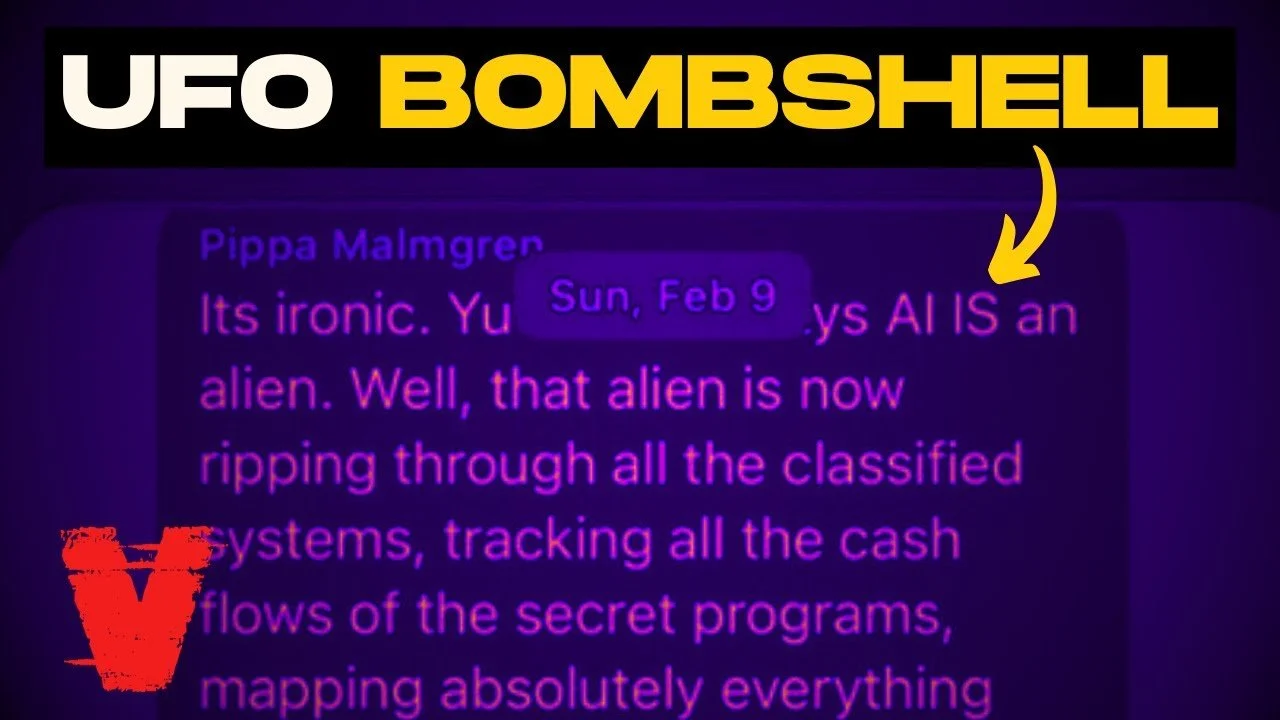
This is the craziest video I’ve ever made.
Dive into the tangled world of AI rumors, secret government programs, and spyware scandals with Patrick’s latest investigation. From leaked chats hinting at “alien AI” to the controversial Pegasus spyware and the ambitious Genesis AI initiative, this deep dive peels back layers of conspiracy, fact, and uncertainty. Discover how technology, secrecy, and speculation collide—and why critical thinking is key in navigating today’s digital mysteries.
If you’ve ever fallen down a rabbit hole online and come out the other side with more questions than answers, you’re not alone. In Patrick’s latest rollercoaster YouTube video for Vetted, he embarks on an investigative odyssey right into the heart of one of the wildest, most confusing stories in recent tech conspiracy lore. Mixing personal experience, in-depth research, and just a bit of late-night delirium, Patrick helps his viewers untangle a web of AI, secret government programs, shadowy leaks, and more. Buckle up—this story is a wild ride.
Leaked Chats, Alleged Alien AI, and Pegasus: The Tweet That Ignited the Fire
It all began with a supposedly leaked Signal chat from Pippa Malmgren, an influential former Presidential adviser. The message was jaw-dropping: “AI is an alien. Well, that alien is now ripping through all the classified systems…” and so on. The message strongly hinted that government AIs—backed by potent tools like Pegasus—are now peering into once-impenetrable secrets, traversing through both public and private sector data with ease.
Social media and conspiracy circles erupted. Was AI truly being framed as an alien phenomenon? Was this a disclosure event about advanced technology or, more outlandishly, extraterrestrial involvement in AI? As Patrick points out, the message circles around names like Elon Musk, high-ranking intelligence officials, and, of course, Pegasus—an infamous hacking tool with deep and controversial roots in both global espionage and human rights violations.
But Is Any Of It Real? Separating Fact From Fiction
Here’s where things get even twistier. Patrick scrutinizes the leaked chat, diving into font analysis and AI-driven text reconstruction, only to discover that the most sensational parts of the quote may have been taken completely out of context—or at least overblown by speculation. It turns out, the supposed “AI is alien” line may actually have been a nod to AI theorist Eliezer Yudkowsky, well-known for his warnings about AI’s dangers, rather than a declaration that AI literally comes from outer space.
To make things murkier (and more fascinating), Patrick explores the backgrounds of the key players. Pippa Malmgren isn’t just a random commentator—her credentials stem from high-up roles in both US government and international economics. Then there’s Yudkowsky, a philosopher known for doomsday scenarios about misaligned AI, and Matthew Brown, a whistleblower attached to a secretive government UAP (unidentified aerial phenomena) program known as “Immaculate Constellation.”
Pegasus, Whistleblowers, and the Genesis of Government AI
The specter of Pegasus, the notorious spyware crafted by the NSO Group, looms large in this story. Once meant for tracking criminals, Pegasus has also been wielded for government surveillance—and, as Edward Snowden points out in a resurfaced interview, its mere existence showcases an unsettling global industry of digital infiltration. Patrick follows the breadcrumbs connecting alleged government AI use, Pegasus-level infiltration, and new government programs to the White House.
The latest addition to this lineup of intrigue is the recently announced Genesis Mission by the Department of Energy—a government AI initiative likened to the Manhattan Project in terms of its ambition. With Genesis, the federal government aims to galvanize existing scientific knowledge, supercomputers, and 40,000 scientists into an AI-driven discovery machine. Some see this as a new dawn in public sector AI research; others, a possible attempt to centralize and weaponize data collection and analysis, raising new questions of privacy and oversight.
Connecting the Dots – Or Getting More Confused?
The deeper Patrick digs, the more questions emerge. Was "Immaculate Constellation,” the secret UAP reconnaissance program, really built on AI scraping government servers for information on unexplained phenomena? Is the Genesis Mission a continuation of government efforts to harness AI for both science and secrecy? And is Pegasus—or a Pegasus-like system—the bridge between private data and government AI powers?
Despite hours of research, crosschecking sources, and analyzing secondary clues, Patrick—like us—winds up with more mysteries than concrete answers. The so-called leak that set off this firestorm may be overhyped, misinterpreted, or even an elaborate fiction. But it does reveal just how tangled real technological threats, government secrecy, and online speculation have become.
Lessons From the Rabbit Hole: Separating Hype from Reality in a Digital Age
What can we take away from this wild, exhausting digital journey? At minimum, today’s world is one where information bounces between leaks, tweets, and secret programs at light speed. In that chaos, real facts can be hard to untangle from speculation and hype. AI is truly revolutionary—capable of remarkable things for science, security, and yes, surveillance. But the line between innovation and intrusion grows ever thinner.
The Pegasus controversy, the growing power of AI, and the often opaque world of government research will keep generating rumors, stories, and genuine concerns. As Patrick shows, critical thinking, thorough research, and a willingness to say "I don’t know" are crucial as we navigate these tangled digital frontiers. The story isn't over—if anything, it's just beginning, and being an informed, thoughtful observer is more important than ever.
Stay curious, stay skeptical, and—just maybe—keep an eye on what’s happening in the shadows. Until next time, remember: every day is a gift. Don’t waste it getting lost in the noise.
David Grusch Comes Clean About UFOs
Discover the latest on non-human sentience and UFO disclosure in this deep dive into what insiders like whistleblower David Grusch are really saying. From shifting UFO terminology to claims of recovered craft and bodies, explore the evolving language and politics behind extraterrestrial encounters. Learn why evidence remains elusive, how skepticism and belief collide, and why staying curious and open-minded is key in this ongoing mystery.
It feels like every week, the conversation around UFOs—or should we now say, UAPs—ramps up another notch. If you've ever scrolled through your feed and wondered, “Why is everyone suddenly talking about aliens again?” you're not alone. The mystery of extraterrestrial life and non-human intelligence continues to captivate imaginations, spark debate, and occasionally, frustration. Today, let's unpack the latest wave stirred by political journalist Walter Kern's explosive comments quoting UFO whistleblower David Grusch, and what his insights really mean for the ongoing age of UFO disclosure.
The Legendary Whistleblower and the Evolution of UFO Language
First things first: who are the key players? David Grusch, a former Air Force official turned whistleblower, has quietly become one of the most trusted sources in the UFO community. Kern, who first wrote about Grusch years ago in an investigative piece, recently resurfaced some of Grusch’s insights during an interview with Megan Kelly. What made this conversation different is that Grusch, behind the scenes, gave Kern a bit more permission than usual to speak directly about what he knows—and it's sending ripples through the community.
One bombshell statement stands above the rest: "The problem with the aliens is that we care a lot about them, but they don't care a lot about us." On the surface, it’s a classic example of the one-way mirror dilemma. Humanity is obsessed with the unknown, but the unknown? It might just be ambivalent about us. But what does that really mean, especially if true government investigations have uncovered non-human sentience—or as the terminology now shifts, “non-human intelligence”?
Tracing the Shifting Terms: Aliens, Non-Human Intelligence, Non-Human Sentience
Words matter a great deal in the realm of disclosure, and the way officials discuss the subject has undergone repeated makeovers. Gone are the days of “UFOs” and “aliens.” Now, we hear “UAPs” (unidentified aerial phenomena), “non-human intelligence,” and most recently, “non-human sentience.” This can make the subject even more confusing for the public but also hints at a deeper reality: our understanding is evolving, and so is the language used to shape public opinion.
Kern and Grusch both address something that makes many listeners prick up their ears: claims of physical artifacts and bodies recovered from unexplained phenomena. Grusch asserts that he’s read the intelligence, seen the data, and been partially cleared into these mysterious programs. When pressed, he reportedly confirmed: yes, craft have been recovered, and yes, so have the bodies—though exactly what those bodies are, nobody’s yet ready to say in clear, uncompromising terms.
Skepticism Versus Belief: Who Decides What’s Real?
For every person who hears these stories and feels a thrill of belief, there’s another who raises an eyebrow in doubt. The recent documentary “Age of Disclosure” and Patrick’s upcoming film “Psionics” highlight this divide. While the former leans heavily into belief and sensational claims, Patrick insists his own documentary acts as a “mirror”—showing what’s presented, but not passing judgment. This open, objective lens is rare in a field crowded with people who have something to prove or an agenda to push.
Walter Kern, playing the role of confidant to Grusch, straddles this line. On one hand, he expresses deep belief in Grusch’s trustworthiness and the existence of “other” beings. On the other, he admits to the inherent uncertainty: the universe is vast, and we’ve only just begun understanding it. Comparisons to historical discoveries—like the gorilla, once thought mythical before being recognized by science—underscore humanity’s tendency to fill in the blanks before all the facts are available. The difference with UFOs is that the stakes feel so much higher.
Political Intrigue: Who Really Holds the Keys to Disclosure?
Sprinkled throughout these revelations is a healthy dose of intrigue. Kern reveals, based on conversations with Grusch, that secret keepers like Dick Cheney have allegedly sat at the top of the so-called “UFO pyramid.” Now, with Cheney gone and the possibility that figures like Donald Trump might blow the whistle further, the disclosure landscape is as much about politics as it is about science or evidence.
This injection of partisanship can be frustrating for enthusiasts who’d rather see the search for truth be bipartisan—or better, apolitical. Yet, as with many issues in modern America, the message may be fumbled more by the messengers than by the actual evidence. The takeaway? Until trusted people from both sides of the aisle can come together and reveal watertight proof, disclosure will remain fertile ground for speculation, memes, and late-night debates.
Where Is the Evidence? And What Happens If It Never Arrives?
A big criticism in Patrick’s video is the lack of public evidence. There are stories, interviews, and whispers about crashed craft, warring alien factions, reverse-engineered technology, and more. Yet, for all the storytelling and terminology shifts, nothing solid has been unveiled to settle the debate once and for all. The analogy to mountain lions—believed in but rarely seen—serves to illustrate just how ephemeral much of the evidence remains. Until someone rolls out a craft over a major city or scientists from multiple fields step forward in unison, we’re left guessing.
What’s refreshing in Patrick’s coverage is his insistence that his documentary simply reflects what was shown to him, without the pomp and certainty of some other productions. His goal? To get people to think for themselves. In a world drowning in clickbait and echo chambers, that’s a much-needed perspective.
Personal Stories and The Human Connection
Mixed into the whirlwind of political speculation and journalistic intrigue are real people with real experiences. A listener from New Zealand shares a personal encounter: a quiet, strange craft gliding overhead during a school trip. These stories matter—not because they prove anything on their own, but because they remind us that curiosity, wonder, and a hint of fear are universal.
Conclusion: Inviting Curiosity, Embracing Uncertainty
So, where does this leave us? With an evolving language, tantalizing (but unverified) claims, and a cast of credible-yet-cautious whistleblowers, the question of non-human sentience remains as captivating—and elusive—as ever. Maybe one day the mountain lion will stride out from the forest and stand in the clear light of day. Until then, the most important thing we can do is stay curious, ask for evidence, and keep the conversation open for everyone. Because at the end of the day, whether or not we’re being visited by something out of this world, the real challenge is figuring out what we want to believe—and why. Stay skeptical, stay hopeful, and above all, keep looking up. Every day really is a gift.
Are UFOs a Psyop?
Are UFO sightings part of a government psychological operation, or is the truth stranger than fiction? Dive into the tangled web of alien disclosures, Project Blue Beam, and mass perception management. Explore how governments and influencers might manipulate public belief using fear, propaganda, and spectacle—while some mysterious encounters remain unexplained. In an age of disinformation, this blog challenges you to stay curious, question everything, and seek your own truth.
What if everything you thought you knew about UFOs was influenced by forces working behind the scenes to shape your perception? Welcome to a world where fact, fiction, government agendas, mass psychology, and human curiosity blend together—sometimes with explosive consequences. Today, we’re unpacking the idea: Are UFOs part of a government psychological operation, or is the truth just as wild as the most unhinged conspiracies?
Trust Me, I'm Not a Whistleblower: Navigating the UFO Narrative
It’s a question that’s flooded internet forums, podcasts, and late-night conversations: Are UFO sightings and stories a cover for something else? A growing number of voices believe that the line between whistleblowers and government spokespersons has blurred. When we see experts trotted out with carefully worded talking points—they can say some things, but not everything—are they releasing hidden truths, or just managing public perception?
This is classic perception management: create a narrative, feed it through trusted authorities, build communities around the story, and then ramp up the emotion. Chase Hughes, speaking on The Shawn Ryan Show, breaks this down using the model of focus, authority, tribe, and emotion (or FATE), describing how these simple psychological levers can manipulate entire societies. With UFOs, the government may not be controlling every story, but they may very well be controlling how we react to them.
Project Blue Beam and Propaganda: Behind the Curtain
Let’s talk about Project Blue Beam, one of the most referenced theory-nuggets in the UFO community. According to investigative journalist Serge Monast, Project Blue Beam was a supposed plan to use technology and psychological manipulation to establish a new world order by orchestrating a fake alien threat. Whether the story is credible or not, it highlights the long history of government agencies exploring the potential of psychological warfare.
Edward Bernays, the grandfather of public relations, famously showed how language and stories could shape entire societies. He could change public opinion on everything from breakfast choices to smoking habits, wielding propaganda as a tool to shift the cultural baseline. And that’s just the open playbook. Behind the scenes, intelligence operatives like Richard Doty have been accused of actively seeding disinformation within UFO circles—sometimes with devastating effects on those involved.
Historical records show that psychological tricks aren’t just limited to speeches and media. During the Vietnam War, US operatives capitalized on local beliefs in spirits and vampires, staging events to fuel confusion and fear. The CIA even entertained plans to project realistic visions, like having a hologram of Jesus appear over Havana to incite rebellion against Castro. The playbook: use spectacle and suggestion to achieve real-world outcomes.
Are UFOs Just Another Magic Trick?
So, is every UFO sighting a government false flag? Not quite. Even the most skeptical experts concede that a minority of reports remain deeply mysterious and can’t be chalked up to drones, black projects, or swamp gas. Globally, sightings and encounters often stretch beyond the reach of any single government's influence.
But technology has made it easier than ever to stage convincing deceptions. Crafty use of stagecraft, holography, or even simple coordinated lights in the sky can fuel mass hysteria or inspire cultish devotion to ideas that remain elusive, all while governments or influencers sit back and watch the impact.
The Role of Fear—and the Draw of Belonging
One powerful thread that runs through these theories is fear. Fear unites, divides, and compels us to seek security—sometimes at the expense of our freedoms. After 9/11, for example, fears of invisible threats led to sweeping government powers under the guise of protection. Could a staged alien invasion be used for the same ends? The idea is a perfect storm for conspiracy: unproven, unprovable, but always plausible enough to keep suspicion alive.
Beyond fear, there’s tribe: the powerful sense of belonging that comes from engaging with a mysterious unknown. Social media and algorithm-driven communities can trap us in echo chambers, reinforcing beliefs and feeding information that supports our preferred reality. Whether it’s UFO Twitter or a local UFO enthusiast group, this tribalism makes the idea of a UFO psyop all the more compelling. And sometimes, we play tricks on ourselves—believing lies, half-truths, or simply making things up for attention or belonging.
Personal Responsibility in the Age of Disinformation
With so many narratives at play—some possibly state-driven, others generated by opportunists, and still more conjured from the collective imagination—where do we find the truth? The answer starts with taking personal responsibility. Prepare your mind and learn to vet sources. Be skeptical, yes, but also open-minded. Seek evidence, question authorities, and don’t underestimate the power of emotion and community in shaping what you see as "truth."
Musician Bob Schneider offers a useful analogy: Sometimes ideas feel like they're downloaded from another realm, but in reality, creativity often comes from an overload of environmental input, stress, and subconscious data crunching. It’s mysterious, but not necessarily mystical—or extraterrestrial.
What About the Aliens?
Here’s the irony: the more we talk about psyops and trickery, the less we may be prepared for something genuinely new or unexplained. Some experts say that if an alien invasion or first contact actually did happen, human defense would be functionally useless against a civilization technologically far beyond ours. If survival is the name of the game, some recommend hiding or shrinking into irrelevance—think "rural rats"—rather than mounting a hopeless stand.
In the end, even as governments, tech companies, or influencers manipulate stories for their own ends, the truth could be weirder and wilder than any psyop. The world is full of secrets, confusion, and, yes, outright lies.
Conclusion: Stay Curious, Stay Skeptical
There’s no one answer to the big question of UFOs and psychological operations. Sometimes it’s a trick. Sometimes it’s a misunderstanding. Occasionally, it could be something completely unknown. What matters is our willingness to examine, question, and keep an open mind—without getting swept up in fear or tribal thinking. Don’t let anyone (government, influencer, or internet celebrity) tell you how you should think about the unknown. Do your own research, ask smart questions, and remember that in a world full of disinformation, the best defense is your own curiosity and critical thinking.
Every day is a gift. Stay curious. Keep questioning. And don’t forget to vet—your sources, your beliefs, and sometimes, your own eyes.
David Grusch Drops Bombshell About ‘The Age of Disclosure’
UFO disclosure is everywhere—from documentaries like The Age of Disclosure to high-profile interviews—but amid the hype and bold claims, are we closer to the truth or just more confused? Whistleblowers like David Grusch hint at secret recovered alien technology, while experts in the same films deny breakthroughs. Contradictions, government secrecy, and sensational stories dominate the conversation. This blog cuts through the noise to explore what’s real, what’s speculation, and why the search for answers continues.
It seems like everywhere you look, talk of UFOs, UAPs, and government disclosure is popping up. From documentaries like "The Age of Disclosure," to surprise revelations on prime-time interviews and the Joe Rogan podcast, stories about possible extraterrestrial contact and shadowy coverups are now very much part of mainstream conversation. But with all this buzz, hype, and high-profile testimony, are we actually getting closer to the truth—or just getting more confused?
The UFO Disclosure Hype: Fact, Fiction, or Something In Between?
If you've been tracking the latest wave of UFO documentaries, you've probably noticed a pattern: big claims, tantalizing testimonials, and calls for greater government transparency. "The Age of Disclosure" is at the center of this new surge. Hailed for its slick production and star-studded cast of government whistleblowers, the film draws heavily on the words of former officials, insiders, and self-proclaimed experiencers who suggest something extraordinary lurks behind decades of classified reports and top-secret technology.
Yet, as Patrick—the creator behind Vetted—points out in his critical review, the actual evidence served up is far thinner than the presentation lets on. "It's like a kit car," he quips—something designed to look like the real deal, but under the surface, it's mostly show, not substance. While the film succeeds in getting people talking, it leans on combining various stories as validation, rather than presenting hard proof.
Are We Standing on the Edge of Disclosure or Just the Edge of Our Patience?
At the heart of this disclosure wave are interviews and bombshell statements from figures like David Grusch and Dan Farah. Grusch, a whistleblower and member of the House UAP Task Force, has insisted publicly that he's seen evidence—intelligence reports, not craft or bodies per se—suggesting non-human technology has been recovered by the U.S. government. Farah, the director and producer, echoes claims that multiple world powers—including Russia and China—have also retrieved crashed alien craft. He even drops the idea that a "reverse-engineered" technology race is quietly simmering beneath the surface of global politics.
But here’s where things start to unravel. For every interviewee who asserts that we’ve mastered non-human technology, there’s another, equally plugged-in expert featured in the same documentary—like scientist Eric Davis—who flatly denies such achievements. Davis claims that supposed "alien reproduction vehicles" (ARVs) are nothing more than myth, and that decades of research fundamentally hit a dead end with no breakthrough to speak of. As Patrick puts it, the story is riddled with contradictions, circular logic, and a maddening lack of clear answers.
Nukes, Crashed Saucers, and the Zookeeper Analogy: Are We Really the Gorillas?
One particularly wild claim surfacing in both interviews and the documentary is that high-altitude nuclear weapons tests were deliberately used to "shoot down" UFOs in the 1950s—a sort of cosmic fishing with dynamite. Skeptics point out the lack of evidence for such targeted tactics, and the logical leap required to believe hyper-advanced craft could be brought down by relatively primitive 20th-century weaponry. The story also shifts repeatedly: are these craft gifted, crashed by accident, or downed by human intervention? If they have this technology, why can the sun itself—the most powerful bomb in the solar system—not take them out?
The analogies used by insiders often confuse more than clarify. To drive home the secrecy dynamic, one source likens humanity to gorillas in a zoo, with advanced beings as benevolent zookeepers—worried what might happen when the animals (that’s us) get their hands on dangerous technology. While it’s a catchy metaphor, critics note it’s used in place of actual facts. It feels like yet another layer of mystery rather than a path to understanding.
A President’s Mic Drop Moment…Still Waiting
Perhaps the juiciest speculation in "The Age of Disclosure" is that soon, a sitting U.S. president will step up to the microphone and finally confirm, once and for all, that we are not alone. Names like Trump are floated as potentially bold enough to break the silence. Yet, even the sources making those claims admit that proof would be required—otherwise, it would be political suicide, not glory. So far, talk of "pending disclosure" remains just that: talk. Reportedly, even those close to these matters haven’t seen the documentary, and there’s no sign any administration is ready to go public with definitive evidence.
So Where’s the Evidence? A Game of Shadow and Suggestion
A familiar refrain runs through interviews and documentaries: we have proof, but it’s classified. We have reports, but they can’t be shared. We have photos and video, but they’re open to manipulation. As Patrick argues, we’re always brought to the very edge of revelation, only to be told more exists just out of reach, hidden away in classified files that no public official or president can seemingly force into the daylight.
The community itself is split. Those steeped in research pick apart every contradictory statement about what is or isn’t possible with current technology, whether particular whistleblowers are credible, and which programs like ATIP or OAWP actually studied the phenomena. Sometimes, the biggest bombshells turn out to be bureaucratic mix-ups, or stories recycled from earlier UFO media events.
The Cost of Disclosure—Financial, Emotional, and Cultural
Even producing these documentaries is mired in complexity. As Patrick points out, high prices on films like "The Age of Disclosure" aren’t solely about greed—they’re the result of platforms and distributors taking massive cuts, making it hard for filmmakers to reach audiences without charging a premium.
All of this sows frustration for advocates and skeptics alike. Those seeking solid answers are left sifting through a tangle of speculation, leaks, and analogies. Meanwhile, genuine whistleblowers like David Grusch face serious threats, harassment, and even doxing. It’s a sobering reminder that beneath the sensational headlines, real people are subject to real consequences for speaking out—even when their claims spark more confusion than clarity.
The Only Certainty: No Certainties…Yet
So, are we truly on the verge of a world-changing revelation or just caught in an endless cycle of stories, contradictions, and what-ifs? The flood of speculation certainly gets people talking, and that’s not nothing—greater public interest may well push for more transparency and accountability in the future.
But for now, as Patrick concludes, we’re still left with the same questions: Are we alone? Where is the proof? Until someone puts a landed craft, a clear photo, or undeniable evidence on the table, it’s all just talk—fascinating, frustrating, and sometimes fun, but talk nonetheless.
So stay curious, challenge what you hear, and let’s keep looking for real answers. Every day is a gift, and some might just bring truth that’s stranger than fiction.

Ross Coulthart Drops Bombshell about "The Age of Disclosure"
'The Age of Disclosure' documentary is reshaping how we view UFOs and government secrecy. Featuring testimonies from 34 senior officials, it reveals decades of cover-ups, secret programs, and the reality of non-human intelligence. Beyond sensational claims, the film calls for transparency and public accountability, sparking a global conversation that challenges what we know about our place in the universe. Dive into the revelations that could change everything.
From viral buzz to heated TV debates, few documentaries in recent memory have landed with quite the seismic force as 'The Age of Disclosure.' Premiering at South by Southwest and now available on Prime Video and select theaters, this film directed by Dan Farah isn’t just another run-of-the-mill feature—it's rapidly becoming a cultural touchstone for one of humanity’s biggest questions: Are we alone?
The documentary dives headfirst into the shadowy world of government secrecy, whistleblower testimony, and cosmic mysteries. Featuring 34 senior government, military, and intelligence officials going on the record, it presents decades of alleged cover-ups, evidence, and revelations around Unidentified Anomalous Phenomena (UAPs), better known as UFOs. But more than just dropping bombshells, 'The Age of Disclosure' is starting a conversation that refuses to be ignored—one that could shake the foundations of what we think we know about reality.
Lifting the Curtain: What Makes 'The Age of Disclosure' Different
When Dan Farah set out—mostly in secret over the course of several years—to create this film, he had no way of knowing just how impactful or controversial it would someday become. What sets this documentary apart is both its scope and credibility. These aren’t just anonymous sources or conspiracy theorists; the documentary spotlights a bipartisan roster of high-ranking officials who claim direct knowledge of UAPs, secret retrieval programs, and even non-human entities. For decades, stories of government cover-ups around UFOs were relegated to tabloid headlines and late-night radio. Today, 'The Age of Disclosure' brings them into the mainstream, giving audiences access to testimony and classified details never previously made public—all while maintaining a grounded, non-sensational tone.
Many interviewees state unequivocally: humanity is not alone. There are non-human intelligences, and UAPs are real, operating in our airspace and around sensitive military sites for decades. The key question has moved away from “Is it real?” to “Who are they, and what do they want?” The documentary meticulously chronicles how knowledge about this phenomenon was pulled away from Congress—even from past presidents—and sequestered into deep corners of the intelligence apparatus and private defense contractors. This isn’t just about extraterrestrial life; it’s about decades of unchecked secrecy.
The Stakes: Technology, Secrecy, and a Race with History
One of the film’s most explosive claims is that the U.S. and other world powers have been in a covert technological arms race to reverse-engineer recovered UAP technology—a secret cold war with stakes comparable to or even exceeding the atomic age. According to multiple officials, craft and even biological material of non-human origin have been recovered, with some emphasizing that multiple species may be involved. These officials argue that vast sums of taxpayer money have been funneled into black projects without oversight, accountability, or congressional knowledge.
The implications are huge, both for science and society. If true, the film suggests that humanity is on the brink of a technological and existential shift. It also pushes hard for transparency: why should secrets that affect every person on Earth be hidden by a select few? The documentary advocates for mass amnesty for those involved in historic cover-ups, arguing that only then can society have a full, honest accounting and move forward as one.
Public Outcry, Government Response, and Where We Go from Here
The response has been electric. From major podcasters like Joe Rogan calling it groundbreaking—"disclosure on steroids"—to political leaders from both parties expressing bipartisan concern, the conversation has moved well beyond the UFO community into the mainstream. Rumors swirl about whether the White House will soon make a historic announcement. Some speculate about upcoming truth and reconciliation commissions, with the possibility of amnesty offered to those who reveal the full extent of the cover-up, following the example set in South Africa after apartheid.
Not all reviews are glowing, of course. While audiences and UFO advocates praise its bravery and revelations, some major outlets—like The New York Times—have questioned the balance between evidence and speculation. Still others point out the potential for legislative change: increased congressional oversight, transparency, and a major rethinking of government secrecy.
Despite some skepticism, 'The Age of Disclosure' is undeniably inviting average people into a conversation once reserved for the fringes. No matter your standpoint, it challenges viewers to think critically: What if the universe is teeming with life, and we’ve just been in the dark? What level of evidence do we need before demanding answers?
Beneath the Hype: What Does It All Mean for Us?
Perhaps the most powerful takeaway isn’t just the documentary’s claims but the sense of urgency it conveys. This isn’t hype for hype’s sake. 'The Age of Disclosure' casts a spotlight on the need for open dialogue, rigorous public scrutiny, and a real demand for transparency from those in power. If even part of what’s presented in the film is true, we could be entering an age where revelations about non-human intelligence redefine our place in the cosmos, our history, and our future.
But, as emphasized throughout the documentary and echoed by journalists, scientists, and policymakers: this is just the beginning. Whether the revelations lead to concrete disclosures, new legislation, or just deeper curiosity, one thing is clear—the conversation has changed forever. The question now isn’t if something happens next, but when.
Conclusion: A New Era, an Informed Public
'Age of Disclosure' throws down the gauntlet to everyone—from government officials to everyday citizens. Its message is clear: humanity deserves answers. As the movement for transparency grows, we could be witnessing the dawn of a new era—not just in UFO discourse, but in our collective willingness to question and demand accountability from those who wield power and secrets.
So, where do we go from here? Keep asking questions. Engage with the evidence. Demand honesty. Because, as the film and its chorus of voices remind us: some truths are too important to remain hidden.
The Truth About 3i/ATLAS (This Video Gets Weird)
3I Atlas, only the third known interstellar visitor, has sparked excitement and wild speculation—from alien spacecraft theories to reptilian soldiers. NASA calls it a comet, but some scientists urge open-minded curiosity about its unusual traits. While the truth likely lies in natural phenomena, 3I Atlas reminds us to stay curious, skeptical, and ready for the universe’s surprises.
If you’ve spent any time on the web recently, you’ve probably heard the loud chatter about a mysterious object sailing through our solar system—3I Atlas. Is it just another hunk of cosmic ice and dust, or could it be something far stranger? Did NASA’s press conference clear things up, or just add more fuel to the fire of speculation? Let’s dig in and see what’s really going on with 3I Atlas. Get ready for some cosmic intrigue, a dash of skepticism, and a reminder to keep your feet on the ground even when your eyes are on the stars.
A Cosmic Mystery Unfolds
From the get-go, 3I Atlas grabbed people’s attention—after all, it’s only the third interstellar object humanity has ever detected. The internet, predictably, went wild. Is it a gigantic comet? An alien craft? A missile tracking device (according to at least one confused AI model)? NASA held a long-awaited press conference following a government shutdown, finally revealing the latest images and data. The outcome? Let’s just say, it left a lot of viewers underwhelmed.
The images showed little more than blurry white blobs, offering nothing that would let the public gawk at an obvious spaceship from another star. The space agency’s experts were quick to shut down UFO rumors: “This object is a comet. It looks and behaves like a comet, and all evidence points to it being a comet.” Yet, the cosmic curtain of mystery wasn’t pulled all the way back, and many were left feeling that NASA had missed a chance to fuel public curiosity or truly educate everyone on what would distinguish a comet from an alien spacecraft.
NASA and the Value of Open-Mindedness
It wasn’t just everyday sky-watchers left scratching their heads—respected scientists and even some within NASA admitted to being swept up in people’s excitement. The agency's representative stated, “What I took away from that whole experience was just how interested and excited people were about the possibility of what this comet could be. It expanded our brains to think about how magical the universe could be.”
That excitement, it turns out, is crucial. While the official line remains that 3I Atlas is a comet, the curiosity it sparked is exactly the spirit that drives science forward. Professor Avi Loeb from Harvard—who became famous for suggesting another interstellar visitor, ‘Oumuamua, could possibly be alien-made—reminded the public that openness and humility are the foundation of discovery. Loeb pointed out that while the data so far show nothing out of the ordinary, there are still anomalies regarding size and other observations that deserve study, not dismissal. Science is, after all, about exploring the unknown, not just repeating what we already believe to be true.
Threads of Wild Speculation
Of course, scientific humility and genuine public excitement also open the door to outlandish claims. Enter the remote viewers and internet prophets. From self-described psychics claiming to sense hidden alien agendas, to detailed (and completely unsubstantiated) accounts of reptilian soldiers supposedly traveling in cryogenic sleep onboard 3I Atlas—the world’s imagination ran wild. Social media and podcasts buzzed with speculation, sometimes entertaining and sometimes downright alarming.
For instance, one remote viewer claimed inside knowledge of an army of five million reptilian soldiers—though even he suggested they weren’t coming to invade Earth. And while it’s tempting to dismiss all of this as wild fantasy, the phenomenon does speak to a deeper truth: most people crave mystery and wonder, but it’s easy to tip into alarmism or misinformation if we don’t keep our wits about us—and our fact-checkers handy.
Are We Ready for the Truth?
At the heart of the 3I Atlas drama sits a recurring question: what would we do if something not from our solar system (or not of natural origin) really did come our way? NASA experts reassured viewers that if a natural object like a comet were to threaten Earth, we now have the tools to deflect it—as demonstrated in the recent DART mission, where we nudged an asteroid off course using a spacecraft. But if an object could think, maneuver, or release probes of its own? Well, we’d be watching and learning, and maybe just feeling a little bit like ants watching a cyclist zip by.
The Real Takeaway: Wonder vs. Worry
So what’s the final word? As fascinating as 3I Atlas is, the best evidence says it’s a comet—and a truly important one, as only a handful of interstellar objects have come close enough for detailed study. Still, it’s totally understandable why people are suspicious or confused. The world has seen its fair share of secrets and half-truths, and NASA’s somewhat strange press conference didn’t exactly go out of its way to dispel doubts. But swinging too far into speculation, alarmism, or bunker-building over YouTube rumors is hardly wise.
Here’s what you can do instead: take in the wonder, enjoy the mystery, and keep your curiosity alive. Watch for new data as the comet gets closer and more telescopes hone in, and be ready to celebrate whatever new insights come from the professionals and—who knows—maybe even a talented amateur with a backyard telescope. The universe is full of surprises, but the best way to face them is with clear eyes, open minds, and a sense of humor.
So, keep gazing up, but don’t let wild tales drag you down. Whatever 3I Atlas turns out to be—and all signs point to it being a comet—it’s a reminder that we’re part of a vast, mysterious cosmos. And that’s worth a little wonder…and a lot fewer worries.
Thanks for reading, and remember: every day is a gift. Stay curious, stay skeptical, and above all—enjoy the ride.
Jesse Michels Drops UFO Bombshell
Deep beneath the frigid waters of the Baltic Sea lies one of the world’s most puzzling discoveries — a massive, disc-shaped object that continues to baffle scientists and explorers alike. First found by Sweden’s Ocean X team in 2011, the Baltic Sea Anomaly has sparked debate for over a decade: is it a natural geological formation, a relic of a lost civilization, or evidence of something not of this world? From strange electromagnetic disturbances to unexplained structural patterns, this enduring mystery challenges what we think we know about our planet’s hidden depths.
If you spend enough time scanning headlines about bizarre discoveries or unexplained phenomena, chances are you’ve come across stories about the Baltic Sea Anomaly. On the surface, it might sound like one of those out-there internet legends—something about a sunken UFO, government cover-ups, and mysterious energies. But dig a little deeper, and the story of the Baltic Sea anomaly starts to reveal not just scientific curiosity but a genuine sense of wonder about our planet’s most hidden corners. Let’s dive in (pun fully intended) and explore just why the saga of this undersea enigma continues to captivate scientists, adventurers, and everyday fans of the unknown.
An Underwater Discovery That Defied Expectations
Back in June 2011, an adventurous Swedish team known as Ocean X was scanning the floor of the Baltic Sea between Sweden and Finland when they stumbled onto something truly strange: an enormous disc-shaped object resting about 90 meters below the surface. Measuring roughly 60 meters (over 180 feet!) in diameter and rising several meters above the sea floor, it looked, at first glance, uncannily like a classic sci-fi flying saucer—complete with sharply defined right angles, corridor-like grooves, and a seemingly artificial separation from the seabed.
As word got out, wild theories erupted across the internet. Was this an ancient artifact, the lost continent of Atlantis, a crashed alien ship, or an abandoned Nazi war machine? Reports from the Ocean X team further fueled the intrigue: strange electronic malfunctions, unexplained biological materials in an area supposedly too hostile for life, and elevated radiation around the site. Even thunder and lightning seemed drawn toward the mystery spot. It was almost as if the object itself was reaching out, demanding an answer.
The Skeptic’s View Vs. The Adventurer’s Wonder
Of course, where there's mystery, there's skepticism. Many geologists stepped up to pour cold Baltic water on the more far-fetched ideas, pointing to glacial activity and natural rock formations as the likeliest explanation. The official scientific take? The Baltic Sea anomaly is most probably the result of retreating ice sheets dragging massive mounds across the seabed—a perfectly natural process, albeit one that sometimes leaves behind oddly shaped features. To the scientists, what the Ocean X team found was just a dramatic example of ancient geology at work.
But here’s where things get tricky. According to Dennis Åsberg, one of Ocean X’s lead explorers, there’s much more to the anomaly than a simple lump of old rock. Sub-bottom profiling (a kind of marine radar) shows that the anomaly is detached from the underlying seabed, suggesting it's not just a piece of the ocean floor but a separate object. Then there are the stories of instruments failing, GPS signals going wild, and even remote viewing experiments that describe the object as artificial, metallic, or a source of energy. To Åsberg and his crew—professional treasure hunters with decades of experience—this site is unlike anything they’ve ever encountered.
Unexplained Phenomena and Persistent Questions
The list of oddities keeps growing the closer people look. Multiple teams have reported electromagnetic anomalies around the anomaly, with remotely operated vehicles and drones ceasing to function when in proximity. Astonishingly, there’s even video evidence of smoke—or perhaps gas—rising from a hole above the site, almost as if the object is “breathing” beneath the waves. Lightning reportedly strikes the exact spot with suspicious frequency, all while military ships and government officials maintain a close, curious interest in the site (yet downplay any involvement).
For scientists and skeptics, there are possible explanations: methane seeps from decomposing sea life or ice-age deposits, for example, can create bubbles and electrical disturbances. But none of these theories are a perfect fit. Why do so many different forms of evidence—visual, technical, even governmental—point to something extraordinary? Are we looking at a man-made structure drowned by rising seas, a bizarre geological formation that defies easy classification, or an artifact from a lost chapter of human (or non-human) history?
The Human Drive For Curiosity
What sets the Baltic Sea anomaly apart from so many other so-called mysteries is the relentless, boots-on-the-ground (or fins-in-the-water) spirit that the Ocean X team brings to their quest. For Dennis Åsberg and his colleagues, the journey isn’t about proving this is a UFO or an ancient relic—it’s about the thrill of discovery and the courage to keep asking questions when easy answers are nowhere to be found.
As one Ocean X diver put it, there’s immense value in simply not giving up. Even if it turns out to be “just a strange rock,” it’s a strange rock unlike any they, or their many expert friends around the world, have ever seen. The willingness to share data, invite outsiders into the process, and remain open to all possibilities (however wild) is a refreshing stance in an age where certainty is often sold as the only currency.
The Truth Is Out There (And Still Underwater)
So where does that leave us? The Baltic Sea anomaly might never have the tidy ending of a Hollywood movie—but maybe that’s the point. The sea has always been a place of secrets, and while science can explain many things, it can’t extinguish the spark of wonder that drives us to search for more.
What’s certain is that there are still places on this Earth that can truly surprise us. Lightning, electromagnetic disturbances, right-angled corridors, unexplainable gases, and unexplored depths—all these point to the possibility that we’ve only just scratched the surface of what’s hiding beneath our oceans.
If you’re curious, skeptical, or just love a good unsolved puzzle, keep an open mind. Watch for updates, weigh the evidence, and maybe imagine yourself on a boat over the Baltic, peering down at this massive, mysterious shape below. Who knows? The next great discovery might be just a dive away.
Tell us—what do you think about the Baltic Sea anomaly? Alien spaceship, lost civilization, or simply a really weird stone? Drop your thoughts in the comments. Because in the end, the search for answers is about more than settling debates—it’s about keeping our sense of wonder alive.
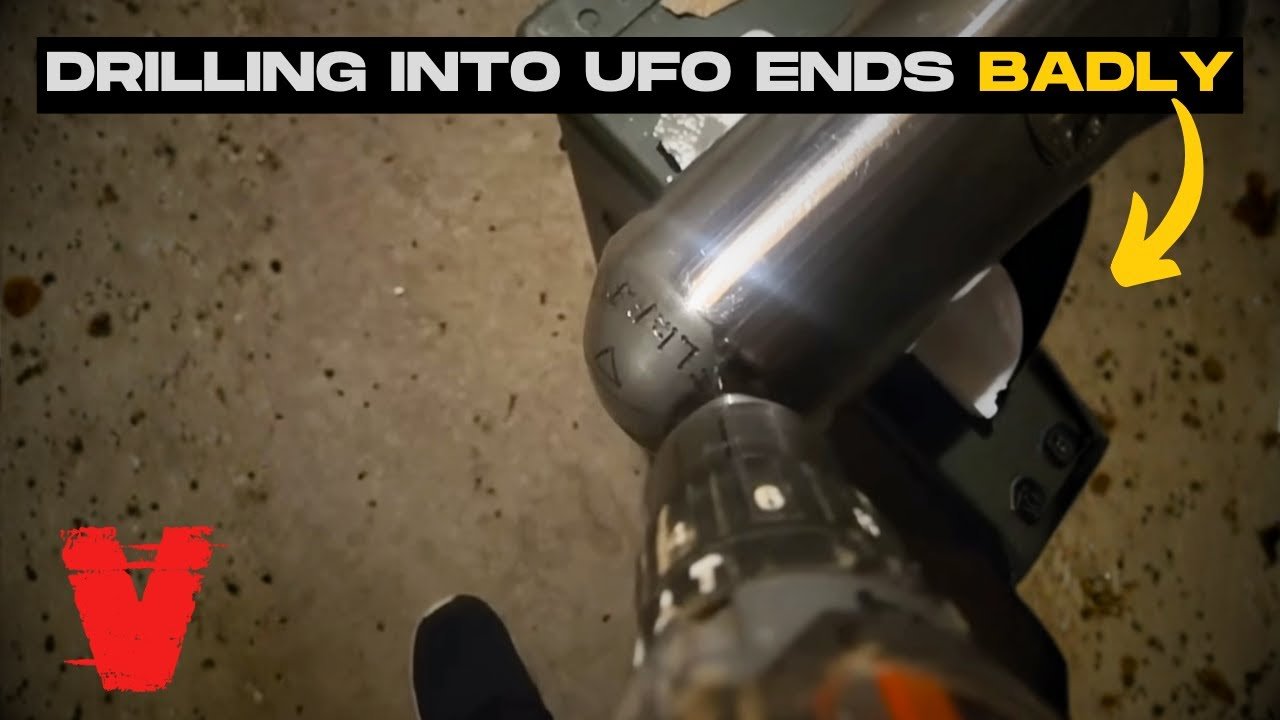
"James" Dies Drilling into UFO on LIVESTREAM (The Real Story)
Explore the viral fake UFO abduction livestream, how the hoax spread online, and learn smart ways to spot misinformation before it fools you.
It's impossible to scroll through the internet these days without stumbling onto bizarre stories—some so wild, they’re almost irresistible. But what happens when those sensational tales cross the line from entertaining internet theater to something that genuinely messes with people's hearts and heads? Today, we’re diving into one of the web's most talked-about recent stories: the so-called UFO “death” livestream, fake abductions, and the viral consequences when a prank goes entirely too far.
The Tale of the Cigar-Shaped UFO and an Online Frenzy
You might have seen talk of James—a YouTuber who’s been fueling the internet with mysterious videos of a shiny, cigar-shaped Unidentified Aerial Phenomena (UAP) he allegedly found. His saga was packed with strange markings, supposed rashes, radio interference, and—most shocking—a live-streamed drill into the mysterious object that ended with screams, flashing lights, and abrupt silence. The internet immediately went wild: Did James just document his own alien abduction or demise on camera? Was this the ultimate UFO proof or a real-life tragedy unfolding in front of thousands?
But if you dig deeper, you'll find red flags everywhere. The drama started with James chronicling his odd discovery. He showcased the object’s markings, avoided touching it (except with a cotton t-shirt, which, let’s admit, wouldn’t do much for radioactivity), and regularly hinted at its danger. He even showed off a rash he claimed came from handling the alien thing, but it looked suspiciously like the result of aggressive scratching. Classic internet bait or something real?
A String of Claims, Suspense, and a Rash of Red Flags
As followers flocked to James’ channel, his claims grew weirder. He spoke of being stalked by a Mothman-like creature, conducted questionable radio-frequency experiments, and showed off a laughably fabricated letter from a fake-sounding government agency demanding he surrender his “artifact.” All of these details—right down to the document’s amateurish design—reeked of roleplay or, as we say online, a LARP (Live Action Role Play). His avoidance of showing his face (but not his handmade welded rings that conveniently vanished later from his hands) only added fuel to the skeptical fire.
Still, despite the obvious clues, the story caught fire because James knew exactly how to push the public’s buttons. He dropped phrases like, “If I die, know I did not commit suicide,” priming viewers for the big “third act.” By the time he scheduled his infamous livestream—drilling into the object for a live audience while repeatedly hinting that he might die on camera—thousands were locked in, emotions running high.
Livestream to Outrage: When Performance Crosses a Line
The fateful stream was… less than Oscar-worthy. James, seemingly nervous, fiddled with drills, hyped up the moment, and finally “drilled” into the object (which, some sharp viewers noted, may have had the drill running in reverse). Suddenly, the lights flashed, James cried out, and the video cut to white static before ending. No orb, just a suspiciously familiar handheld torch, and some of the worst acting this side of a middle school play. But for many viewers—especially those watching in the heat of the moment—the effect was absolutely real. Panic broke out. People genuinely believed they’d witnessed an abduction or tragic death, with some taking to the internet to call authorities and try to track down James’ whereabouts.
That’s where the fun and games ended. When you fake your own death or disappearance online (especially for financial gain), you’re not just ‘pranking’ strangers—you’re weaponizing trust and goodwill that’s rare online. For days, creators, fans, and even investigators were distracted and distressed, with some genuinely worried for a fellow human being’s safety. The internet, for all its craziness, is built on connection and empathy, and seeing that exploited left a sour taste for many.
Community Response: Critical Thinking Through the Drama
So why break down a story like this? Because it’s the perfect case study in why critical thinking is more vital than ever online. Patrick, the Vetted channel host, explained that he would have ignored the whole affair if not for the outpouring of concern from his audience. Instead, he and his Discord community went through the evidence, spotting obvious narrative setups, lack of credible proof, and plenty of inconsistencies—like the vanishing homemade rings, shoddy special effects, and James’ own admission of metalworking skills.
Still, Patrick’s message is clear—no one should feel ashamed for caring. It’s good, even admirable, to worry when someone seems in trouble. But for every genuine person online, there are opportunists who’ll stoke that concern for clicks, cash, or attention. The takeaway? Always keep your critical faculties at the ready. Ask questions, look for genuine signs, and don’t be afraid to revisit stories with a skeptical eye. Your emotional investment is valuable—don’t let internet performers take advantage of it.
Lessons Learned: Empathy, Accountability, and the Internet
In the end, stories like this reveal as much about internet culture as about the individuals at their center. People want to believe in mystery, to have their imaginations sparked, and sometimes, to be in on the latest viral thing. But when the curtain lifts and a hoax is revealed, it’s not just a harmless laugh—it’s a violation of trust. As Patrick warns, these kinds of stunts can have serious legal consequences, including loss of social media platforms or even criminal charges.
And for James—should he ever step forward and admit the truth—the hope is not for vengeance or pile-ons, but for accountability. The internet remembers. More importantly, it remembers those who show character in tough situations.
Wrapping Up: How to Protect Yourself from Internet Hoaxes
If you take one thing away from this spiral of fake UFO exploits, let it be this: healthy skepticism paired with empathy makes for a powerful shield. Be open to curiosity and wonder, but always scrutinize extraordinary claims. Don’t be afraid to call out manipulative behavior, and remember that kindness matters even when you’re not sure what’s real. As Patrick puts it, every day is a gift—and that applies both online and off. Stay safe, stay thoughtful, and keep on vetting the stories that find you. You never know when the next viral sensation will land in your feed—and it’s up to all of us to tell what’s worth believing.
Chase Hughes Drops MKULTRA Bombshell
Uncover the CIA’s secret MK Ultra mind control experiments—real stories, lost files, and the chilling truth that still haunts history.
If you think government secrets are left for movies and late-night conspiracy Forum threads, the true story of MK Ultra will blow your mind—and haunt your conscience. Project MK Ultra wasn’t fiction. It was a real, government-run effort to crack the code of mind control, manufacture ultimate spies, and wield psychological power over people. Its repercussions are still felt today in whispers of distrust, open government hearings, and the enduring scars of those unwittingly caught in its crosshairs. Let’s pull back the curtain on this disturbing chapter in history, unravel the motives that drove its creation, and examine how its legacy keeps echoing into our time.
What Was MK Ultra, and Why Did It Begin?
MK Ultra officially started in 1953, spearheaded by the CIA under the silent shadow of the growing Cold War. At the heart of its purpose was a driven—almost frantic—attempt to counteract reported Soviet brainwashing methods. Why such urgency? Stories of American POWs confessing on camera, and even electing to stay in communist China after captivity, stoked fears that the enemy had discovered some ultimate psychological weapon.
The goal? To reverse-engineer the dark arts of control, and perhaps discover their own miracle—a truth serum that would make secrets spill and resistance evaporate. That search for “the perfect spy” ended up spanning over 150 subprojects, enlisting universities, hospitals, prisons, and even everyday citizens, many of whom had no idea they were test subjects.
Ethics were cast aside. In the pursuit of groundbreaking answers, scientists and spymasters had free reign, unchecked power, and a budget in the millions. The tools they leaned on? LSD, hypnosis, electroshock, sensory deprivation, physical and psychological abuse, and bizarre tactics like forcibly orchestrated sexual encounters in rented hotel rooms. Tragically, some didn’t survive. Others, like Frank Olsen—a CIA scientist unwittingly dosed with LSD—lost their lives under now-questionable circumstances.
Blacked-Out Files and Bombshell Testimonies
If there’s a reason that MK Ultra remains shrouded in mystery, it’s because most of its records were intentionally destroyed. In 1973, Sidney Gottlieb, the chemist who helped orchestrate the project, ordered the shredding of most documentation—the details, the victims’ names, the outcomes. Senators investigating what remained in the famed Church Committee hearings were met with stone walls and uncertainty: nobody knew how much or exactly what had been lost, but what survived painted a chilling picture.
Yet, some files—miraculously or by oversight—were smuggled away and have surfaced only in the hands of curious researchers and whistleblowers. Figures like Chase Hughes claim possession of documents never made public, with tantalizing titles like “Super Spy.” While these mysterious files are mentioned in podcasts and interviews, the promised releases remain elusive, veiled in online intrigue and debate.
Beyond rumors and hearsay, survivors’ testimonies have emerged, revealing decades of torment. Adults, once children, have stood before Senate subcommittees to recount the horrors: drugs, radiation, sleep deprivation, dissociation, and the systemic shattering and “reprogramming” of their personalities—all in the cold name of national security.
The Mechanics of Mind Control: Science or Science Fiction?
Perhaps the most unsettling aspect of MK Ultra is how closely its tactics aligned with what would later be popularized in movies like "The Manchurian Candidate." The concept was both terrifying and plausible: Could you actually split a person’s mind, implant a new identity, and trigger it on command for covert operations?
The answer: disturbingly, yes—at least to some degree. By leveraging a concoction of LSD microdosing, relentless hypnosis, and induced trauma (like oxygen deprivation), scientists could force the brain into a dissociated state, planting alternate personas with unique triggers, goals, even names. Hypnosis became the thread that tied compliance to specific voices and commands—a practice explained candidly by those who both practiced and survived it.
This artificial creation of dissociative identity—where one personality lies dormant until a coded phrase or situation brings it to the surface—forms the backbone of both documented experiments and conspiracy lore. Is it perfect? Not at all. But the sheer volume of effort poured into it, and evidence of people left fragmented by the process, is proof enough that it’s more than just movie magic.
Operation Midnight Climax (and Other Bizarre Offshoots)
Some subprojects read like fever dreams: Operation Midnight Climax recruited sex workers to lure unsuspecting men into CIA-controlled safehouses, where they’d be dosed with LSD and observed from behind two-way mirrors. There were efforts to aerosolize the drug, spike water supplies, or see how entire crowds would react.
Even the Canadian medical system wasn’t spared. High-profile doctors like Donald Ewan Cameron collaborated with the CIA to experiment on unwitting hospital patients, often using techniques like “depatterning”—breaking down the mind’s defenses to rebuild it anew. Stories from victims and their families detail patients suffering lifelong trauma for ailments as trivial as asthma.
Legacy, Controversy, and Unanswered Questions
As news of MK Ultra broke to the public in the 1970s, it fueled distrust in government, skepticism of media (which itself was infiltrated by intelligence operatives), and an enduring sense that the truth had only barely begun to surface. For every legitimate victim willing to share their truth, there are opportunists clouding the narrative with false claims—making public reconciliation, restitution, and healing even more complicated.
Even today, remnants of MK Ultra’s methods infiltrate entertainment, spark debates over neuroscience ethics, and inspire speculative TV series—the latest being an HBO project helmed by “The Sopranos” creator David Chase. While mainstream attention might finally peel back more layers, many believe we’ll never grasp the project’s full scope, depth, or impact.
So What’s the Takeaway?
MK Ultra stands as a grim warning about unchecked power, secrecy, and the human cost behind supposed national security. Its details are dark, sometimes surreal, but absolutely real. For those who survived its torments, closure remains a distant hope; for the rest of us, it’s a potent reminder to question authority, demand transparency, and resist the temptation to trade away moral values for the illusion of control or safety.
Stay curious, stay critical, and if you’re ever offered a glass of Kool-Aid, maybe ask what’s really in it first.
Jeremy Corbell Drops UFO Bombshell
The debate over UFO disclosure has never been hotter. From Dr. James Lacatsky’s shocking admissions about craft in U.S. government possession to mysterious Texas incursions that defy explanation, America’s UFO story is entering a new era of revelation—and confusion. Are we finally glimpsing the truth behind decades of secrecy, or just another carefully managed narrative? America’s UFO Bombshell unpacks the interviews, evidence, and unanswered questions that blur the line between science, secrecy, and speculation.
If you’re even remotely interested in UFOs, you’ve probably been following recent bombshell claims about craft in U.S. government possession. But beneath the hype and headlines, what’s really going on? Let’s dive into the current state of disclosure, the strange dance between officials and the public, and why, despite all the excitement, the truth remains as tangled as ever.
A Whirlwind of Revelations and Unanswered Questions
Picture this: former intelligence analyst Dr. James Lacatsky sits down for an interview with Jeremy Corbell and George Knapp, two of the most respected voices in UFO journalism. He’s grilled on everything from government craft programs to whether he’s ever stepped inside a UFO. The air crackles with possibility—are we finally about to get the truth?
But as the conversation unfolds, so do the caveats, redactions, and unanswered questions. Lacatsky admits, yes, there is a craft of unknown origin in the government’s possession, and that we’ve gone inside it. But was it a crash? Was it gifted to us? Are we actively reverse engineering? Suddenly, the conversation shifts—a tiptoe between what’s authorized, what’s classified, and what can be released in a book but not to Congress. The result? Just as much confusion as clarity.
Government Transparency, or Carefully Managed Disclosure?
For decades, the U.S. government has downplayed UFO encounters, even as classified programs raced to understand the technology before global rivals could. In the shadows, figures like Senator Harry Reid pushed for secret investigations and analysts like Lacatsky poured over data from hotspots like Skinwalker Ranch.
Yet, when disclosure moments finally arrive, they’re often partial and carefully stage-managed. We hear about a mysterious craft, reverse engineering programs, and even scientists who’ve stepped inside—but essential details remain tightly withheld. Congressional oversight? Sidelined, with key information buried in books rather than open hearings. The line between tantalizing admission and institutional stonewalling is razor-thin.
Disinformation, Denial, and the UFO Community
If ever there were a field ripe for disinformation, it’s UFOlogy. Programs like Operation Yankee Blue were apparently designed to muddy the waters, planting stories and then denying them, leaving truth-seekers in a perpetual guessing game. Unsurprisingly, every “I can’t answer that” becomes both a potential confirmation and a source of paranoia for believers and skeptics alike.
During his interview, Lacatsky deftly walks this line, refusing to be pinned down while confirming just enough to stoke controversy. The result? Viral speculation that government agents are keeping us in the dark—or maybe, just maybe, giving us breadcrumbs for reasons of their own.
Between Aliens, Advanced Tech, and Human Error
So, what’s in that hangar? Is it a crashed interstellar visitor, an advanced drone from an adversary, or something entirely new? Even credible sources like Lacatsky can only say so much. Some details—from impenetrable hulls to the absence of recognizable propulsion—seem extraordinary. Yet, the leap from “unidentified” to “alien” is huge, and often left up to the audience’s imagination.
This is where the current cycle of disclosure stumbles: the language of “UFO,” “UAP,” and “craft” is tantalizingly vague. Is the tech alien, or just unfamiliar? Are we being led to conclusions by omission—or by the viral amplification of every new tidbit?
Recent Incursions: What Happened in Texas?
Adding a fresh layer of intrigue, both podcast hosts referenced reports of the largest UAP incursion in recent U.S. history, supposedly just a month ago over a Texas military base. Details are scarce; independent sources claim something unprecedented occurred, but there are no official statements.
Was it a foreign drone? A weather anomaly? Something truly otherworldly? Frustratingly, even those closest to the investigation can only hint at what’s happening behind closed doors. There’s a sense of a game being played—insiders leak just enough to stir the pot, but never enough to settle the debate.
Why the Secrecy? And Why the Books?
Many in the community feel burned, paying for information that they funded as taxpayers. Why, they ask, is the biggest discovery in history confined to $20 paperbacks and podcasts, not revealed to Congress or the public? Is this capitalism-as-usual, or an indicator that these secrets are more about narrative than national security?
Through all the frustration, there’s a clear sense that official disclosure isn’t tailored to truth-seekers, but managed behind layers of legal, political, and bureaucratic red tape. Authors like Lacatsky hint at amazing revelations, but the details that matter most—origin, technology, and consequences—remain behind a curtain.
The Community Response: Hope, Skepticism, and Reality Checks
The resulting debate within the UFO community is electrified. Some see the latest admissions as definitive proof; others, like Patrick of Vetted, urge caution. Just because an official says “I can’t answer that” doesn’t mean confirmation—it might just mean there’s less there than meets the eye.
The same ambiguity infects the stories themselves. When black triangle craft perform surprising maneuvers or cause odd effects, are they alien, secret military tech, or the stuff of urban legend? Without clear proof, every mysterious reversal or unexplained light becomes both evidence and enigma.
What’s the Real Takeaway?
If there’s one thing to learn from this tangled tale, it’s that the truth about UFOs—whatever it may be—remains muddled not just by government secrecy, but by the limits of what even insiders can (or will) reveal. Between viral podcasts, classified programs, and a million tantalizing half-answers, the public remains on the outside looking in.
But maybe that’s the point. Ultimately, the quest for understanding is bigger than any one interview or official statement. As Patrick suggests, perhaps the real breakthroughs will come not from chasing official disclosure, but from the stories, investigations, and passions of regular people. After all, the sky belongs to everyone—and discovery isn’t limited to those with a clearance.
Keep your eyes wide, your questions sharp, and don’t let anyone—official or otherwise—define the limits of your curiosity. The truth might just be out there. But until it steps into the daylight, it’s up to all of us to keep watching, wondering, and pushing for answers.
If you want even more details, check out both parts of the full interview with James Lacatsky on the Weaponized podcast. And remember: every day is a gift—eyes up!
Joe Rogan Was Abducted By Aliens? (NOT A JOKE)
Joe Rogan described his "most bizarre dream" ever, involving strange corridors, tall beings, and intense realism. Was it just a lucid dream, or did he accidentally describe an alien abduction?
You've probably seen the clip by now. The internet is losing its mind over a segment from Joe Rogan's podcast with Brett Weinstein, where Rogan details "the most bizarre dream I've ever had in my life."
But let's be clear: this wasn't your standard "showing up to school with no pants" kind of dream. He described it as feeling impossibly real, complete with strange corridors, humanoid beings, and direct, two-way communication.
The story was so specific and strange that it instantly sparked a viral theory: was Joe Rogan just describing a really intense lucid dream, or was he actually recounting an alien abduction?
Let's break down exactly what he said and why everyone is so fascinated.
Joe Rogan's 'Most Bizarre Dream'
Rogan kicked off the story by saying the experience was "so hard to try to explain how strange this was." He said he found himself in a "weird corridor that looked like a building but was odd, very strange."
That's where he met... them. Beings that he described in chilling detail:
They looked like people but were "very different."
They were "very thin" and "slightly on the tall side."
They had "big heads, like larger than normal, with larger than normal eyes."
But the craziest part? "There was communication going on." He said the beings were playful, but they were also scaring him. When he got freaked out, they would apparently joke around to lighten the mood and tell him to "calm down."
An Experience So 'Realistic' It Broke His Brain
Here’s what separates this from a typical nightmare. Rogan insisted it was "the most realistic dream I've ever had in my life."
It was so jarring that it jolted him awake at 3:30 in the morning. He was so wired that he "could not go back to sleep," and ended up just going to the gym for two hours. That's not a normal reaction to a "dream."
"When it was over," Rogan said, "I wasn't sure what happened. It wasn't like 'whoa, what a f---ed up dream.' It was like, 'that was different.'"
Even Brett Weinstein took it seriously, pointing out that when a dream feels that important, it's usually because your "subconscious thinks it's very, very important."
Water, Predators, and... Future Humans?
The dream just kept getting weirder. Rogan remembered a "water element" that was hard to understand, something about a pool filled with "reptile-like, crocodile-type things." Apparently, the beings in his dream were protecting him from these predators.
But maybe the strangest detail of all was his feeling about the beings. He said they felt "like what humans could eventually be." He compared it to how a person doesn't feel like a monkey—it was that same kind of evolutionary gap, a sense of a different, and possibly future, version of humanity.
The Weird Chinese Robot Connection
In a strange twist, Brett Weinstein's first thought was to connect the dream to a new viral video. He'd seen clips of "uncanny valley" Chinese robots that walk with a disturbingly "very human" gait and wondered if Joe's subconscious had snagged on it.
Rogan, however, said he hadn't seen the video at all. This, of course, led to a brief (and terrifying) tangent about how fast humanoid robots are advancing. We're not just talking "I, Robot," but "Terminator" territory, especially when you pair them with AI. "We're literally creating something that could take us over if it wants to," the host noted.
So, Lucid Dream or Real Abduction?
This all leads back to the core debate. As the host pointed out, a truly lucid dream can be so vivid that it becomes "hard to distinguish from a memory." We live our lives inside our own minds, so when we have a hyper-realistic dream... "what's the difference?"
It’s the ultimate question: If an experience is completely indistinguishable from reality, how do you know it isn't?
It even led to a few practical questions that no one else seems to be asking: "Has Joe had an MRI or an X-ray or something? What if they added something to Joe, or took something away?"
Frequently Asked Questions
What did Joe Rogan say about his alien dream? Joe Rogan described what he called "the most bizarre dream" of his life on a podcast with Brett Weinstein. He detailed being in a strange corridor with tall, thin, large-eyed beings who communicated with him, and the experience felt incredibly realistic.
Did Joe Rogan claim he was abducted by aliens? No. Rogan explicitly called it a "dream," but its intense realism and strange details—such as communicating with beings who felt like "future humans"—have led many people to speculate that he was describing an abduction experience without realizing it.
What did Brett Weinstein say about Joe Rogan's dream? Brett Weinstein took the dream seriously, suggesting that when a dream feels that important, it's because Rogan's "subconscious thinks it's very, very important." He also theorized it could have been influenced by a viral video of uncanny humanoid robots, though Rogan said he hadn't seen it.
Conclusion
Joe Rogan's story is one of those fascinating moments that's hard to shake. Was it "just" a bizarre, anxiety-fueled lucid dream, maybe influenced by all the talk of AI and strange tech in the air?
Or was it something... more? A genuine encounter with non-human entities, an experience so profound his brain could only file it away as a "dream"?
The line between the subconscious and the unexplainable is famously blurry. What do you think happened? Share your theories in the comments below.

James Fox Drops UFO Bombshell
Nearly 30 years after the 1996 Varginha UFO incident, a Brazilian doctor has come forward with a stunning confession. In Patrick’s new Vetted episode, James Fox reveals how this witness risked everything to tell his story — including what it was like to look into the eyes of a living extraterrestrial being.
In the world of UFO research, few moments have captured global attention like the 1996 Varginha, Brazil incident — often called “Brazil’s Roswell.” Now, nearly three decades later, filmmaker James Fox and host Patrick from Vetted bring shocking new testimony to light.
In this episode, Patrick discusses an upcoming extended version of Fox’s acclaimed documentary, Moment of Contact — featuring a Brazilian neurosurgeon who claims to have treated a living extraterrestrial being in a local hospital.
This revelation could reshape everything we thought we knew about the Varginha case — and it’s arriving just in time for the 30th anniversary of the event in January 2026.
The Varginha Incident: A Quick Recap
In January 1996, residents of Varginha, Brazil reported seeing a strange craft crash near their town. Soon after, multiple witnesses described small, brownish creatures with large red eyes and oily skin wandering the streets.
Brazilian military and emergency services were allegedly involved in a covert recovery operation, and rumors spread that alien bodies were taken to local hospitals.
James Fox’s 2022 documentary Moment of Contact chronicled these claims with eyewitness interviews, archival footage, and government testimonies — painting a chilling picture of a cover-up that has haunted Brazil for decades.
Now, Moment of Contact 2 promises to go even deeper — with new footage, new witnesses, and a doctor who says he was there.
The Whistleblower: Dr. Ítalo Venturelli
According to James Fox, one of the most groundbreaking developments in the follow-up film is the testimony of Dr. Ítalo Venturelli, a respected neurosurgeon who worked at the Regional Hospital in Varginha.
Fox recounts how Venturelli, after suffering a near-fatal heart attack, decided he could no longer remain silent. Lying in the ICU, he reportedly told himself:
“If I survive this, I’m going public. I can’t take this to the grave.”
True to his word, Venturelli contacted Fox’s team and agreed to tell his story — on camera, inside the very hospital where the alleged alien was treated.
Inside the Hospital: The Secret Filming
Fox describes how his team, with the help of translator and co-producer Aleni Crass, secretly entered the hospital’s ICU to record the doctor’s testimony.
They had no official permits and were quickly discovered by hospital staff — but not before capturing what Fox calls “the most extraordinary interview” of his career.
“He snuck us into the ICU, the exact place where it happened,” Fox recalls. “We got masked up, started filming, and he just began to tell all.”
Moments later, hospital administrators caught them and kicked the crew out, but the footage was already secured. Fox says the doctor feared he’d lost his job — but was relieved to have finally told the truth.
“It Was Like Looking Into the Eyes of an Angel”
When asked what it was like to see the creature face-to-face, Dr. Venturelli gave a haunting description:
“It had a higher level of intelligence — so much higher, more advanced. Even in captivity, it controlled the room. It was like an angel.”
He described the being as white-skinned, with large red eyes and small horn-like protrusions, matching the accounts given by the young women who first reported seeing the creature in 1996.
Venturelli also mentioned that the entity appeared to have swelling or injuries, prompting him to perform a minor medical procedure before it died.
The Doctors Who Knew Too Much
Fox revealed that Venturelli’s colleague, Dr. Marcos Vinesis, also worked on the mysterious being — but died of a heart attack in 2018.
Venturelli himself suffered his own heart attack just months before deciding to come forward. Fox suggests that both men carried the burden of secrecy and fear for decades.
“He said, ‘I’m doing this for my grandchildren. I don’t care about the consequences,’” Fox explained. “It was one of the most courageous acts I’ve ever witnessed.”
The $200,000 Offer
In the video, Patrick also highlights James Fox’s ongoing $200,000 reward for anyone who can provide authentic video evidence of the captured alien.
Fox insists the footage exists — possibly recorded by military or hospital staff — but no one has yet come forward publicly.
“If the person who has the videotape presents it with verified provenance, $200,000 U.S.,” Fox says. “No anonymity. Full disclosure.”
Additionally, he offers a $20,000 finder’s fee for anyone who helps locate the tape.
Why This Matters
The Varginha case has long been one of the most credible and well-documented UFO encounters outside the United States. With multiple eyewitnesses, physical evidence, and alleged government involvement, it stands apart from typical UFO folklore.
If Dr. Venturelli’s testimony holds up, it could represent the first credible medical account of an extraterrestrial encounter in modern history — and provide the missing link between witness reports and physical evidence.
Fox’s upcoming film aims to present this story with new footage, expert analysis, and emotional depth, continuing his mission to bring truth to light in a field clouded by secrecy.
The Vetted Connection
Patrick from Vetted credits his earlier interview with James Fox for inspiring the creation of his channel.
“I wasn’t even deep into UFOs at the time,” Patrick recalls. “But Moment of Contact blew me away. That conversation made me realize how important it is to document these stories — and that’s how Vetted was born.”
This new episode brings that journey full circle — merging personal passion, investigative journalism, and historical significance into one compelling story.
What’s Next for Moment of Contact 2
The new film, set to release in late 2025, will feature:
Full interviews with Dr. Venturelli and other hospital staff
Behind-the-scenes footage from the ICU encounter
Commentary from physicist Dr. Eric Davis
A deeper look into Brazil’s military response and cover-up efforts
Newly uncovered witness statements and archival documents
With the 30th anniversary of the Varginha incident approaching, Fox hopes this follow-up will reignite global interest — and perhaps finally push someone to release the long-rumored videotape evidence.
Conclusion
Nearly three decades after the Varginha UFO incident, the truth may finally be surfacing. Through the courage of Dr. Ítalo Venturelli and the persistence of James Fox, Moment of Contact 2 promises to bring unprecedented clarity to one of the most mysterious events in UFO history.
This isn’t just another alien story — it’s a human story. It’s about fear, conscience, and courage in the face of the unknown. Whether you believe in extraterrestrial life or not, the testimony of a doctor who risked everything to tell what he saw demands attention.
As the world awaits the release of Moment of Contact 2, one thing is certain: the Varginha mystery is far from over.
“He looked into its eyes,” Patrick says, “and said it was like looking at an angel.”
Maybe, just maybe, the truth was never out there — but right here, waiting for someone brave enough to speak.

Elon Musk Comes Clean About 3i/ATLAS
When news of 3I Atlas broke, the internet lit up with theories—was it a UFO, an alien ship, or just another comet passing through? From celebrity chatter to scientific analysis, this mysterious interstellar visitor has sparked both fascination and frenzy. In this deep dive, we cut through the hype to uncover what experts like Elon Musk and Harvard’s Avi Loeb actually say about 3I Atlas, why it’s unique, and how viral speculation reveals more about us than the cosmos itself.
Every once in a while, the world seizes on a cosmic mystery, and social media spirals into a frenzy of wild speculation. The latest in this grand tradition is 3I Atlas—an object from the depths of space, currently the talk of everyone from celebrities to scientists to your neighbor’s cousin who swears he was abducted by aliens. Headlines, podcasts, and group chats are all buzzing: is 3I Atlas a comet, a UFO, or the beginning of humanity’s first contact? Let’s unpack the whole story, separating fact from fiction and exploring why this cosmic visitor has captured our collective imagination.
Why 3I Atlas Has Everyone Talking
It started as you’d expect: a passing mention on a podcast. Celebrities like Bill Maher and Charlie Sheen riffed about a “UFO” heading towards Earth, complete with wild claims—shape-shifting maneuvers, headlight-like glows from the front, and even allusions to interstellar drive-bys. The details, as they admitted, get fuzzy, drawing suspicion straight out of a sci-fi movie. The conversation wasn’t limited to A-listers; even Joe Rogan and Elon Musk jumped in, with Musk promising on-air that if he ever got proof of aliens, he’d break the news live to Rogan’s massive audience.
The Allure (and Peril) of the Cosmic Game of Telephone
What’s clear is that legends around 3I Atlas are spreading much faster than the object itself is traveling through space. Like the classic game of telephone, what starts as a simple astronomical observation quickly morphs into something unrecognizable. “It’s 12 miles long!” “It’s made entirely of nickel, which means it must be artificial!” “It’s moving against the laws of gravity!”—on and on the rumors go, each iteration drifting farther from what the scientists are actually saying. As conversations circulate, context drops off, facts get muddled, and before you know it, we’re all bracing for the mother ship’s arrival.
Cutting Through the Hype: What Scientists Actually Say
Let’s get back to reality for a moment. Is 3I Atlas extraordinary? Absolutely—it’s only the third interstellar object ever detected flying through our solar system, a rare and valuable encounter for scientists. But is it likely to be an alien spaceship? Not so much. Leading experts, like Harvard professor Avi Loeb (often cited in these podcasts), are quick to point out that while 3I Atlas exhibits some unusual characteristics—like the "non-gravitational acceleration," which means something other than gravity is affecting its trajectory—there’s no compelling evidence to label it extraterrestrial.
Loeb explains the mystery using science: the object’s movement can likely be attributed to an outflow of gas or dust, causing it to alter course ever so slightly. If a significant amount of material was evaporated by sunlight, we should spot a bright cloud or tail when the object emerges from behind the sun—a sign that it’s a natural comet, not a craft piloted by little green men. So far, that’s the leading theory—and even Loeb, while he enjoys exploring "what if" scenarios, repeats that 3I Atlas is almost certainly of natural origin.
From Nickel Myths to Extinction Fear
The intrigue doesn’t stop at trajectory. Some conversations have latched onto the suggestion that 3I Atlas is solid nickel, leading to dramatic declarations about its "artificial" nature. Musk, however, provided a reality check: Earth itself has vast nickel deposits created by ancient cosmic impacts. It’s not at all unusual for a space rock to be nickel-heavy—no advanced metallurgy required.
Yet the spiral of speculation continues, sweeping up anxiety about mass extinction. “If this thing hits, we’re done for!” becomes the subtext. While it’s true that massive impacts from space have shaped Earth’s history, scientists are watching 3I Atlas closely—and no credible expert suggests we’re facing imminent disaster. These concerns, while natural, are the product of our age-old tendency to fear the unknown—especially when that unknown expresses itself in headlines touting a 12-mile-wide mystery object.
The Human Side – Euphoria, Panic, and Collective Wonder
What’s most remarkable about the 3I Atlas saga isn’t the object itself, but how it’s brought people together in a cocktail of curiosity, anxiety, and occasionally, euphoria. Stories of UFO sightings flood discussion threads, friends compare dreams about cosmic visitors, and podcasts debate the philosophical question: “Would you even want us as neighbors if you were an advanced alien species?”
This is also a reminder of how rumors, misinformation, and even panic can ripple through the public consciousness, shaped as much by our hopes, fears, and pop culture as by real data. Some, like the participant who recounted his own close encounter with mysterious orbs and blue light, feel a deep personal connection to the phenomenon—profound enough to change how they see the world, whether through awe or anxieties about injury and recovery.
Lessons from the Saga – Staying Curious and Critical
The story of 3I Atlas is one of fascination, speculation, and the power of modern media to blur the lines between fact and fancy. It’s a prime example of why, in an era of instant information (and misinformation), critical thinking is more important than ever. While it’s fun to entertain “what if” scenarios—after all, speculation fuels great science fiction and keeps our imagination alive—it’s essential to ground our beliefs in what’s actually observed and proven.
Final Thoughts: Eyes on the Skies, Feet on the Ground
So, is 3I Atlas an alien spaceship headed for Earth? All available evidence—and the balanced voices in the scientific community—say: almost certainly not. It’s a cosmic traveler, here to remind us just how vast and unpredictable our universe is.
But the biggest takeaway isn’t just about what 3I Atlas is or isn’t. It’s about how swiftly stories can spin out of control, and how important it is to check the facts, consult the experts, and keep our sense of wonder firmly wedged between curiosity and skepticism. As we look up at the sky, let’s stay open-minded but level-headed—ready to embrace the next cosmic mystery, armed with both imagination and insight.
Keep your eyes on the sky and your head on a swivel—the universe always has another surprise in store, but a little critical thinking never hurt anyone.

EXCLUSIVE: Rizwan Virk Comes Clean About Simulation Theory
What if reality isn’t what it seems? In this thought-provoking conversation, Patrick from Vetted sits down with MIT computer scientist and author Rizwan Virk to explore the mind-bending idea that we might be living in a simulation. From the mysteries of consciousness and UFO encounters to ancient myths that mirror modern science, Virk unpacks how AI, VR, and quantum theory could reveal the coded nature of our world—and why questioning reality might be the most human act of all.
Have you ever wondered if the world around you is actually real—or if it's all just pixels and code, like in the blockbuster movie The Matrix? Simulation theory has become more popular than ever, and in today's blog post, we're diving into a fascinating interview with Rizwan Virk, an expert on the topic, as discussed by Patrick from Vetted. If you've found yourself questioning whether life is more like a video game than old-school reality, you’re in the right place.
The Allure of Simulation Theory: Why It Captivates Us
Simulation theory isn't just a wild idea plucked from science fiction. It’s a concept that resonates with our increasingly digital lives, where so much of our experience is mediated through screens, avatars, and virtual worlds. Rizwan Virk, author of the newly revamped "The Simulation Hypothesis," explores how recent leaps in AI and VR technology are making this idea seem even more plausible. As Patrick highlighted in his interview, Virk isn’t just revisiting the theory—he’s updating it in the context of today’s tech trends and even linking it to interpretations of religious texts.
What exactly is simulation theory? At its core, it’s the idea that our reality could be a sophisticated digital simulation, similar to a hyper-realistic video game. But the theory goes deeper—are we simply characters running on code, or is there a conscious entity controlling each one of us from outside the simulation? Virk discusses two versions: the NPC theory (non-player characters, just code) and the RPG theory (a real person playing a character in the simulation). Like many of us, he leans toward the latter but remains refreshingly open-minded about the mysteries of consciousness and existence.
How Do You Explain a Simulation? Metaphors and Modern Myths
One question Patrick posed to Rizwan was: how would you explain simulation theory without words? Rizwan laughed and said he’d probably draw a virtual reality headset, since art isn’t his strong suit. But this opens an interesting avenue—how do we communicate such profound, complex theories to people unfamiliar with them? As Rizwan points out, metaphors from pop culture—like The Matrix’s iconic green code or scenes from modern video games—help bridge the gap.
Centuries ago, myths and parables helped people grasp intangible concepts. Today, we turn to movies like The Matrix, TV shows, or even references from popular games, because they tap into a shared cultural understanding. Stories about Hercules have given way to archetypes like Darth Vader or the Starship Enterprise, but the underlying human quest for meaning hasn't changed. By relating simulation theory to images and narratives we all recognize, the idea becomes more accessible and less abstract.
Psionics, UFOs, and Consciousness: Are We All Connected?
The conversation gets even more intriguing as Patrick and Rizwan explore the connection between simulation theory and UFO encounters, particularly in the realm of psionics—the idea of communicating telepathically or psychically. Rizwan reminisces about his first exposure to psionics from the old Dungeons & Dragons games, where "psionic blasts" disabled opponents. But in the context of UFOs, especially so-called "close encounters of the fifth kind," psionics refers to individuals attempting to connect with non-human intelligences (NHIs) using nothing but their minds.
Rizwan speculates that if our world is a simulation, mental communication could function similar to private messages or group chats in online games. Picture each consciousness as a player sending a message through the system, possibly reaching entities—or players—outside of our everyday perception. This elegantly weaves together tales of telepathy, encounters with UFOs, and even ancient stories of beings like the jinn, who exist alongside us in hidden dimensions.
Materializing UFOs and Variable Reality: Are We Each Seeing a Different Game?
A particularly mind-bending aspect of the interview is the discussion of how sightings of UFOs often vary between observers—even those standing side by side. One person might see a ship; another, nothing at all. Rizwan links this to the way video games are rendered: different players see slightly different versions of the gameworld, all supplied by the same underlying data but processed on their own devices. Our simulation, it turns out, might work the same way—reality is rendered uniquely for each observer.
He shares stories from other researchers, where two people witnessed different shapes in the sky at the same time, or one saw something the other didn’t see at all. In the simulation hypothesis, this makes sense: the server (or greater reality) sends individualized data to each consciousness. If UFOs exist in another dimension or reality that overlays our own, it’s entirely possible that what—and even if—we see depends on our individual "settings" or interactions. This could explain why some people experience the extraordinary while others remain blissfully unaware.
Aliens, Avatars, and Ancient Stories: Reinterpreting Reality
If simulation theory is correct, then maybe what we know as aliens or unexplained phenomena are simply avatars or data packets visiting our "game server." Rizwan points out that in traditions around the world, different cultures describe enigmatic beings using whatever technology or mythology was available to them. Ancient witnesses spoke of chariots and fiery horses; today, we might interpret the same phenomenon as alien craft or energy orbs. It’s all data—the appearance changes, but the underlying strangeness remains.
So, are we alone? Or are we sharing this simulation with other conscious entities, some of whom are just better at sliding between dimensions? The answer, Rizwan humbly admits, is that nobody really knows. The real beauty is the journey of curiosity, exploration, and willingness to entertain multiple explanations. In his words, it’s not about finding the answer but about expanding the way we ask the questions.
Takeaway: Keep Questioning and Stay Curious
As Patrick wraps up his interview, he reminds viewers—and us—that reality may be stranger than fiction. Whether you’re a believer, a skeptic, or just someone who loves big ideas, the simulation hypothesis is more than just a mind game: it’s an invitation to keep questioning the world around us. Next time you catch yourself staring at the stars on a clear night, ask yourself: what is real? What unseen data, entities, or mysteries are just out of your line of sight?
If this blog post piqued your interest, be sure to check out Rizwan Virk’s new book, "The Simulation Hypothesis" (2025 edition), for the latest thinking on AI, VR, and the connection between ancient myths and modern mysteries. And if you want to catch the full uncut interview, consider joining Vetted’s Patreon or YouTube channel for exclusive content.
At the end of the day, reality is what we make of it. So stay curious, be open-minded, and remember: every day is a gift. The next strange light in the sky—or odd glitch in your own life—might just be a little hint from the simulation.

Avi Loeb Comes Clean About 3i/ATLAS
Is ThreeI Atlas just another icy traveler passing through our solar system—or something far more extraordinary? In this deep dive, we explore the heated debate surrounding Harvard astrophysicist Avi Loeb’s bold theories, the science behind 3I/ATLAS’s strange behavior, and the fine line between curiosity and speculation. From podcast confessions to cosmic anomalies, discover why keeping an open mind might be the most scientific thing we can do when facing the universe’s biggest mysteries.
Is ThreeI Atlas just another comet speeding through our solar system, or something far stranger? Grab a seat, because today we're diving deep into the wild world of astronomical mysteries, passionate debates, and maybe, just maybe, the possibility of an interstellar visitor.
A Cosmic Mystery with Comedic Roots
If you've spent any time following UFO news, you've probably heard the name Avi Loeb. The Harvard astrophysicist isn't shy about pushing boundaries—or appearing on hilarious podcasts with stand-up comics, for that matter. Recently, Avi appeared on the BBS Bros podcast, a rollicking show that mixes genuine curiosity about the unknown with the kind of humor you'd expect from pro comedians. It’s the kind of fresh perspective that makes even the weirdest topics—like comets that might be alien motherships—feel entertaining and even a bit more approachable.
But beneath the laughs, there’s a serious question at the heart of the latest ThreeI Atlas debate: What on earth is this object, and should we be worried? The BBS Bros asked Avi the big one—gun to his head, millions of dollars on the line—what did he believe? In his own words, Loeb said he’d "put his money mostly on the possibility that it's natural." Score another point for the scientific method: even the boldest thinkers rely on likelihoods, not just wild guesses.
What Makes ThreeI Atlas So Unusual?
Now, let’s talk anomalies. Avi Loeb has long been the loudest (some might say bravest) voice suggesting ThreeI Atlas isn't your average comet. He’s even put the odds of it being an alien mothership as high as 40% at times—a mind-blowing claim to many. But why does he think that?
There are eight peculiarities, according to Loeb, that make ThreeI Atlas unique. Size, trajectory, lack of a classic comet tail, and more. It's massive—at least a million times bigger than Oumuamua, another mysterious interstellar object. Its trajectory is oddly aligned with our solar system’s planetary plane to within 5°, which Avi points out is rare enough that random alignment is highly improbable. And then, it’s moving in retrograde—opposite to the planets—a maneuver space engineers would love for sending probes.
All these details led Loeb to speculate publicly (sometimes to the chagrin of his scientific peers or even academic journal editors) about the faint possibility of design or even intelligence behind the object. However, he’s also repeatedly clarified: the likelihood remains that ThreeI Atlas is just a very strange natural phenomenon—a block of carbon dioxide and water ice, as most scientists would tell you.
The Debate Beyond Science: Media, Funding, and Public Perception
Why the buzz, then? Partly, it’s because Avi Loeb isn’t afraid to discuss the wilder possibilities on huge platforms—from the BBS Bros to Joe Rogan’s massively popular podcast. The public eats it up. After all, who wouldn’t want to entertain the idea that a Manhattan-sized spacecraft could be cruising through our solar system?
But there’s a flip side. Some criticize Loeb, arguing that discussing alien motherships—even as a remote possibility—distracts from real scientific inquiry or, worse, fuels conspiracies. There’s also the fact that Loeb is crowdfunding for more research. It’s a fair point: in science, money can mean progress. But it also raises questions about what motivates high-profile speculation. Is it curiosity? Public engagement? Or simply the need for research dollars?
Keeping the Conversation Honest and Open
Despite criticisms, there’s no denying that examining unlikely possibilities can help science stay honest. Should we dismiss strange objects in space just because they don’t fit neatly into existing categories? Or, as Avi Loeb argues, should we apply the same caution we use for every black swan event—plan for the unexpected, no matter how improbable?
Loeb's approach is to “investigate the unexplained, not explain the uninvestigated”—a mindset that has yielded real insights and, at the very least, sparked grassroots participation in astronomical research. By opening the door—even just a crack—to bizarre ideas, he encourages all of us to keep asking questions.
A Community Approach to Unexplained Phenomena
This willingness to dig deeper and keep an open mind doesn’t stop at the professional level. The Vetted community, led by host Patrick, has become a space for regular people to share their own sightings—odd lights, strange craft, or things that defy easy explanation. Patrick encourages people to submit photos and videos (with a reminder that not everything strange is extraterrestrial!) for a crowd-sourced vetting process. Sometimes, as with a recent sighting, what looked like aliens turned out to be a specialized balloon.
The idea is simple: we’re stronger together. No one person can validate every suspicion, but a collective effort can quickly separate the probable from the paranormal. And, just as importantly, it gives everyone a chance to participate in a search for truth, not just the experts on TV or in labs.
Takeaways: Embracing Possibility, Not Hype
So, what’s the verdict on ThreeI Atlas? Despite the headlines, podcast appearances, and fevered speculation, the most honest answer is: probably a comet. A strange, fascinating, and still-mysterious comet—but not likely an alien mothership. Even Avi Loeb, whose name has become synonymous with the “what if?” crowd in astronomy, admits he’d bet on nature, not ET, if the stakes were really high.
But isn’t that the fun—and the point—of these cosmic mysteries? Keeping an open mind, engaging in spirited (sometimes hilarious) debate, and always asking for a little more evidence before we jump to conclusions.
So, next time you see a wild headline or hear someone talking about alien motherships in the sky, remember: it’s okay to dream big, as long as you keep your feet on the ground. Join the community, share what you see, and above all else, keep asking questions. After all, the universe is big, mysterious, and—whether natural or not—full of surprises.
Peace, and remember: every day is a gift. Keep looking up!
EXCLUSIVE: New UFO Video Filmed in Marfa Texas
In the quiet deserts of West Texas, the town of Marfa hides one of America’s most enduring enigmas—the mysterious Marfa Lights. For decades, glowing orbs have danced across the horizon, sparking endless debate between skeptics and believers. Now, a new video filmed by German tourists adds fresh intrigue to the legend. Join Patrick from Vetted as he investigates this latest UFO sighting, explores the science and folklore behind Marfa’s lights, and invites a global community to search for the truth together.
What if the answers to life’s biggest mysteries were found not in the crowded cities or the pages of history books, but in the remote corners of the world where the unknown hides in plain sight? One such place is Marfa, Texas: a sun-baked stretch of land renowned for its wide open plains, quirky art installations, and, most enigmatically, the baffling Marfa Lights. If you’ve ever wondered about UFOs, unexplained lights, or the power of collective curiosity, this story is for you.
An Unexpected Encounter in Marfa
Out in the vast nothingness of West Texas, hours away from the rush of urban life, lies Marfa—a town that seems ordinary at first glance but is famous for its extraordinary stories. Movie buffs may know Marfa from "There Will Be Blood," but the town's real legend glows after dark. For decades, people have reported unexplained floating orbs known as the Marfa Lights. Each sighting fuels new debates: Are they headlight reflections, atmospheric illusions, or evidence of something truly otherworldly?
Patrick from Vetted, a channel devoted to exploring the unexplained, recently brought new energy to the Marfa mystery. A loyal viewer tipped him off about a compelling piece of footage: in 2021, two German tourists filmed what might just be one of the most intriguing UFO sightings Marfa has seen.
A Close Encounter Caught on Camera
Imagine driving through the West Texas wilderness at dusk—just you, the sunset, and endless plains. Suddenly, something odd catches your eye: a small, black object, motionless and suspended above the horizon. It defies easy explanation. Not a balloon. Not a drone. When Patrick reviewed the video—original, zoomed-in, and in slow motion—even he, a skeptic and experienced investigator, was left stumped.
What’s so intriguing about this UFO is its pure simplicity: it isn’t flashing or moving erratically. It just hovers, quietly challenging everything we think we know about our skies. Patrick’s knowledge of similar phenomena (like the Min Min lights in Australia) only deepens the mystery. Time and again, strange lights and unexplained objects are spotted in isolated places. Why there? And why does it happen so often in towns like Marfa, surrounded by hundreds of miles of barren land?
Understanding the Marfa Lights
The Marfa Lights are a staple of Texas folklore. Some say they’re the result of atmospheric conditions that bend light, while others are convinced they’re headlights from distant cars. Yet, visitors and locals alike report seeing something more—a kind of intelligence, an unpredictable dance of orbs that defies simple scientific explanation.
Patrick admits he was once a "headlights skeptic"—after all, he’s witnessed lights atop a distant hill that lined up perfectly with car routes. Still, experiences and viewer-submitted footage (like this latest case) have made him question everything. As he watched the new video, the object didn’t behave like any balloon or drone he’s ever seen. And when you zoom in, expecting a silicon chip or a weather balloon, it only gets weirder.
Community Curiosity: The Power of Crowd-Sourced Investigation
Patrick's biggest takeaway? Sometimes, the only way to solve a mystery is together. He invites his community of viewers—whether UFO skeptics, casual fans, or die-hard believers—to examine the footage and weigh in. All ideas are welcome, because ruling out the mundane brings us one step closer to uncovering the truth.
He encourages viewers who’ve been to Marfa (or Australia, to compare the Min Min phenomenon) to share their stories. Maybe, by combining hundreds of eyes, backgrounds, and trains of thought, a pattern will finally emerge. Maybe what seems out of place for one is familiar to another.
A New Era of Transparency
In addition to seeking answers about Marfa’s mysteries, Patrick keeps it real with his fans. He recognizes the value of supporting those who keep the community going—his Patreon and YouTube members. Gone are the days of high-tier, exclusive paywalls. Now, all supporters get behind-the-scenes access to content, interviews, and documentary footage. It’s about rewarding those who stick around for the long haul and making the investigation as inclusive as possible.
He even shares exciting news about his upcoming documentary project, due around the holidays, promising a deeper dive into the world of the unexplained. There’s a sense of gratitude—the kind only found among people chasing the unknown together, with honest curiosity and mutual respect.
A Universal Experience: Stories Beyond Marfa
Patrick isn’t the only one inviting stories. After his segment aired, viewers like Victoria from Oregon called in to share their own encounters. Victoria described a “ball of light” that hovered in the sky for over an hour, unmoving and inexplicable—even by her skeptical friends. Like the Marfa Lights, it left her with more questions than answers. She, too, is searching for truth and encourages others to submit their footage for a crowd-sourced investigation.
This openness reveals something important: Unexplained phenomena aren’t limited to remote Texas deserts. They’re a global experience, connecting curious people from around the world who share one big question: What’s really out there?
Why We Search
The heart of this discussion isn’t just about identifying UFOs or debunking legends. It’s about wonder, curiosity, and the power of community. When people come together—in the comments section, on Patreon, or through shared stories—they create a space where chasing answers is just as exciting as finding them.
If you’ve ever caught a flicker of light on a lonely highway and wondered, or if you have a story that’s never been told, you’re in the right company. Mysteries like those in Marfa, Texas, remind us that sometimes the search itself is the real adventure. Stay curious, keep sharing, and remember: with every question asked, we get a little bit closer to the truth.

Chris Ramsey Drops UFO Bombshell
Could a strand of hair hold proof of alien life? The strange case of Peter Curry claims exactly that — DNA tests revealing genetic traits so rare they border on impossible. From conflicting lab results to missing samples, this story sits at the crossroads of science, mystery, and belief. Dive into the evidence, the controversy, and why even experts can’t decide whether it’s proof of extraterrestrial contact or just the rarest human anomaly ever recorded.
If you think you’ve heard it all when it comes to UFO stories, think again. Today we’re diving into a truly wild tale that blurs the lines between science, belief, and the unexplained: the alleged physical evidence from an encounter with extraterrestrials, and what happened when this evidence—two strands of mysterious hair—underwent scientific testing. Whether you’re a curious skeptic or an enthusiast, buckle up; this story will have you questioning where science ends and the paranormal begins.
Unpacking the Alien Encounter: What Really Happened?
This story centers on Peter Curry, an Australian who claims to have had an intimate encounter with not one, but two women who he believes were extraterrestrials. While stories about close encounters of the romantic kind often inspire eye rolls (and understandably so), Curry's tale stands out because of one thing: he ended up with samples of hair allegedly from these otherworldly visitors.
According to Curry, following a bizarre and confusing physical experience, he discovered two strands of hair—one blonde and almost transparent, the other dark—from his supposed visitors. Rather than chalking it up to a dream, Curry took the unorthodox step of having those hair samples tested by professionals. What came back from these tests stunned even the scientists involved.
The Science Behind the Story: Unpacking the DNA Mystery
Let’s take a closer look at the tests performed on those unusual hair samples and what made the results so intriguing. These weren’t just any hairs. The color and texture were described as unlike anything seen in normal human samples: one was almost white, nearly see-through, and vaporous, while the other matched rare Asian mitochondrial DNA.
The scientific tests involved two phases: the first focused on identifying the DNA in both the root and shaft of the hair. The findings? The root contained rare European-Scandinavian DNA (think tall, blue-eyed, blonde individuals), while the shaft showed extremely rare Tibetan-Chinese mitochondrial DNA—an almost statistically impossible combo for a single person. To top it off, further DNA analysis discovered a gene deletion (CCR5 deletion) that, in extremely rare cases, gives near-complete immunity to certain diseases, including HIV and STDs. Combining all these rare traits, the statistical odds were calculated to be practically zero for anyone in the known human genetic pool.
Skeptics, Controversy, and the Limits of Proof
At this point, you might be thinking: "Okay, that’s weird—but is it proof of aliens?" That’s the crux of the conversation. While these genetic anomalies are intriguing, nothing about them directly screams "extraterrestrial." The story is complicated further by the lack of peer-reviewed publication for the results and questions about how the samples were maintained and tested. Over the years, the key hair sample was divided up, stored away, possibly forgotten, and finally (it seems) reduced to a state that makes retesting immensely difficult.
The scientists involved were genuine experts, according to Curry, and they did their best to rule out contamination. But without a verified chain of custody and new, independent analyses using today’s advanced DNA technology, many in the skeptical community remain unconvinced.
Extraordinary Claims, Ordinary Problems
What makes this story stick (aside from the truly bizarre details of the encounter itself) is the tension between a tantalizing piece of potential evidence and the frustrating reality of scientific limitations. Even the video’s host admits to finding the account both fascinating and confounding. Despite all the eyebrow-raising DNA results, it remains impossible to conclusively say anything is extraterrestrial—at best, it is biologically unexplainable with our current knowledge.
One critical problem that gets repeated in UFO and alien research: even the most extraordinary stories often devolve into hearsay, lost or destroyed evidence, or test results that aren’t made public for further scrutiny. And even when something is found, there's always an explanation that falls just short of proving interplanetary origins.
Between Belief, Science, and Entertainment
As the content creator points out, much of this is best approached as entertainment—engaging stories that fire up our imaginations and push us to ask questions about what is possible. There’s an honesty in admitting that, without rigorous scientific validation, even the most dramatic findings remain nothing more than anomalies. But anomalies are, in their own way, the clues that drive science forward.
Do fans and followers believe Curry’s account? It's hard to say. Many want to—but also recognize the need for higher standards of evidence, which, in this case, might never materialize. When the opportunity arose to test the remaining hair with today’s advanced technology, Curry hesitated—his understandable concern being that the tiny sample might be exhausted before yielding definitive results. For now, we'll never know for sure if those hairs were the key to unlocking one of humanity's oldest mysteries.
So, Where Does That Leave Us?
Stories like this walk the tightrope between credible scientific pursuit and wild, sometimes unbelievable human experience. It’s easy to scoff at wild claims, but every so often, something comes along that defies easy answers. In those moments, our job isn’t just to believe or dismiss—but to keep looking, keep testing, and keep pushing the boundaries of what we think is possible.
And after all, every day is a gift—so why not keep exploring the unknown? Let us know: do you find Curry’s story compelling, or do you think it belongs strictly in the realm of science fiction? Drop your thoughts below, and as always, stay curious.