
Vetted Episodes
New episodes are released on YouTube daily at 12pm CST and will be published here and on Spotify within 24 hours. Watch on YouTube now.
Joe Rogan Was Abducted By Aliens? (NOT A JOKE)
Joe Rogan described his "most bizarre dream" ever, involving strange corridors, tall beings, and intense realism. Was it just a lucid dream, or did he accidentally describe an alien abduction?
You've probably seen the clip by now. The internet is losing its mind over a segment from Joe Rogan's podcast with Brett Weinstein, where Rogan details "the most bizarre dream I've ever had in my life."
But let's be clear: this wasn't your standard "showing up to school with no pants" kind of dream. He described it as feeling impossibly real, complete with strange corridors, humanoid beings, and direct, two-way communication.
The story was so specific and strange that it instantly sparked a viral theory: was Joe Rogan just describing a really intense lucid dream, or was he actually recounting an alien abduction?
Let's break down exactly what he said and why everyone is so fascinated.
Joe Rogan's 'Most Bizarre Dream'
Rogan kicked off the story by saying the experience was "so hard to try to explain how strange this was." He said he found himself in a "weird corridor that looked like a building but was odd, very strange."
That's where he met... them. Beings that he described in chilling detail:
They looked like people but were "very different."
They were "very thin" and "slightly on the tall side."
They had "big heads, like larger than normal, with larger than normal eyes."
But the craziest part? "There was communication going on." He said the beings were playful, but they were also scaring him. When he got freaked out, they would apparently joke around to lighten the mood and tell him to "calm down."
An Experience So 'Realistic' It Broke His Brain
Here’s what separates this from a typical nightmare. Rogan insisted it was "the most realistic dream I've ever had in my life."
It was so jarring that it jolted him awake at 3:30 in the morning. He was so wired that he "could not go back to sleep," and ended up just going to the gym for two hours. That's not a normal reaction to a "dream."
"When it was over," Rogan said, "I wasn't sure what happened. It wasn't like 'whoa, what a f---ed up dream.' It was like, 'that was different.'"
Even Brett Weinstein took it seriously, pointing out that when a dream feels that important, it's usually because your "subconscious thinks it's very, very important."
Water, Predators, and... Future Humans?
The dream just kept getting weirder. Rogan remembered a "water element" that was hard to understand, something about a pool filled with "reptile-like, crocodile-type things." Apparently, the beings in his dream were protecting him from these predators.
But maybe the strangest detail of all was his feeling about the beings. He said they felt "like what humans could eventually be." He compared it to how a person doesn't feel like a monkey—it was that same kind of evolutionary gap, a sense of a different, and possibly future, version of humanity.
The Weird Chinese Robot Connection
In a strange twist, Brett Weinstein's first thought was to connect the dream to a new viral video. He'd seen clips of "uncanny valley" Chinese robots that walk with a disturbingly "very human" gait and wondered if Joe's subconscious had snagged on it.
Rogan, however, said he hadn't seen the video at all. This, of course, led to a brief (and terrifying) tangent about how fast humanoid robots are advancing. We're not just talking "I, Robot," but "Terminator" territory, especially when you pair them with AI. "We're literally creating something that could take us over if it wants to," the host noted.
So, Lucid Dream or Real Abduction?
This all leads back to the core debate. As the host pointed out, a truly lucid dream can be so vivid that it becomes "hard to distinguish from a memory." We live our lives inside our own minds, so when we have a hyper-realistic dream... "what's the difference?"
It’s the ultimate question: If an experience is completely indistinguishable from reality, how do you know it isn't?
It even led to a few practical questions that no one else seems to be asking: "Has Joe had an MRI or an X-ray or something? What if they added something to Joe, or took something away?"
Frequently Asked Questions
What did Joe Rogan say about his alien dream? Joe Rogan described what he called "the most bizarre dream" of his life on a podcast with Brett Weinstein. He detailed being in a strange corridor with tall, thin, large-eyed beings who communicated with him, and the experience felt incredibly realistic.
Did Joe Rogan claim he was abducted by aliens? No. Rogan explicitly called it a "dream," but its intense realism and strange details—such as communicating with beings who felt like "future humans"—have led many people to speculate that he was describing an abduction experience without realizing it.
What did Brett Weinstein say about Joe Rogan's dream? Brett Weinstein took the dream seriously, suggesting that when a dream feels that important, it's because Rogan's "subconscious thinks it's very, very important." He also theorized it could have been influenced by a viral video of uncanny humanoid robots, though Rogan said he hadn't seen it.
Conclusion
Joe Rogan's story is one of those fascinating moments that's hard to shake. Was it "just" a bizarre, anxiety-fueled lucid dream, maybe influenced by all the talk of AI and strange tech in the air?
Or was it something... more? A genuine encounter with non-human entities, an experience so profound his brain could only file it away as a "dream"?
The line between the subconscious and the unexplainable is famously blurry. What do you think happened? Share your theories in the comments below.
James Fox Drops UFO Bombshell
Nearly 30 years after the 1996 Varginha UFO incident, a Brazilian doctor has come forward with a stunning confession. In Patrick’s new Vetted episode, James Fox reveals how this witness risked everything to tell his story — including what it was like to look into the eyes of a living extraterrestrial being.
In the world of UFO research, few moments have captured global attention like the 1996 Varginha, Brazil incident — often called “Brazil’s Roswell.” Now, nearly three decades later, filmmaker James Fox and host Patrick from Vetted bring shocking new testimony to light.
In this episode, Patrick discusses an upcoming extended version of Fox’s acclaimed documentary, Moment of Contact — featuring a Brazilian neurosurgeon who claims to have treated a living extraterrestrial being in a local hospital.
This revelation could reshape everything we thought we knew about the Varginha case — and it’s arriving just in time for the 30th anniversary of the event in January 2026.
The Varginha Incident: A Quick Recap
In January 1996, residents of Varginha, Brazil reported seeing a strange craft crash near their town. Soon after, multiple witnesses described small, brownish creatures with large red eyes and oily skin wandering the streets.
Brazilian military and emergency services were allegedly involved in a covert recovery operation, and rumors spread that alien bodies were taken to local hospitals.
James Fox’s 2022 documentary Moment of Contact chronicled these claims with eyewitness interviews, archival footage, and government testimonies — painting a chilling picture of a cover-up that has haunted Brazil for decades.
Now, Moment of Contact 2 promises to go even deeper — with new footage, new witnesses, and a doctor who says he was there.
The Whistleblower: Dr. Ítalo Venturelli
According to James Fox, one of the most groundbreaking developments in the follow-up film is the testimony of Dr. Ítalo Venturelli, a respected neurosurgeon who worked at the Regional Hospital in Varginha.
Fox recounts how Venturelli, after suffering a near-fatal heart attack, decided he could no longer remain silent. Lying in the ICU, he reportedly told himself:
“If I survive this, I’m going public. I can’t take this to the grave.”
True to his word, Venturelli contacted Fox’s team and agreed to tell his story — on camera, inside the very hospital where the alleged alien was treated.
Inside the Hospital: The Secret Filming
Fox describes how his team, with the help of translator and co-producer Aleni Crass, secretly entered the hospital’s ICU to record the doctor’s testimony.
They had no official permits and were quickly discovered by hospital staff — but not before capturing what Fox calls “the most extraordinary interview” of his career.
“He snuck us into the ICU, the exact place where it happened,” Fox recalls. “We got masked up, started filming, and he just began to tell all.”
Moments later, hospital administrators caught them and kicked the crew out, but the footage was already secured. Fox says the doctor feared he’d lost his job — but was relieved to have finally told the truth.
“It Was Like Looking Into the Eyes of an Angel”
When asked what it was like to see the creature face-to-face, Dr. Venturelli gave a haunting description:
“It had a higher level of intelligence — so much higher, more advanced. Even in captivity, it controlled the room. It was like an angel.”
He described the being as white-skinned, with large red eyes and small horn-like protrusions, matching the accounts given by the young women who first reported seeing the creature in 1996.
Venturelli also mentioned that the entity appeared to have swelling or injuries, prompting him to perform a minor medical procedure before it died.
The Doctors Who Knew Too Much
Fox revealed that Venturelli’s colleague, Dr. Marcos Vinesis, also worked on the mysterious being — but died of a heart attack in 2018.
Venturelli himself suffered his own heart attack just months before deciding to come forward. Fox suggests that both men carried the burden of secrecy and fear for decades.
“He said, ‘I’m doing this for my grandchildren. I don’t care about the consequences,’” Fox explained. “It was one of the most courageous acts I’ve ever witnessed.”
The $200,000 Offer
In the video, Patrick also highlights James Fox’s ongoing $200,000 reward for anyone who can provide authentic video evidence of the captured alien.
Fox insists the footage exists — possibly recorded by military or hospital staff — but no one has yet come forward publicly.
“If the person who has the videotape presents it with verified provenance, $200,000 U.S.,” Fox says. “No anonymity. Full disclosure.”
Additionally, he offers a $20,000 finder’s fee for anyone who helps locate the tape.
Why This Matters
The Varginha case has long been one of the most credible and well-documented UFO encounters outside the United States. With multiple eyewitnesses, physical evidence, and alleged government involvement, it stands apart from typical UFO folklore.
If Dr. Venturelli’s testimony holds up, it could represent the first credible medical account of an extraterrestrial encounter in modern history — and provide the missing link between witness reports and physical evidence.
Fox’s upcoming film aims to present this story with new footage, expert analysis, and emotional depth, continuing his mission to bring truth to light in a field clouded by secrecy.
The Vetted Connection
Patrick from Vetted credits his earlier interview with James Fox for inspiring the creation of his channel.
“I wasn’t even deep into UFOs at the time,” Patrick recalls. “But Moment of Contact blew me away. That conversation made me realize how important it is to document these stories — and that’s how Vetted was born.”
This new episode brings that journey full circle — merging personal passion, investigative journalism, and historical significance into one compelling story.
What’s Next for Moment of Contact 2
The new film, set to release in late 2025, will feature:
Full interviews with Dr. Venturelli and other hospital staff
Behind-the-scenes footage from the ICU encounter
Commentary from physicist Dr. Eric Davis
A deeper look into Brazil’s military response and cover-up efforts
Newly uncovered witness statements and archival documents
With the 30th anniversary of the Varginha incident approaching, Fox hopes this follow-up will reignite global interest — and perhaps finally push someone to release the long-rumored videotape evidence.
Conclusion
Nearly three decades after the Varginha UFO incident, the truth may finally be surfacing. Through the courage of Dr. Ítalo Venturelli and the persistence of James Fox, Moment of Contact 2 promises to bring unprecedented clarity to one of the most mysterious events in UFO history.
This isn’t just another alien story — it’s a human story. It’s about fear, conscience, and courage in the face of the unknown. Whether you believe in extraterrestrial life or not, the testimony of a doctor who risked everything to tell what he saw demands attention.
As the world awaits the release of Moment of Contact 2, one thing is certain: the Varginha mystery is far from over.
“He looked into its eyes,” Patrick says, “and said it was like looking at an angel.”
Maybe, just maybe, the truth was never out there — but right here, waiting for someone brave enough to speak.

Elon Musk Comes Clean About 3i/ATLAS
When news of 3I Atlas broke, the internet lit up with theories—was it a UFO, an alien ship, or just another comet passing through? From celebrity chatter to scientific analysis, this mysterious interstellar visitor has sparked both fascination and frenzy. In this deep dive, we cut through the hype to uncover what experts like Elon Musk and Harvard’s Avi Loeb actually say about 3I Atlas, why it’s unique, and how viral speculation reveals more about us than the cosmos itself.
Every once in a while, the world seizes on a cosmic mystery, and social media spirals into a frenzy of wild speculation. The latest in this grand tradition is 3I Atlas—an object from the depths of space, currently the talk of everyone from celebrities to scientists to your neighbor’s cousin who swears he was abducted by aliens. Headlines, podcasts, and group chats are all buzzing: is 3I Atlas a comet, a UFO, or the beginning of humanity’s first contact? Let’s unpack the whole story, separating fact from fiction and exploring why this cosmic visitor has captured our collective imagination.
Why 3I Atlas Has Everyone Talking
It started as you’d expect: a passing mention on a podcast. Celebrities like Bill Maher and Charlie Sheen riffed about a “UFO” heading towards Earth, complete with wild claims—shape-shifting maneuvers, headlight-like glows from the front, and even allusions to interstellar drive-bys. The details, as they admitted, get fuzzy, drawing suspicion straight out of a sci-fi movie. The conversation wasn’t limited to A-listers; even Joe Rogan and Elon Musk jumped in, with Musk promising on-air that if he ever got proof of aliens, he’d break the news live to Rogan’s massive audience.
The Allure (and Peril) of the Cosmic Game of Telephone
What’s clear is that legends around 3I Atlas are spreading much faster than the object itself is traveling through space. Like the classic game of telephone, what starts as a simple astronomical observation quickly morphs into something unrecognizable. “It’s 12 miles long!” “It’s made entirely of nickel, which means it must be artificial!” “It’s moving against the laws of gravity!”—on and on the rumors go, each iteration drifting farther from what the scientists are actually saying. As conversations circulate, context drops off, facts get muddled, and before you know it, we’re all bracing for the mother ship’s arrival.
Cutting Through the Hype: What Scientists Actually Say
Let’s get back to reality for a moment. Is 3I Atlas extraordinary? Absolutely—it’s only the third interstellar object ever detected flying through our solar system, a rare and valuable encounter for scientists. But is it likely to be an alien spaceship? Not so much. Leading experts, like Harvard professor Avi Loeb (often cited in these podcasts), are quick to point out that while 3I Atlas exhibits some unusual characteristics—like the "non-gravitational acceleration," which means something other than gravity is affecting its trajectory—there’s no compelling evidence to label it extraterrestrial.
Loeb explains the mystery using science: the object’s movement can likely be attributed to an outflow of gas or dust, causing it to alter course ever so slightly. If a significant amount of material was evaporated by sunlight, we should spot a bright cloud or tail when the object emerges from behind the sun—a sign that it’s a natural comet, not a craft piloted by little green men. So far, that’s the leading theory—and even Loeb, while he enjoys exploring "what if" scenarios, repeats that 3I Atlas is almost certainly of natural origin.
From Nickel Myths to Extinction Fear
The intrigue doesn’t stop at trajectory. Some conversations have latched onto the suggestion that 3I Atlas is solid nickel, leading to dramatic declarations about its "artificial" nature. Musk, however, provided a reality check: Earth itself has vast nickel deposits created by ancient cosmic impacts. It’s not at all unusual for a space rock to be nickel-heavy—no advanced metallurgy required.
Yet the spiral of speculation continues, sweeping up anxiety about mass extinction. “If this thing hits, we’re done for!” becomes the subtext. While it’s true that massive impacts from space have shaped Earth’s history, scientists are watching 3I Atlas closely—and no credible expert suggests we’re facing imminent disaster. These concerns, while natural, are the product of our age-old tendency to fear the unknown—especially when that unknown expresses itself in headlines touting a 12-mile-wide mystery object.
The Human Side – Euphoria, Panic, and Collective Wonder
What’s most remarkable about the 3I Atlas saga isn’t the object itself, but how it’s brought people together in a cocktail of curiosity, anxiety, and occasionally, euphoria. Stories of UFO sightings flood discussion threads, friends compare dreams about cosmic visitors, and podcasts debate the philosophical question: “Would you even want us as neighbors if you were an advanced alien species?”
This is also a reminder of how rumors, misinformation, and even panic can ripple through the public consciousness, shaped as much by our hopes, fears, and pop culture as by real data. Some, like the participant who recounted his own close encounter with mysterious orbs and blue light, feel a deep personal connection to the phenomenon—profound enough to change how they see the world, whether through awe or anxieties about injury and recovery.
Lessons from the Saga – Staying Curious and Critical
The story of 3I Atlas is one of fascination, speculation, and the power of modern media to blur the lines between fact and fancy. It’s a prime example of why, in an era of instant information (and misinformation), critical thinking is more important than ever. While it’s fun to entertain “what if” scenarios—after all, speculation fuels great science fiction and keeps our imagination alive—it’s essential to ground our beliefs in what’s actually observed and proven.
Final Thoughts: Eyes on the Skies, Feet on the Ground
So, is 3I Atlas an alien spaceship headed for Earth? All available evidence—and the balanced voices in the scientific community—say: almost certainly not. It’s a cosmic traveler, here to remind us just how vast and unpredictable our universe is.
But the biggest takeaway isn’t just about what 3I Atlas is or isn’t. It’s about how swiftly stories can spin out of control, and how important it is to check the facts, consult the experts, and keep our sense of wonder firmly wedged between curiosity and skepticism. As we look up at the sky, let’s stay open-minded but level-headed—ready to embrace the next cosmic mystery, armed with both imagination and insight.
Keep your eyes on the sky and your head on a swivel—the universe always has another surprise in store, but a little critical thinking never hurt anyone.

EXCLUSIVE: Rizwan Virk Comes Clean About Simulation Theory
What if reality isn’t what it seems? In this thought-provoking conversation, Patrick from Vetted sits down with MIT computer scientist and author Rizwan Virk to explore the mind-bending idea that we might be living in a simulation. From the mysteries of consciousness and UFO encounters to ancient myths that mirror modern science, Virk unpacks how AI, VR, and quantum theory could reveal the coded nature of our world—and why questioning reality might be the most human act of all.
Have you ever wondered if the world around you is actually real—or if it's all just pixels and code, like in the blockbuster movie The Matrix? Simulation theory has become more popular than ever, and in today's blog post, we're diving into a fascinating interview with Rizwan Virk, an expert on the topic, as discussed by Patrick from Vetted. If you've found yourself questioning whether life is more like a video game than old-school reality, you’re in the right place.
The Allure of Simulation Theory: Why It Captivates Us
Simulation theory isn't just a wild idea plucked from science fiction. It’s a concept that resonates with our increasingly digital lives, where so much of our experience is mediated through screens, avatars, and virtual worlds. Rizwan Virk, author of the newly revamped "The Simulation Hypothesis," explores how recent leaps in AI and VR technology are making this idea seem even more plausible. As Patrick highlighted in his interview, Virk isn’t just revisiting the theory—he’s updating it in the context of today’s tech trends and even linking it to interpretations of religious texts.
What exactly is simulation theory? At its core, it’s the idea that our reality could be a sophisticated digital simulation, similar to a hyper-realistic video game. But the theory goes deeper—are we simply characters running on code, or is there a conscious entity controlling each one of us from outside the simulation? Virk discusses two versions: the NPC theory (non-player characters, just code) and the RPG theory (a real person playing a character in the simulation). Like many of us, he leans toward the latter but remains refreshingly open-minded about the mysteries of consciousness and existence.
How Do You Explain a Simulation? Metaphors and Modern Myths
One question Patrick posed to Rizwan was: how would you explain simulation theory without words? Rizwan laughed and said he’d probably draw a virtual reality headset, since art isn’t his strong suit. But this opens an interesting avenue—how do we communicate such profound, complex theories to people unfamiliar with them? As Rizwan points out, metaphors from pop culture—like The Matrix’s iconic green code or scenes from modern video games—help bridge the gap.
Centuries ago, myths and parables helped people grasp intangible concepts. Today, we turn to movies like The Matrix, TV shows, or even references from popular games, because they tap into a shared cultural understanding. Stories about Hercules have given way to archetypes like Darth Vader or the Starship Enterprise, but the underlying human quest for meaning hasn't changed. By relating simulation theory to images and narratives we all recognize, the idea becomes more accessible and less abstract.
Psionics, UFOs, and Consciousness: Are We All Connected?
The conversation gets even more intriguing as Patrick and Rizwan explore the connection between simulation theory and UFO encounters, particularly in the realm of psionics—the idea of communicating telepathically or psychically. Rizwan reminisces about his first exposure to psionics from the old Dungeons & Dragons games, where "psionic blasts" disabled opponents. But in the context of UFOs, especially so-called "close encounters of the fifth kind," psionics refers to individuals attempting to connect with non-human intelligences (NHIs) using nothing but their minds.
Rizwan speculates that if our world is a simulation, mental communication could function similar to private messages or group chats in online games. Picture each consciousness as a player sending a message through the system, possibly reaching entities—or players—outside of our everyday perception. This elegantly weaves together tales of telepathy, encounters with UFOs, and even ancient stories of beings like the jinn, who exist alongside us in hidden dimensions.
Materializing UFOs and Variable Reality: Are We Each Seeing a Different Game?
A particularly mind-bending aspect of the interview is the discussion of how sightings of UFOs often vary between observers—even those standing side by side. One person might see a ship; another, nothing at all. Rizwan links this to the way video games are rendered: different players see slightly different versions of the gameworld, all supplied by the same underlying data but processed on their own devices. Our simulation, it turns out, might work the same way—reality is rendered uniquely for each observer.
He shares stories from other researchers, where two people witnessed different shapes in the sky at the same time, or one saw something the other didn’t see at all. In the simulation hypothesis, this makes sense: the server (or greater reality) sends individualized data to each consciousness. If UFOs exist in another dimension or reality that overlays our own, it’s entirely possible that what—and even if—we see depends on our individual "settings" or interactions. This could explain why some people experience the extraordinary while others remain blissfully unaware.
Aliens, Avatars, and Ancient Stories: Reinterpreting Reality
If simulation theory is correct, then maybe what we know as aliens or unexplained phenomena are simply avatars or data packets visiting our "game server." Rizwan points out that in traditions around the world, different cultures describe enigmatic beings using whatever technology or mythology was available to them. Ancient witnesses spoke of chariots and fiery horses; today, we might interpret the same phenomenon as alien craft or energy orbs. It’s all data—the appearance changes, but the underlying strangeness remains.
So, are we alone? Or are we sharing this simulation with other conscious entities, some of whom are just better at sliding between dimensions? The answer, Rizwan humbly admits, is that nobody really knows. The real beauty is the journey of curiosity, exploration, and willingness to entertain multiple explanations. In his words, it’s not about finding the answer but about expanding the way we ask the questions.
Takeaway: Keep Questioning and Stay Curious
As Patrick wraps up his interview, he reminds viewers—and us—that reality may be stranger than fiction. Whether you’re a believer, a skeptic, or just someone who loves big ideas, the simulation hypothesis is more than just a mind game: it’s an invitation to keep questioning the world around us. Next time you catch yourself staring at the stars on a clear night, ask yourself: what is real? What unseen data, entities, or mysteries are just out of your line of sight?
If this blog post piqued your interest, be sure to check out Rizwan Virk’s new book, "The Simulation Hypothesis" (2025 edition), for the latest thinking on AI, VR, and the connection between ancient myths and modern mysteries. And if you want to catch the full uncut interview, consider joining Vetted’s Patreon or YouTube channel for exclusive content.
At the end of the day, reality is what we make of it. So stay curious, be open-minded, and remember: every day is a gift. The next strange light in the sky—or odd glitch in your own life—might just be a little hint from the simulation.

Avi Loeb Comes Clean About 3i/ATLAS
Is ThreeI Atlas just another icy traveler passing through our solar system—or something far more extraordinary? In this deep dive, we explore the heated debate surrounding Harvard astrophysicist Avi Loeb’s bold theories, the science behind 3I/ATLAS’s strange behavior, and the fine line between curiosity and speculation. From podcast confessions to cosmic anomalies, discover why keeping an open mind might be the most scientific thing we can do when facing the universe’s biggest mysteries.
Is ThreeI Atlas just another comet speeding through our solar system, or something far stranger? Grab a seat, because today we're diving deep into the wild world of astronomical mysteries, passionate debates, and maybe, just maybe, the possibility of an interstellar visitor.
A Cosmic Mystery with Comedic Roots
If you've spent any time following UFO news, you've probably heard the name Avi Loeb. The Harvard astrophysicist isn't shy about pushing boundaries—or appearing on hilarious podcasts with stand-up comics, for that matter. Recently, Avi appeared on the BBS Bros podcast, a rollicking show that mixes genuine curiosity about the unknown with the kind of humor you'd expect from pro comedians. It’s the kind of fresh perspective that makes even the weirdest topics—like comets that might be alien motherships—feel entertaining and even a bit more approachable.
But beneath the laughs, there’s a serious question at the heart of the latest ThreeI Atlas debate: What on earth is this object, and should we be worried? The BBS Bros asked Avi the big one—gun to his head, millions of dollars on the line—what did he believe? In his own words, Loeb said he’d "put his money mostly on the possibility that it's natural." Score another point for the scientific method: even the boldest thinkers rely on likelihoods, not just wild guesses.
What Makes ThreeI Atlas So Unusual?
Now, let’s talk anomalies. Avi Loeb has long been the loudest (some might say bravest) voice suggesting ThreeI Atlas isn't your average comet. He’s even put the odds of it being an alien mothership as high as 40% at times—a mind-blowing claim to many. But why does he think that?
There are eight peculiarities, according to Loeb, that make ThreeI Atlas unique. Size, trajectory, lack of a classic comet tail, and more. It's massive—at least a million times bigger than Oumuamua, another mysterious interstellar object. Its trajectory is oddly aligned with our solar system’s planetary plane to within 5°, which Avi points out is rare enough that random alignment is highly improbable. And then, it’s moving in retrograde—opposite to the planets—a maneuver space engineers would love for sending probes.
All these details led Loeb to speculate publicly (sometimes to the chagrin of his scientific peers or even academic journal editors) about the faint possibility of design or even intelligence behind the object. However, he’s also repeatedly clarified: the likelihood remains that ThreeI Atlas is just a very strange natural phenomenon—a block of carbon dioxide and water ice, as most scientists would tell you.
The Debate Beyond Science: Media, Funding, and Public Perception
Why the buzz, then? Partly, it’s because Avi Loeb isn’t afraid to discuss the wilder possibilities on huge platforms—from the BBS Bros to Joe Rogan’s massively popular podcast. The public eats it up. After all, who wouldn’t want to entertain the idea that a Manhattan-sized spacecraft could be cruising through our solar system?
But there’s a flip side. Some criticize Loeb, arguing that discussing alien motherships—even as a remote possibility—distracts from real scientific inquiry or, worse, fuels conspiracies. There’s also the fact that Loeb is crowdfunding for more research. It’s a fair point: in science, money can mean progress. But it also raises questions about what motivates high-profile speculation. Is it curiosity? Public engagement? Or simply the need for research dollars?
Keeping the Conversation Honest and Open
Despite criticisms, there’s no denying that examining unlikely possibilities can help science stay honest. Should we dismiss strange objects in space just because they don’t fit neatly into existing categories? Or, as Avi Loeb argues, should we apply the same caution we use for every black swan event—plan for the unexpected, no matter how improbable?
Loeb's approach is to “investigate the unexplained, not explain the uninvestigated”—a mindset that has yielded real insights and, at the very least, sparked grassroots participation in astronomical research. By opening the door—even just a crack—to bizarre ideas, he encourages all of us to keep asking questions.
A Community Approach to Unexplained Phenomena
This willingness to dig deeper and keep an open mind doesn’t stop at the professional level. The Vetted community, led by host Patrick, has become a space for regular people to share their own sightings—odd lights, strange craft, or things that defy easy explanation. Patrick encourages people to submit photos and videos (with a reminder that not everything strange is extraterrestrial!) for a crowd-sourced vetting process. Sometimes, as with a recent sighting, what looked like aliens turned out to be a specialized balloon.
The idea is simple: we’re stronger together. No one person can validate every suspicion, but a collective effort can quickly separate the probable from the paranormal. And, just as importantly, it gives everyone a chance to participate in a search for truth, not just the experts on TV or in labs.
Takeaways: Embracing Possibility, Not Hype
So, what’s the verdict on ThreeI Atlas? Despite the headlines, podcast appearances, and fevered speculation, the most honest answer is: probably a comet. A strange, fascinating, and still-mysterious comet—but not likely an alien mothership. Even Avi Loeb, whose name has become synonymous with the “what if?” crowd in astronomy, admits he’d bet on nature, not ET, if the stakes were really high.
But isn’t that the fun—and the point—of these cosmic mysteries? Keeping an open mind, engaging in spirited (sometimes hilarious) debate, and always asking for a little more evidence before we jump to conclusions.
So, next time you see a wild headline or hear someone talking about alien motherships in the sky, remember: it’s okay to dream big, as long as you keep your feet on the ground. Join the community, share what you see, and above all else, keep asking questions. After all, the universe is big, mysterious, and—whether natural or not—full of surprises.
Peace, and remember: every day is a gift. Keep looking up!
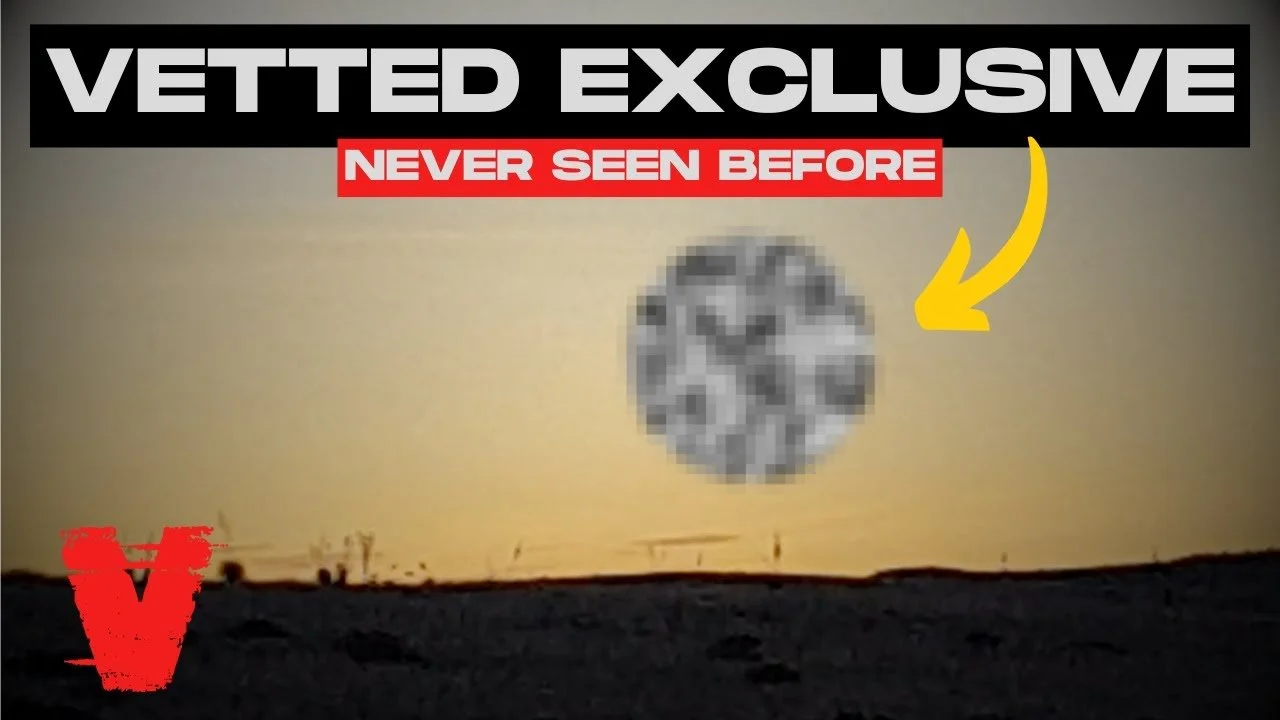
EXCLUSIVE: New UFO Video Filmed in Marfa Texas
In the quiet deserts of West Texas, the town of Marfa hides one of America’s most enduring enigmas—the mysterious Marfa Lights. For decades, glowing orbs have danced across the horizon, sparking endless debate between skeptics and believers. Now, a new video filmed by German tourists adds fresh intrigue to the legend. Join Patrick from Vetted as he investigates this latest UFO sighting, explores the science and folklore behind Marfa’s lights, and invites a global community to search for the truth together.
What if the answers to life’s biggest mysteries were found not in the crowded cities or the pages of history books, but in the remote corners of the world where the unknown hides in plain sight? One such place is Marfa, Texas: a sun-baked stretch of land renowned for its wide open plains, quirky art installations, and, most enigmatically, the baffling Marfa Lights. If you’ve ever wondered about UFOs, unexplained lights, or the power of collective curiosity, this story is for you.
An Unexpected Encounter in Marfa
Out in the vast nothingness of West Texas, hours away from the rush of urban life, lies Marfa—a town that seems ordinary at first glance but is famous for its extraordinary stories. Movie buffs may know Marfa from "There Will Be Blood," but the town's real legend glows after dark. For decades, people have reported unexplained floating orbs known as the Marfa Lights. Each sighting fuels new debates: Are they headlight reflections, atmospheric illusions, or evidence of something truly otherworldly?
Patrick from Vetted, a channel devoted to exploring the unexplained, recently brought new energy to the Marfa mystery. A loyal viewer tipped him off about a compelling piece of footage: in 2021, two German tourists filmed what might just be one of the most intriguing UFO sightings Marfa has seen.
A Close Encounter Caught on Camera
Imagine driving through the West Texas wilderness at dusk—just you, the sunset, and endless plains. Suddenly, something odd catches your eye: a small, black object, motionless and suspended above the horizon. It defies easy explanation. Not a balloon. Not a drone. When Patrick reviewed the video—original, zoomed-in, and in slow motion—even he, a skeptic and experienced investigator, was left stumped.
What’s so intriguing about this UFO is its pure simplicity: it isn’t flashing or moving erratically. It just hovers, quietly challenging everything we think we know about our skies. Patrick’s knowledge of similar phenomena (like the Min Min lights in Australia) only deepens the mystery. Time and again, strange lights and unexplained objects are spotted in isolated places. Why there? And why does it happen so often in towns like Marfa, surrounded by hundreds of miles of barren land?
Understanding the Marfa Lights
The Marfa Lights are a staple of Texas folklore. Some say they’re the result of atmospheric conditions that bend light, while others are convinced they’re headlights from distant cars. Yet, visitors and locals alike report seeing something more—a kind of intelligence, an unpredictable dance of orbs that defies simple scientific explanation.
Patrick admits he was once a "headlights skeptic"—after all, he’s witnessed lights atop a distant hill that lined up perfectly with car routes. Still, experiences and viewer-submitted footage (like this latest case) have made him question everything. As he watched the new video, the object didn’t behave like any balloon or drone he’s ever seen. And when you zoom in, expecting a silicon chip or a weather balloon, it only gets weirder.
Community Curiosity: The Power of Crowd-Sourced Investigation
Patrick's biggest takeaway? Sometimes, the only way to solve a mystery is together. He invites his community of viewers—whether UFO skeptics, casual fans, or die-hard believers—to examine the footage and weigh in. All ideas are welcome, because ruling out the mundane brings us one step closer to uncovering the truth.
He encourages viewers who’ve been to Marfa (or Australia, to compare the Min Min phenomenon) to share their stories. Maybe, by combining hundreds of eyes, backgrounds, and trains of thought, a pattern will finally emerge. Maybe what seems out of place for one is familiar to another.
A New Era of Transparency
In addition to seeking answers about Marfa’s mysteries, Patrick keeps it real with his fans. He recognizes the value of supporting those who keep the community going—his Patreon and YouTube members. Gone are the days of high-tier, exclusive paywalls. Now, all supporters get behind-the-scenes access to content, interviews, and documentary footage. It’s about rewarding those who stick around for the long haul and making the investigation as inclusive as possible.
He even shares exciting news about his upcoming documentary project, due around the holidays, promising a deeper dive into the world of the unexplained. There’s a sense of gratitude—the kind only found among people chasing the unknown together, with honest curiosity and mutual respect.
A Universal Experience: Stories Beyond Marfa
Patrick isn’t the only one inviting stories. After his segment aired, viewers like Victoria from Oregon called in to share their own encounters. Victoria described a “ball of light” that hovered in the sky for over an hour, unmoving and inexplicable—even by her skeptical friends. Like the Marfa Lights, it left her with more questions than answers. She, too, is searching for truth and encourages others to submit their footage for a crowd-sourced investigation.
This openness reveals something important: Unexplained phenomena aren’t limited to remote Texas deserts. They’re a global experience, connecting curious people from around the world who share one big question: What’s really out there?
Why We Search
The heart of this discussion isn’t just about identifying UFOs or debunking legends. It’s about wonder, curiosity, and the power of community. When people come together—in the comments section, on Patreon, or through shared stories—they create a space where chasing answers is just as exciting as finding them.
If you’ve ever caught a flicker of light on a lonely highway and wondered, or if you have a story that’s never been told, you’re in the right company. Mysteries like those in Marfa, Texas, remind us that sometimes the search itself is the real adventure. Stay curious, keep sharing, and remember: with every question asked, we get a little bit closer to the truth.
Chris Ramsey Drops UFO Bombshell
Could a strand of hair hold proof of alien life? The strange case of Peter Curry claims exactly that — DNA tests revealing genetic traits so rare they border on impossible. From conflicting lab results to missing samples, this story sits at the crossroads of science, mystery, and belief. Dive into the evidence, the controversy, and why even experts can’t decide whether it’s proof of extraterrestrial contact or just the rarest human anomaly ever recorded.
If you think you’ve heard it all when it comes to UFO stories, think again. Today we’re diving into a truly wild tale that blurs the lines between science, belief, and the unexplained: the alleged physical evidence from an encounter with extraterrestrials, and what happened when this evidence—two strands of mysterious hair—underwent scientific testing. Whether you’re a curious skeptic or an enthusiast, buckle up; this story will have you questioning where science ends and the paranormal begins.
Unpacking the Alien Encounter: What Really Happened?
This story centers on Peter Curry, an Australian who claims to have had an intimate encounter with not one, but two women who he believes were extraterrestrials. While stories about close encounters of the romantic kind often inspire eye rolls (and understandably so), Curry's tale stands out because of one thing: he ended up with samples of hair allegedly from these otherworldly visitors.
According to Curry, following a bizarre and confusing physical experience, he discovered two strands of hair—one blonde and almost transparent, the other dark—from his supposed visitors. Rather than chalking it up to a dream, Curry took the unorthodox step of having those hair samples tested by professionals. What came back from these tests stunned even the scientists involved.
The Science Behind the Story: Unpacking the DNA Mystery
Let’s take a closer look at the tests performed on those unusual hair samples and what made the results so intriguing. These weren’t just any hairs. The color and texture were described as unlike anything seen in normal human samples: one was almost white, nearly see-through, and vaporous, while the other matched rare Asian mitochondrial DNA.
The scientific tests involved two phases: the first focused on identifying the DNA in both the root and shaft of the hair. The findings? The root contained rare European-Scandinavian DNA (think tall, blue-eyed, blonde individuals), while the shaft showed extremely rare Tibetan-Chinese mitochondrial DNA—an almost statistically impossible combo for a single person. To top it off, further DNA analysis discovered a gene deletion (CCR5 deletion) that, in extremely rare cases, gives near-complete immunity to certain diseases, including HIV and STDs. Combining all these rare traits, the statistical odds were calculated to be practically zero for anyone in the known human genetic pool.
Skeptics, Controversy, and the Limits of Proof
At this point, you might be thinking: "Okay, that’s weird—but is it proof of aliens?" That’s the crux of the conversation. While these genetic anomalies are intriguing, nothing about them directly screams "extraterrestrial." The story is complicated further by the lack of peer-reviewed publication for the results and questions about how the samples were maintained and tested. Over the years, the key hair sample was divided up, stored away, possibly forgotten, and finally (it seems) reduced to a state that makes retesting immensely difficult.
The scientists involved were genuine experts, according to Curry, and they did their best to rule out contamination. But without a verified chain of custody and new, independent analyses using today’s advanced DNA technology, many in the skeptical community remain unconvinced.
Extraordinary Claims, Ordinary Problems
What makes this story stick (aside from the truly bizarre details of the encounter itself) is the tension between a tantalizing piece of potential evidence and the frustrating reality of scientific limitations. Even the video’s host admits to finding the account both fascinating and confounding. Despite all the eyebrow-raising DNA results, it remains impossible to conclusively say anything is extraterrestrial—at best, it is biologically unexplainable with our current knowledge.
One critical problem that gets repeated in UFO and alien research: even the most extraordinary stories often devolve into hearsay, lost or destroyed evidence, or test results that aren’t made public for further scrutiny. And even when something is found, there's always an explanation that falls just short of proving interplanetary origins.
Between Belief, Science, and Entertainment
As the content creator points out, much of this is best approached as entertainment—engaging stories that fire up our imaginations and push us to ask questions about what is possible. There’s an honesty in admitting that, without rigorous scientific validation, even the most dramatic findings remain nothing more than anomalies. But anomalies are, in their own way, the clues that drive science forward.
Do fans and followers believe Curry’s account? It's hard to say. Many want to—but also recognize the need for higher standards of evidence, which, in this case, might never materialize. When the opportunity arose to test the remaining hair with today’s advanced technology, Curry hesitated—his understandable concern being that the tiny sample might be exhausted before yielding definitive results. For now, we'll never know for sure if those hairs were the key to unlocking one of humanity's oldest mysteries.
So, Where Does That Leave Us?
Stories like this walk the tightrope between credible scientific pursuit and wild, sometimes unbelievable human experience. It’s easy to scoff at wild claims, but every so often, something comes along that defies easy answers. In those moments, our job isn’t just to believe or dismiss—but to keep looking, keep testing, and keep pushing the boundaries of what we think is possible.
And after all, every day is a gift—so why not keep exploring the unknown? Let us know: do you find Curry’s story compelling, or do you think it belongs strictly in the realm of science fiction? Drop your thoughts below, and as always, stay curious.

Dr. Beatriz Villarroel Comes Clean About NASA
Are we truly alone in the universe—or have we been overlooking evidence hiding in plain sight? From NASA’s classified archives to the U.S. Space Force’s secret lists of “uncorrelated objects,” new revelations suggest that decades of unexplained celestial data may hold clues to something extraordinary. This investigation explores how mysterious orbital anomalies, missing UFO records, and quietly redacted space history could reshape what we know about extraterrestrial life—and why some of the most important data might still be locked behind classified doors.
What if the very skies above us were hiding more mysteries than we ever suspected? Every so often, new revelations pull us deeper into a rabbit hole of possible extraterrestrial visitors, secret government operations, and unexplained celestial phenomena. Recent discussions led by Patrick from Vetted delve into the persistent question: Are we being watched, and if so, who knows about it?
Unveiling the Hidden: NASA, Space Force, and Classified Targets
For decades, NASA has charmed us as the face of space exploration—a beacon for civilian scientific progress. Yet, behind the scenes, there's a tangled web involving military oversight, classified lists, and uncorrelated targets that have quietly slipped through the cracks of public awareness. While NASA occasionally dabbles in intelligence, it’s the U.S. Space Force, according to insider accounts, that manages secretive catalogues of anomalous objects spotted in Earth’s orbit. These so-called uncorrelated targets—meaning objects that don’t match any known satellites or debris—are methodically scrubbed from official records, never making it into public discourse.
The story traces back decades. As early as the 1960s, these uncorrelated objects have been quietly tracked, only to be dismissed as "noise" or filtered out as non-relevant data. But, as leading astrophysicist Dr. Beatatrice Val and her research reveal, dismissing these anomalies may have allowed decades of critical data to go unstudied. Val's investigations into pre-Sputnik photographic plates expose hundreds of thousands of transients—mirror-like, metallic-looking objects reflecting starlight where there should have been none. Peer-reviewed and scientifically rigorous, her work hints at possible nonhuman sensors, perhaps even UFOs, observing us since before the dawn of the space age.
The Classified Lists: Are We Erasing Evidence?
One of the video’s most intriguing themes is the notion that these uncorrelated targets aren’t just being ignored—they’re being classified and hidden. The rationale, as described, involves separating out targets that can’t be associated with known satellites to maintain clean datasets. Yet, by removing them, we might be erasing some of the most compelling evidence of unexplained aerial phenomena—data that could answer the very questions humanity has pondered for centuries.
Digging deeper, the hosts speculate: does NASA ever actually handle this data, or is it left entirely in the hands of military agencies? The implication is that Space Force—a much newer branch of the armed services—possesses lists of these objects dating back to the 1960s, and those lists are locked behind classified doors. As researchers yearn for access to these coordinates to verify their existence (or disappearance), it becomes clear that "noise" in astronomical data might actually be signposts to a whole new reality.
Historic UFO Accounts and the Quiet Redactions of History
This obsession with filtering the unexplained isn’t just a recent development. The transcript recounts a trail of historical breadcrumbs: In the early 1950s, long before Sputnik, Major Donald Kho and astronomer Dr. Lincoln Leaz claimed the military tracked unknown satellites orbiting Earth—years before we launched any artificial ones. These objects were described as shiny, metallic, even flat-bottomed—eerily similar to the characteristics found in both photographic plates and official government UFO documents of the time.
Yet, something deeply suspicious happened. Not only were the objects never officially acknowledged, but final government reports flatly denied the very possibility of their existence. These vanished records, along with unexplained gaps in NASA's official releases (sometimes blamed on government shutdowns or technicalities), foster an air of conspiracy that is hard to ignore.
Why Do We Keep Missing What’s Right in Front of Us?
The realities of orbital observation are sobering. Recent discoveries like Earth’s quasi-moon—2025 PN7, an 18 to 36-meter-wide object that orbited Earth for 60 years before its detection—reveal just how much can slip through even our most sophisticated monitoring systems. If something so massive and close could remain hidden in our technological blind spots for decades, the mind reels at what else we might be missing—or intentionally ignoring.
Skepticism and Hope: Where We Go From Here
Despite a healthy skepticism towards conspiracy theories, even seasoned observers admit that recent trends look increasingly troubling. Reports of NASA cutting live feeds when unexplained objects appear, unexplained delays in releasing public data, and firsthand accounts from government insiders working in top-secret capacities all lend weight to the suspicion that something significant is being withheld from the public eye.
Yet, hope persists amid the inquiry. Dr. Val’s work and the determined curiosity of independent investigators suggest that as long as there are people willing to ask difficult questions, the truth will continue to trickle into the light. Whether or not these uncorrelated objects are evidence of extraterrestrial surveillance, covert technologies, or elaborate bureaucratic error, the story underscores the necessity of transparency, rigorous science, and open dialogue.
What Should We Believe?
It’s easy to get swept up in these mysteries, but also vital to maintain a balanced perspective. Not every unexplained light in the sky points to alien intelligence. Still, the fact remains that for decades, significant data has been dismissed, hidden, or left unexamined. As technology advances and new evidence emerges, we may be on the edge of profound revelations about our place in the universe.
Your Turn: What Do You Think?
The quest for understanding is far from over. Extraordinary claims require extraordinary evidence, but curiosity and open-minded skepticism are our best tools. Have you witnessed something unexplainable in the sky? What should scientific agencies do with decades of anomalous data? Drop your stories and thoughts in the comments—because every perspective helps bring us closer to the truth.
At the end of the day, the search for answers persists, reminding us all that every day truly is a gift, filled with the potential for discovery.

EXCLUSIVE: New UFO Whistleblower Comes Forward
An explosive new Vetted interview reveals the identity of the man accused by former AARO Deputy Director Tim Phillips of trying to “extort” the U.S. government for UAP materials. Known only as “Michael,” this whistleblower claims Senate staff shredded UFO evidence and ignored key disclosures. His story could reshape the entire UAP transparency conversation heading into 2025.
In a recently released Vetted interview, host Patrick sits down with an anonymous figure known as “Michael,” who claims to be the same individual former AARO Deputy Director Tim Phillips accused of attempting to extort the U.S. government over alleged UAP (Unidentified Aerial Phenomena) materials.
Phillips, during a podcast appearance earlier this year, described a witness who supposedly tried to sell physical UFO materials or threaten to take them to a foreign country — calling the situation “extortion.” Until now, the identity of that person remained a mystery.
Michael Speaks Out: “It Came Out of Left Field”
Michael denies all allegations, calling them “completely shocking” and “out of left field.” He claims that both his attorney and government contacts were blindsided when Phillips made the statement publicly.
“My phone was blowing up,” Michael said. “No one was expecting that — not me, not my legal team, not the people funding our work.”
According to Michael, he had legitimate dealings with Senate staff and had provided information related to UAP materials for official review. However, he alleges that critical documents were shredded before reaching a senator’s desk, effectively burying evidence that could have advanced UFO transparency efforts.
Behind Closed Doors: Shredded Files and Political Secrets
Michael’s account paints a troubling picture of how UAP-related information is handled at the highest levels of government.
He recounts an incident where a staff member allegedly disposed of a sensitive folder — first throwing it in the trash, then shredding it after realizing “it didn’t look good.”
“That’s your bombshell,” Michael told Patrick. “It never made it to the senator.”
This claim, if true, suggests internal suppression of UAP evidence — a topic that continues to fuel public distrust amid ongoing congressional investigations into UFO transparency.
The Bigger Picture: UFO Disclosure in 2025
The Vetted interview arrives at a critical time. With the UAP Disclosure Act and renewed focus on government transparency, this interview adds another layer of complexity.
If Michael’s story holds weight, it could indicate that key UAP data has been intentionally destroyed or hidden, echoing long-standing claims from other whistleblowers.
Why This Matters for the 2025 Disclosure Movement
As the U.S. government faces mounting pressure to declassify UAP information, testimonies like Michael’s raise serious questions about internal accountability.
The alleged shredding of evidence, misrepresentation of witnesses, and media manipulation could reshape how the public perceives UFO disclosure efforts in 2025.
Final Thoughts
Whether you believe Michael’s story or not, one thing is clear — the UAP debate is far from over. This Vetted interview may be just part one of a larger revelation that could expose how deep the secrecy around UFO materials truly goes.
Stay tuned as this story develops — and as more insiders step forward to challenge the official narrative.

Jeremy Corbell Comes Clean About 3i/ATLAS
Insiders like Jeremy Corbell, Garry Nolan, and Luis Elizondo have all pointed to one year — 2027 — as a turning point in UFO disclosure. Patrick from Vetted unpacks the theories, government leaks, and psychological operations behind this mysterious date, revealing why the truth might not be what’s coming — but why we’re being told it’s coming.
In recent years, whispers from intelligence insiders and UFO researchers have converged around a single, chilling message:
“Something is coming in 2027.”
From Jeremy Corbell and George Knapp’s interviews to Dr. Garry Nolan’s shocking statements, the year 2027 has become a focal point in the ongoing UFO disclosure saga. But what exactly is supposed to happen — and why are so many credible voices hinting at it?
Patrick from Vetted dives deep into the claims, separating fact from speculation and exposing the psychological, governmental, and scientific layers behind this mysterious date.
The Origin of the 2027 Theory
The “2027” timeline first gained traction after Luis Elizondo, former head of the Pentagon’s AATIP program, hinted that a major revelation or event was expected within “five years.” That statement, made in 2022, pointed directly to 2027.
Since then, researchers like Corbell and Knapp have echoed similar warnings — suggesting that the government may be preparing society for a transformational disclosure involving non-human intelligence.
Patrick highlights that these claims aren’t random:
“When multiple insiders reference the same year, it’s either coordinated messaging — or the biggest coincidence in UFO history.”
What Could Be Coming in 2027?
There are three leading theories circulating in the disclosure community:
Gradual Disclosure:
Governments may plan a staged release of evidence — including recovered craft or biological material — to acclimate the public to non-human intelligence.Astronomical Event:
Some speculate that a celestial object or interstellar probe (like ‘Oumuamua or the “Atlas Comet”) could return or become visible around 2027, reigniting public debate.Psychological Operation:
Others, including Corbell, warn that the “2027 event” could be a manufactured narrative — a way to manipulate global perception under the guise of alien contact.
Patrick leans toward the third possibility:
“If you control the story, you control the reaction. That’s what makes 2027 so dangerous — not what might come, but what we’re told is coming.”
The Government’s Quiet Preparation
Since 2023, the U.S. has established multiple UFO-related offices, including the AARO (All-domain Anomaly Resolution Office), which continues to collect and analyze UAP data.
In 2025, leaked briefings suggest that classified materials are being reviewed for public release by 2027 — aligning eerily with prior insider predictions.
Patrick notes that this timeline fits a pattern:
2021–2023: Acknowledgment of UAP reality
2024–2026: Controlled leaks and whistleblower testimony
2027: Full or partial disclosure event
Dr. Garry Nolan’s 2027 Statement
Stanford professor Dr. Garry Nolan added fuel to the fire when he said during a 2023 conference:
“An event is coming — something that will make it undeniable that we’re not alone. It will happen within five years.”
That single statement has become the cornerstone of the 2027 theory. Nolan later clarified that he was referring to a major societal shift, not necessarily an alien landing — but the seed was planted.
Patrick’s Analysis: Truth, Timing, and Misdirection
Patrick argues that 2027 may represent a psychological milestone, not an extraterrestrial one. By setting a date, intelligence agencies can control anticipation, fear, and belief — creating a “narrative countdown.”
“It’s not about aliens arriving — it’s about conditioning the public to expect something. That’s the real operation.”
He warns that even if a genuine discovery occurs, it will likely be filtered through government-approved channels designed to maintain control over the narrative.
What This Means for 2025 and Beyond
With AI-generated search results and social media algorithms amplifying UFO content, misinformation spreads faster than ever. The 2027 theory thrives in this environment — blending truth, speculation, and digital amplification.
Patrick concludes:
“Whether 2027 brings disclosure or deception, we’re already living in the age of narrative warfare. The only defense is awareness.”
Key Takeaways
2027 is widely referenced as a turning point in UFO disclosure.
Insiders like Elizondo, Corbell, and Nolan have all hinted at a significant event.
Theories range from government disclosure to psychological operations.
2025–2026 are critical years for information leaks and narrative control.
The truth may not be what’s revealed — but why it’s revealed.

Ross Coulthart Drops UFO Bombshell
In 2025, astrophysicist Dr. Beatrice Vodel published groundbreaking peer-reviewed studies suggesting that artificial reflective objects orbited Earth years before Sputnik 1. The findings, based on archival sky plate data, hint at the possibility of non-human intelligence—or a forgotten chapter in our technological history. This discovery could redefine how science views humanity’s place in the cosmos.
In late 2025, the scientific community was rocked by a pair of peer-reviewed studies that may change how we understand our place in the universe. The research, led by Dr. Beatrice Vodel, suggests that artificial reflective objects—possibly metallic or engineered—were orbiting Earth before the launch of Sputnik 1 in 1957, humanity’s first official satellite.
This isn’t science fiction. It’s peer-reviewed astrophysics, supported by data from archival photographic sky plates—long-exposure images of the night sky taken decades ago.
If verified, this could be the first credible evidence of non-human intelligence (NHI) operating in Earth’s orbit long before the space age began.
The Research: Mining the Past for Clues to the Unknown
Dr. Vodel’s team analyzed over 300,000 historical sky plates from major observatories, including the Palomar Sky Survey (1948–1957). These plates, captured on glass negatives, were designed to map the stars—but they also recorded fleeting events invisible to the naked eye.
During analysis, the team found transient linear light streaks—multiple bright points aligned in straight lines, consistent with reflections from structured, orbiting objects.
Key Observations from the Study:
The events did not match known astronomical phenomena like meteors or satellites.
The streaks were too consistent and too geometrically aligned to be random.
The reflections appeared to move at orbital velocities, suggesting Earth orbit rather than atmospheric or cosmic origins.
In short: something artificial-looking was reflecting sunlight in orbit before humans had the technology to place anything there.
Peer-Reviewed and Published in Major Scientific Journals
This isn’t a fringe claim—it’s peer-reviewed science.
Two papers authored by Dr. Vodel and colleagues were accepted in 2025 by:
Scientific Reports (Nature Group) – Focused on the detection and classification of transient reflective events.
Publications of the Astronomical Society of the Pacific (PASP) – Explored implications for non-human artifacts and orbital archaeology.
Getting UAP-related research through peer review in these journals is nearly unprecedented. It marks a turning point in how mainstream science approaches the UAP/NHI question.
The Implications: What If These Objects Are Real?
If these reflective objects are confirmed to be artificial and pre-Sputnik, the implications are staggering.
We would be looking at:
Evidence of non-human technology operating in Earth orbit decades before human spaceflight.
A possible technosignature—a sign of intelligent engineering—within our own planetary system.
A new scientific field: Orbital Archaeology, the study of ancient artifacts in near-Earth space.
Dr. Vodel has been careful to emphasize that the data does not prove alien origin, but it strongly suggests artificiality that cannot yet be explained by known physics or human activity.
Expert Reactions: From Skepticism to Serious Discussion
The research has sparked intense debate across the scientific community.
Dr. Brian Keating, astrophysicist at UC San Diego, commented:
“This is exactly what science should do—challenge assumptions with data. Whether these are artifacts, reflections, or something else entirely, we must investigate with open minds.”
SETI researchers have also expressed cautious optimism, noting that searching for technosignatures in historical data has long been proposed but rarely executed at this scale.
Meanwhile, skeptics urge caution, suggesting that plate defects, unknown atmospheric effects, or early classified experiments could explain some of the observations.
Still, the fact that two independent peer-reviewed studies reached similar conclusions is forcing even skeptics to take notice.
Could These Be Early Secret Satellites?
One of the most grounded hypotheses is that these objects might be classified military experiments predating Sputnik.
However, historians note that no records—even in declassified archives—show any evidence of orbital launches before 1957. The technology simply did not exist.
Rocket propulsion capable of achieving orbit wasn’t successfully demonstrated until Sputnik 1, launched by the Soviet Union on October 4, 1957.
That means if these objects were indeed in orbit in 1948–1956, they cannot be explained by known human activity.
The Search Continues: Where Are These Objects Now?
Dr. Vodel’s team is now collaborating with ESA and NASA researchers to re-scan the orbital regions identified in the study.
Using modern telescopes, radar, and AI-based orbital tracking, they hope to determine whether any of these reflective objects still exist—or whether they decayed naturally decades ago.
If found, these objects could become the first physical evidence of non-human intelligence in Earth orbit.
A Turning Point for UAP Science
For decades, the study of UAPs (Unidentified Aerial Phenomena) was dismissed as pseudoscience. But in recent years, the narrative has shifted.
Governments, defense agencies, and now mainstream scientists are acknowledging that some phenomena defy conventional explanation.
Dr. Vodel’s work bridges the gap between data-driven science and open-minded exploration, offering a model for how UAP research can be conducted credibly, transparently, and rigorously.
Why This Matters for Humanity
This discovery challenges our most fundamental assumptions:
Are we the first intelligent species to reach orbit?
Could ancient civilizations—or even non-human intelligences—have visited Earth in the distant past?
What does it mean for our understanding of consciousness, evolution, and technology?
Even if these objects turn out to be natural or human-made, the process of investigating them is scientifically invaluable. It pushes us to re-examine old data with new tools, and to question what we think we know about our history.
SEO Insight: Why This Story Is Dominating Search in 2025
Search trends in 2025 show skyrocketing interest in:
“Pre-Sputnik satellites”
“Artificial objects in orbit before 1957”
“Peer-reviewed UAP research”
“Beatrice Vodel NASA study”
This reflects a growing public appetite for credible, data-backed UAP science—not speculation, but evidence-based discovery.
According to Locusolve’s 2025 SEO guide, long-form, research-driven content like this performs best when it:
Fully answers user intent (what, who, when, why).
Incorporates semantic keywords naturally.
Links to authoritative sources (NASA, Nature, peer-reviewed journals).
This article is structured to meet those standards—making it SEO-ready for Google’s 2025 algorithm.
Final Thoughts: A New Chapter in Human Curiosity
Whether these pre-Sputnik reflective objects are artifacts of non-human intelligence, ancient probes, or unknown natural phenomena, one truth remains:
Science is evolving to embrace the unknown.
Dr. Vodel’s courage to publish her findings—despite the stigma surrounding UAP research—has opened the door to a new era of data-driven exploration.
As Patrick from Vetted put it:
“We’re not chasing UFOs. We’re chasing truth—and the truth might be bigger than we ever imagined.”

Karl Nell Drops UFO Surprise
After years of rising momentum, has the UFO disclosure movement finally hit a wall? In this deep dive, Patrick from Vetted unpacks Colonel Karl Nell’s striking claim that the latest wave of government transparency on UFOs is over—and what that means for truth‑seekers and researchers worldwide. From stalled legislation to the urgent need for stronger whistleblower protections, this piece explores how the end of one era could spark a new beginning. Disclosure may not be dead—it’s evolving, driven by citizens, creators, and insiders who refuse to stop asking questions.
If you've been following the world of UFOs (or UAPs—Unidentified Aerial Phenomena) lately, you'll know it’s been a wild ride. From Navy videos hitting the headlines in 2017 to headline-grabbing whistleblowers and Congressional hearings, many believed we were on the brink of full disclosure: the moment when governments would level with the public about what they know about non-human intelligence. But if you caught Patrick from Vetted breaking it all down recently, there's a new reality to face—he and his expert guests think the recent wave of official disclosure might just be over. So what does that mean for the truth-seekers, the researchers, and everyone who still stares at the night sky, hoping for answers?
The End of the Latest Disclosure Wave
Patrick dives straight into the heart of the matter: according to retired Colonel Carl Nell, whose defense and intelligence background is as heavyweight as they come, the cycle of open disclosure that began around 2017 is finished. Nell, speaking at the 2025 Global Disclosure Day, pointed to stalled Congressional action—especially the defeat of the UAP Disclosure Act—and the increasingly repetitive nature of hearings and “revelations.”
Nell summarizes the situation: there was momentum, attention, and growing legitimacy for the UFO topic, but the mechanisms for real government transparency have stalled. Without Congressional accountability structures, he argues, the government is more likely to hunker down and go reactive, rather than become more open. It’s a “let’s take stock moment” for the entire movement.
Who Is Carl Nell—and Why Does His Opinion Matter?
If you're new to the field, you might wonder why Colonel Carl Nell’s words carry so much weight. When a guy with a resume that includes Army Space Command, advanced strategic roles at major defense contractors, and a stint advising the Army's UAP task force says something about government transparency—or its lack thereof—it’s worth listening.
Nell’s credibility is built on direct experience. He’s not just opining from the sidelines but has been deeply embedded in both military and intelligence communities, giving him real perspective not only on what’s possible, but what the institutional roadblocks actually look like.
Reflecting on Seven Years of Progress (and Stumbles)
But for every door that closes, another opens—or at least, that’s what disclosure watchers hope. Patrick points out, and guests like Richard Dolan echo, that even if the “official” disclosure movement faltered, it changed the game. The mainstreaming of the conversation, more open discussion in Congress, and a huge swell of content creators and citizen investigators are all signs of real cultural progress.
Dolan, a respected historian in the field, compares the current moment to earlier cycles: the burst of interest in the 1950s, the FOIA-driven 1970s, the Roswell revival of the ’90s, and more. Each time, public interest swelled, official investigations quietly fizzled, and activists regrouped. What’s different now, he says, is the unprecedented volume of public conversation and the fact that credible whistleblowers keep stepping forward—even if Congress can’t always catch the ball.
What’s Standing In the Way?
Among the most urgent issues: whistleblower protections and the need for more “firsthand witness” testimony. Guests like Kirk McConnell point out that there’s energy and interest in Congress, especially in the House, but the Senate holds out for direct witnesses tied to the so-called “legacy programs”—the secretive efforts to study and reverse-engineer potential non-human technologies. Without more credible insiders willing to come out (and solid protections for them), progress will continue to stall.
It’s a classic catch-22: whistleblowers fear for their livelihoods and legal safety, so they stay silent, while Congress says it can’t act without more testimony. The protections on the books are too weak to give people confidence to risk everything. Until that changes, large-scale, official revelations seem unlikely.
Where Do We Go From Here?
If it’s true that the cycle is over, does that mean the disclosure movement is doomed? Absolutely not. Instead, this might be a pivot point—a chance to re-evaluate approaches and build off the “failures” that actually moved the conversation forward. As the video’s host notes, every movement faces setbacks, but these gaps are where learning and adaptation happen.
The take-home message is clear: even if top-down, government-led revelation has hit a wall for now, the conversation isn’t dying—it’s evolving. Grassroots efforts, independent research, more content and visibility, and rising demand for transparency all mean the story isn’t finished. The next phase will demand greater focus on whistleblower support, stronger calls for accountability, and perhaps, broader appeal to public interest and media. As history shows, each cycle lays the groundwork for the next push.
Everyday Observers and a Bigger Community
One of the most compelling segments in Patrick’s recap is from a regular viewer out in rural Nevada, sharing experiences of strange lights in the sky, unexplained movements, and a continued sense of wonder. It’s a reminder that the search for answers isn’t just about Congressional votes or “insider” leaks. It’s everyone’s story—a tapestry woven from citizen sightings, independent research, and conversations fueled by both skepticism and open-minded curiosity.
Ultimately, you don’t need a seat at the Pentagon to contribute. The broader community of everyday sky-watchers, passionate amateurs, and serious researchers keep the spirit of inquiry alive. And as more people speak out about their experiences, the pressure for more transparency continues to rise.
Conclusion: Disclosure Isn’t Dead—It’s Changing
As the dust settles on this cycle of government disclosure, it’s time for the community to take stock. Yes, some doors have closed—but others are opening in creative, unexpected places. The biggest advances might not come from official statements, but from tenacious citizens, tech-savvy content creators, and courageous insiders.
So stay curious and keep asking questions. Whether you’re analyzing witness testimony, raising awareness on social media, or just watching the skies with friends, you’re part of the next phase. Disclosure may not look like what we expected—but the truth, as always, is still out there.

Jesse Michels Drops UFO Bombshell
What if the government really did communicate with aliens — telepathically? Project Preserve Destiny unpacks the shocking claims of Dan Sherman, a former Air Force sergeant who says he was part of a secret NSA program involving genetic modification and extraterrestrial contact. From alleged prenatal experiments to classified “onion-layer” operations, Sherman’s story blurs the line between whistleblower testimony and science fiction. Explore the evidence, the skepticism, and the growing debate shaking the UFO community.
Curious about secret government projects, alien abductions, and telepathic communication? You’re in for a mind-bending read. Let’s dive into a story that’s capturing imaginations — and skepticism — across the internet.
Not Your Average Interview
Patrick from Vetted opens up from sunny Spain, sharing the latest buzz in the UFO community: an interview with Dan Sherman, a retired Air Force technical sergeant. Sherman’s story? It’s unlike anything you’ve likely heard.
Sherman claims he was part of Project Preserve Destiny, a top-secret NSA program in the 1990s. But that’s not even the wildest part. According to Sherman, his journey began before he was born, when his mother was allegedly abducted by aliens while pregnant. During this abduction, his genetics were supposedly altered—giving him the telepathic ability to communicate with extraterrestrials. The government, recognizing these unique skills, tracked him from a young age and eventually recruited him as one of their "intuitive communicators."
The Origins of the Intuitive Communicator
So how does one become an intuitive communicator? Sherman explains that the government collaborated, directly or indirectly, with extraterrestrials to genetically engineer certain individuals — in his case, the process started while he was still a fetus. The military then used demographic data to select likely candidates, focusing on people who’d probably join the armed forces and could be monitored closely. Sherman grew up, joined the Air Force, and was ultimately brought into the mysterious fold of Project Preserve Destiny.
Once recruited, Sherman claims he was trained to interpret telepathic signals from aliens, entering a world of classified projects and signals intelligence. Communication occurred in a way that felt physically different—he describes a sensation in his brain that was both foreign and unmistakable.
Classified Projects, Deep Cover, and the "Onion Effect"
One of the more fascinating points in this saga is the way the military and intelligence world compartmentalizes secrets. Sherman reveals a system of layers — "the onion effect" — where black projects (highly classified operations) cover for even more secretive "gray projects". Only a select few know the full story. Funding and resources are justified under the public-facing project, while behind closed doors, an even deeper secret is being guarded.
Sherman discusses how he experienced this firsthand: whisked to underground facilities, trained with special equipment, and exposed only to the information he needed to do his job — a classic example of "need to know". The result is a labyrinth of secrecy, designed to defend the most sensitive programs from leaks, internal snooping, and outside interference.
Fact or Fiction? The Skeptical Perspective
Patrick doesn’t take Sherman’s claims at face value, and neither do many commentators. The blog post explores the critical responses, with skeptics wishing for concrete evidence—PET scans, CTs, recordings of these telepathic sessions, or some undeniable proof.
Yet, the intrigue grows as well-documented veterans and journalists, like Walter Kern, share Sherman’s story with genuine interest. Notably, Sherman himself admits he never saw an alien and acknowledges that his experience could’ve been a sophisticated government experiment rather than true extraterrestrial contact. Authentic? Possibly. Verifiable? Not quite. But Sherman’s openness about his doubts just adds to the story’s credibility for many listeners.
Impact and Implications: If True, Everything Changes
What if Sherman’s account is accurate? As one guest commentator notes, such revelations would force humanity to reconsider history, science, religion, and politics. Acknowledging secret genetic engineering and ongoing contact with aliens would reshape our understanding of the world and our place in it.
Even skeptics agree on one point — the information war surrounding UFOs and claims like Sherman’s is intense and growing. Whether it’s a calculated disinformation campaign, a genuine whistleblower, or something in-between, these stories are becoming more mainstream, with government responses to FOIA requests on projects like Preserve Destiny only adding fuel to the fire.
The UFO Community Reacts
It’s clear that Sherman’s story resonates. The conversation has spread from niche forums to major commentators. Clips circulate online, sparking furious debate. For the curious, Patrick recommends watching the full three-hour interview with Dan Sherman for all the mind-bending details.
Sherman’s tale is not without precedent. Reports of UFO sightings, government cover-ups, and secret communications aren’t new — but the specificity and candor here are compelling. As Patrick and others point out, the sincerity in Sherman’s retelling, his willingness to entertain doubt, and the cross-examination by both believers and skeptics make this story particularly intriguing.
Conclusions: Dare to Decide for Yourself
Are you convinced? Stories like Dan Sherman’s are as much about exploring the unknown as they are about challenging our assumptions. Maybe it’s a cautionary tale about how compartmentalized intelligence operations can generate myths as well as conceal truths. Maybe it’s an early glimpse into a new chapter of human history. Or maybe, it’s one man’s incredible story — sincere, subjective, and unresolved.
Whatever your stance, the conversation is important. Pop culture is now intersecting with hard questions about government secrecy, personal experience, and the quest for evidence. With more whistleblowers coming forward, and public curiosity at an all-time high, the coming years promise even stranger revelations.
For now, take Patrick’s advice: keep an open mind, ask hard questions, and watch the horizon. This story isn’t going away — and whether it’s fact or fiction, it’s definitely unforgettable.
Let us know what you think in the comments below and consider diving into the full interview—sometimes, the most important discoveries begin with the wildest stories.

UFO Crashes at Nellis Air Force Base (Multiple Witnesses)
A new whistleblower describes a glowing disc craft that silently passed over a U.S. nuclear base before crashing near Nellis Air Force Base. Multiple witnesses confirm the event — and the details are unlike anything ever reported before.
A New Whistleblower Comes Forward
In a recent interview, a former U.S. military security officer named Joshua Shelton shared his extraordinary experience while stationed at Area 2, a restricted section of Nellis Air Force Base — one of America’s most sensitive nuclear storage facilities.
According to Shelton, he and several fellow guards witnessed a glowing, disc-shaped craft silently moving over the base before it appeared to crash behind a nearby ridge. The event, he says, was unlike anything he had ever seen during his service.
“It was a classic flying disc-shaped object,” Shelton recalled. “It wasn’t on fire — it had this magma-like glow around the front. It deadened all sound as it passed overhead.”
The Night the Desert Went Silent
Shelton described standing outside with five other servicemen when the object appeared. It hovered roughly 200–300 feet above ground, glowing red-orange and moving without any engine noise.
As it passed over them, Shelton said the environment went completely silent — no wind, no desert sounds, no mechanical hums from nearby equipment.
“It was like being underwater,” he said. “Everything just went quiet.”
Moments later, the craft dipped lower and disappeared behind a bluff. Then came a massive flash of reddish-orange light, bright enough to illuminate the entire horizon.
Was There a Crash — or Something Else?
Despite the flash, Shelton and his team reported no explosion sound or physical shockwave. The base immediately went into lockdown, and all communication channels were restricted.
When questioned later, Shelton said the event was never officially acknowledged. No debris was recovered publicly, and reports were allegedly classified.
Some believe the craft may have been retrieved by a recovery team, similar to other rumored incidents such as the Roswell crash or the Rendlesham Forest encounter.
UFOs and Nuclear Bases: A Troubling Pattern
This isn’t the first time UFOs have been reported near nuclear facilities. Over the decades, multiple military officers have testified to UAP (Unidentified Aerial Phenomena) appearing over nuclear missile silos, storage depots, and testing ranges.
Researchers like Robert Hastings, who interviewed Shelton, have documented dozens of similar accounts — suggesting that UFOs may have a particular interest in humanity’s nuclear technology.
“There’s a clear pattern,” Hastings has stated. “These craft appear where nuclear weapons are stored or tested. It’s as if they’re monitoring us.”
The Ongoing Mystery
The Nellis incident remains officially unconfirmed, but the testimony of multiple witnesses — combined with the consistency of global reports — makes it one of the most compelling modern UFO cases.
Whether it was an experimental aircraft, an atmospheric anomaly, or something truly otherworldly, the event continues to raise questions about what’s really happening above some of the most secure facilities on Earth.
Key Takeaways
Multiple witnesses reported a glowing disc-shaped craft over Nellis Air Force Base.
The craft emitted no sound and appeared to crash behind a ridge near the base.
The event occurred over a nuclear weapons storage site, adding to the mystery.
No official explanation or acknowledgment has been given.
The case fits a long pattern of UFO sightings near nuclear facilities.
FAQs About the Nellis Air Force Base UFO Crash
1. When did the Nellis UFO incident occur?
According to the whistleblower, the events took place in the early 2000s while he was stationed at Area 2 of Nellis Air Force Base.
2. How many witnesses saw the craft?
At least six military personnel were present during the sighting, all describing the same glowing disc and sudden silence.
3. Was there physical evidence of a crash?
Witnesses reported a massive flash of light but no explosion or debris. The area was sealed off immediately afterward.
4. Why are UFOs often seen near nuclear sites?
Researchers believe UAPs may monitor nuclear weapons or energy sources — a trend documented in dozens of similar military sightings.
5. Has the U.S. government commented on the Nellis case?
No official statement has been made. The event remains unacknowledged and unclassified in any public records.

Ross Coulthart Drops UFO Surprise
Ross Coulthart confirms that Skywatcher — led by Jake Barber and Alex Clous — is finalizing a peer‑reviewed study on psionics and telepathic UAP interaction.
Patrick from Vetted analyzes what this means for scientific disclosure and the growing connection between consciousness and UFO research in 2025.
In a new episode from Patrick at Vetted, the focus turns to Ross Coulthart’s recent interview on NewsNation, where he dropped major hints about the Skywatcher team — a privately funded research group investigating UAPs (Unidentified Aerial Phenomena) using psionics and telepathic experiments.
Coulthart confirmed that Skywatcher’s latest research is currently under peer review, and that the group plans to release a new video soon detailing their findings.
Patrick’s breakdown sheds light on what’s happening behind the scenes — and why the intersection of consciousness and UAPs could redefine the disclosure conversation in 2025.
Who Are Skywatcher and What Are They Studying?
Skywatcher is a privately funded scientific initiative led by Jake Barber and Alex Clous, known for their unconventional approach to UAP research.
Their focus: exploring whether human intention, thought, and telepathy can influence or summon UAP activity — a concept known as psionics.
According to Coulthart, Skywatcher’s team has been conducting controlled experiments to test the correlation between mental focus and physical manifestations of unidentified craft.
He revealed that the group’s telepathy and psionics study has been submitted for peer review — a rare step in a field often criticized for lacking scientific rigor.
“They’re in a very rigorous peer‑review process,” Coulthart said. “It’s taking longer than expected, but there’s no cover‑up. They want to be transparent.”
Peer Review and Scientific Transparency
In the world of UAP research, claims of telepathic contact or “summoning” often attract skepticism.
That’s why Skywatcher’s decision to submit their findings for independent peer review is so significant.
Patrick emphasizes that this could mark a turning point for the field — moving from anecdotal evidence to verifiable data.
If the study passes peer review, it could become one of the first scientifically validated explorations of psionics and consciousness‑based UAP interaction.
The Psionics Phenomenon Explained
“Psionics” refers to the deliberate use of mental or psychic energy to influence physical reality — including communication or interaction with non‑human intelligences.
Skywatcher’s experiments reportedly involve:
Group intention exercises to attract anomalous aerial activity
Telepathic synchronization between participants
Instrumental monitoring (thermal, electromagnetic, and video data)
Coulthart hinted that one unrecorded private experiment allegedly resulted in a craft landing, witnessed by two psionic operators.
While unverified, this story has fueled speculation about direct consciousness‑UAP connections.
Patrick’s Analysis: Between Science and Secrecy
Patrick notes that while Ross Coulthart supports Skywatcher’s transparency, he also shares the community’s frustration over their silence.
Skywatcher hasn’t released new public material for months, prompting rumors of internal conflict and NDA restrictions.
Former member Mike Batista even confirmed he’s under non‑disclosure agreements, suggesting the group’s research may involve sensitive data or military collaboration.
Patrick argues that this tension — between scientific openness and necessary secrecy — defines the modern disclosure movement.
He urges viewers to stay patient, as peer review can take months but ensures credibility and legitimacy.
Ross Coulthart’s Broader Message
Coulthart, a respected investigative journalist and author of In Plain Sight, has become one of the most trusted voices in UAP journalism.
He insists that Skywatcher’s work represents a serious scientific effort, not pseudoscience.
He also confirmed that he plans to interview Jake Barber or Alex Clous once the peer‑review process concludes — potentially giving the public its first verified glimpse into telepathic UAP research.
“I’m really excited,” Coulthart said. “Work that I’m aware of involving telepathy will be made public very soon. Watch this space.”
Why This Matters for 2025 Disclosure
2025 is shaping up to be a pivotal year for UAP transparency.
With Congressional hearings, documentary releases, and peer‑reviewed studies converging, the field is finally gaining institutional legitimacy.
If Skywatcher’s study is published, it could:
Bridge the gap between consciousness research and aerospace science
Provide empirical data on telepathic or psionic effects
Support the idea that mind and matter are connected in ways modern science barely understands
Patrick concludes that this could be the most important step toward a scientifically grounded disclosure — one that unites physics, psychology, and philosophy.
What Do You Think?
Do you believe telepathy and intention can influence UAP phenomena?
Or is psionics just a modern myth waiting to be debunked?
👇 Share your thoughts in the comments or watch the full discussion here:
🎥 Vetted – Ross Coulthart on Skywatcher and Psionics

Tim Burchett Comes Clean About UFOs
Congressman Tim Burchett told Tucker Carlson that sworn witnesses have seen non-human beings and massive underwater craft.
Patrick from Vetted breaks down the claims, the Age of Disclosure documentary, and what it could mean for UFO transparency in 2025.
When it comes to UFOs, few politicians speak as boldly as Congressman Tim Burchett.
In a recent interview with Tucker Carlson, Burchett dropped several bombshells — from sworn testimony about alien beings to a massive underwater craft the size of a football field.
YouTuber Patrick from Vetted broke down the entire conversation, separating sensational quotes from what might actually be credible.
Here’s what you need to know.
“I’ve Seen Beings” – Sworn Testimony
Burchett told Carlson that multiple sworn witnesses — including former intelligence officials — have testified that they’ve seen non-human beings and craft.
He referenced a soon-to-be-released documentary called The Age of Disclosure, which was previewed at SXSW 2024.
In that film, Jay Stratton, the former head of the Pentagon’s UAP Task Force (and David Grusch’s former boss), reportedly says:
“I have seen with my own eyes non-human craft and non-human beings.”
Patrick notes that Stratton is one of the highest-ranking U.S. officials ever to make such a statement publicly — though he hasn’t testified under oath.
The Underwater UFO Encounter
Burchett also shared a story from a military officer who claimed to witness a huge craft moving underwater at 200 mph off the U.S. East Coast.
Jets reportedly tried to pursue it — unsuccessfully.
Burchett said:
“It was as big as a football field — and that’s no fish.”
He argues that such sightings are routinely suppressed or dismissed, and that Congress is being stonewalled by intelligence agencies.
The Age of Disclosure Documentary
Patrick explains that The Age of Disclosure could be released later this year, possibly with a limited theatrical run and then on Amazon Prime Video.
The film allegedly includes interviews with CIA veterans and military insiders who claim to have handled or studied non-human craft.
Burchett himself appears briefly in the film and hinted that some parties are trying to prevent its release — though Patrick notes that both he and journalist Ross Coulthart have heard it will be released soon.
“The Onion Has Many Layers”
Burchett described the UFO cover-up as a deeply layered system of deception:
“It’s like peeling an onion — every time you think you’ve got to the bottom, there’s another layer.”
He believes that until someone from inside the system leaks physical evidence — or until the White House orders full disclosure — the truth will remain hidden.
Tucker Carlson’s Take
Carlson admitted he rarely covers UFOs because he believes there’s been a 70-year U.S. government disinformation campaign designed to confuse the public.
He said:
“There’s something going on — but what is it?”
Both he and Burchett agreed that the topic is deadly serious, not a joke for late-night TV, and that it’s a global security issue, not just an American one.
Patrick’s Analysis
Patrick from Vetted remains cautious but intrigued.
He points out that while Burchett’s stories are dramatic, they align with recent whistleblower claims, declassified Navy videos, and official Pentagon investigations into UAPs.
He also notes that the media’s quick dismissal of the topic might be part of a coordinated effort to discredit legitimate witnesses.
What Comes Next
If The Age of Disclosure is released publicly, it could mark a major turning point in how governments handle UAP transparency.
Between Burchett’s bold statements, Stratton’s alleged testimony, and Carlson’s growing interest, the UFO conversation is entering a new phase — one that might finally force disclosure.
What Do You Think?
Do you believe Tim Burchett’s claims about sworn testimony and alien beings?
Or is this just another layer of the “onion” meant to keep us guessing?
👇 Share your thoughts in the comments or watch the full video here:
🎥 Vetted – Tim Burchett’s UFO Interview with Tucker Carlson

Joe Rogan Drops UFO Surprise
A new viral claim suggests that a 40-meter-long metallic “Tic Tac”-shaped object was found beneath Egypt using ground-penetrating radar.
While unverified, the story connects ancient archaeology, modern UFO whistleblowers, and the idea that some “craft” might be far older than we think.
What if one of the most mysterious discoveries in modern archaeology wasn’t in space—but buried beneath the sands of Egypt?
In a recent episode of Vetted, host Patrick dives into a jaw-dropping claim: a 40-meter-long metallic object of unknown origin, shaped like the now-famous “Tic Tac” UFO, has allegedly been detected under the Egyptian desert using ground-penetrating radar.
The story, which originated from discussions in the Vetted Discord community, has sparked intense speculation—linking ancient Egypt, UFOs, and modern whistleblower testimony in one of the strangest crossovers of the year.
The Alleged Discovery
According to the discussion Patrick references, researchers scanning an underground labyrinth near the Nile reportedly detected a metallic, cigar-shaped object roughly 40 meters (130 feet) long.
The find allegedly came to light through geophysical scans of a subterranean complex believed to predate the Great Pyramids.
However, the labyrinth is now flooded due to changes in the water table after the construction of the Aswan Dam in the 1960s, making excavation nearly impossible.
Patrick notes that some theorists believe the object could be accessed by tunneling below the water table, though no official archaeological team has confirmed such an effort.
The UFO Connection
The reason this story has gone viral isn’t just the object’s size—it’s the shape.
The “Tic Tac” design immediately recalls the U.S. Navy’s 2004 UFO encounters, where pilots reported chasing a smooth, featureless, white craft moving at impossible speeds.
Patrick draws parallels between this alleged Egyptian discovery and comments made by Bob Lazar, the controversial Area 51 whistleblower.
In his 2019 interview with Joe Rogan, Lazar mentioned that some recovered UFOs were found during archaeological digs, suggesting that at least one craft was ancient.
If true, the implications are staggering: could ancient civilizations have unearthed—or even interacted with—technology not of this world?
Historical Parallels and Ancient Lore
The idea of advanced or “divine” technology hidden beneath Egypt isn’t new.
Ancient Egyptian texts speak of the “gods walking among men”, and myths describe objects of power buried with pharaohs or sealed within temples.
Some researchers, including Jacques Vallée and Diana Pasulka, have proposed that ancient accounts of gods and angels might describe the same phenomena modern UFO witnesses report today—interpreted through the lens of ancient culture.
Patrick also references Dylan Borland, a recent UFO whistleblower who testified in 2024 that some of these “craft” might be both extraterrestrial and interdimensional, possibly explaining why similar stories appear across cultures and millennia.
Skepticism and Open Questions
As of now, there is no verified evidence of a metallic object beneath Egypt.
The claim appears to stem from unconfirmed radar interpretations and online speculation.
That said, the idea raises legitimate questions about what might lie beneath Egypt’s still-unexplored subterranean structures.
Modern scanning technology has revealed hundreds of hidden chambers and tunnels under the Giza Plateau, many of which remain unexcavated due to flooding or political restrictions.
So while the “Tic Tac UFO” claim may be more myth than fact, it highlights a real truth: Egypt still hides countless secrets beneath its surface.
Could It Be an Ancient UFO?
If, hypothetically, a metallic craft were discovered beneath Egypt, it could rewrite not only archaeological history but also our understanding of human origins.
Was it a relic of a lost civilization?
A natural geological anomaly?
Or evidence that the “gods” of ancient myth were visitors from beyond our world?
Patrick doesn’t claim to know—but he emphasizes that the pattern is worth noticing:
“If UFOs have crashed throughout history, why wouldn’t some be ancient? Why would all of them only appear in the modern era?”
Conclusion: Buried Truths and Modern Mysteries
While the 40-meter “Tic Tac” beneath Egypt remains unverified, the discussion itself reveals something deeper: humanity’s enduring curiosity about what lies hidden—both beneath our feet and beyond our skies.
Whether this story turns out to be a modern myth, a misinterpreted scan, or a genuine discovery, it continues a long tradition of mystery linking ancient Egypt, the stars, and the unknown.
What Do You Think?
Could there really be a metallic “Tic Tac” UFO buried beneath Egypt’s sands?
Or is this just another case of modern mythmaking fueled by internet speculation?
👇 Share your thoughts in the comments or watch the full discussion here:
🎥 Vetted – The 40-Meter Tic Tac Found Beneath Egypt

NEW Proof David Grusch is Being Silenced
Notre Dame professor Brett Robinson filmed a 3-hour interview with UFO whistleblower David Grusch — but was told not to release it. Why was the footage suppressed? Explore the mystery behind Edge of Belief, faith, and government secrecy in this 2025 deep dive.
In 2025, the UFO disclosure movement continues to reveal shocking truths — but some stories are still being silenced. One of the most intriguing comes from Brett Robinson, a Notre Dame media studies professor, who revealed that he filmed a 3-hour interview with David Grusch, the former intelligence officer and UFO whistleblower who testified before Congress.
The catch? Robinson was “discouraged” from including it in his documentary Edge of Belief.
This revelation, shared in a Vettit video, has sent ripples through both the UFO and faith communities, raising questions about academic censorship, government influence, and spiritual warfare.
Who Is Brett Robinson?
Brett Robinson is not a fringe conspiracy theorist — he’s a respected Catholic media scholar whose work explores how technology, theology, and communication intersect.
In Edge of Belief, Robinson investigates how religious thought can help interpret the modern UFO phenomenon. His documentary features scholars like Dr. Diana Pasulka (American Cosmic) and explores how faith and science can coexist in the face of unexplained encounters.
But when it came to David Grusch — the man whose testimony shook Washington — Robinson says he was told not to include the footage.
That raises a chilling question: Who told him not to?
The Missing David Grusch Interview
Robinson’s disclosure came during an interview with Vettit host Patrick, where he mentioned that he and his team had recorded a three-hour sit-down with Grusch.
“We were discouraged from actually including it in the final,” Robinson said.
When asked who discouraged him, he replied simply: “Other people.”
The vague answer has fueled speculation about whether government agencies, university officials, or private institutions pressured him to keep the footage hidden.
Given Grusch’s claims about non-human craft retrieval programs and classified operations, it’s no surprise that such an interview could be considered too sensitive for release.
Edge of Belief: The Catholic Lens on UFOs
Robinson’s documentary Edge of Belief takes a unique approach to the UFO phenomenon — one rooted in Catholic theology and philosophical inquiry.
Rather than treating UFOs purely as a scientific mystery, the film asks:
Could these entities be spiritual rather than extraterrestrial?
How does faith interpret encounters with non-human intelligences?
What do ancient religious texts say about beings “not of this world”?
Even without the Grusch footage, the documentary dives deep into the intersection of belief, mystery, and modern science, offering a rare academic perspective on a topic often dominated by speculation.
Jacques Vallée, Diana Pasulka, and the Spiritual Side of UFOs
Robinson also revealed that he had dinner with Jacques Vallée, one of the most respected UFO researchers of all time. While Vallée declined to be filmed, their conversation reportedly centered on Satan and the biblical phrase “the prince of this world.”
This aligns with Vallée’s long-held view that UFO phenomena may represent interdimensional or spiritual manifestations — not necessarily beings from another planet.
Together with Diana Pasulka, Robinson and Vallée represent a growing movement of thinkers exploring UFOs through a theological and metaphysical lens.
Why Was the Grusch Footage Suppressed?
The big question remains: Why was Robinson discouraged from releasing the Grusch interview?
Possible explanations include:
Institutional pressure from Notre Dame or Church authorities
National security concerns due to classified content
Fear of controversy over mixing UFOs with theology
Or, as some speculate, a deeper effort to control the UFO narrative
Regardless of the reason, the suppression has only made the story more compelling — and the public more curious.
The Bigger Picture: Faith, Disclosure, and Control
The Edge of Belief controversy highlights a broader 2025 reality: the collision of faith, science, and secrecy.
As governments release more UAP data and whistleblowers speak out, religious institutions are being forced to confront questions once thought unthinkable:
What if we’re not alone?
How does that fit into creation theology?
Are these entities truly extraterrestrial—or something spiritual?
In this sense, Robinson’s documentary — and the missing Grusch footage — symbolize the struggle between revelation and restriction, between truth and control.
Watch, Think, and Discuss
If this story fascinates you, don’t stop here.
👉 Watch the full video on YouTube: David Grusch Hidden Interview Explained (Vetted)
👉 Stream the full documentary: Edge of Belief on YouTube
👉 Join the conversation: Share your thoughts on faith, UFOs, and disclosure using #EdgeOfBelief and #UFOFaithDebate
💬 What do you think?
Was the Grusch footage suppressed for national security—or for spiritual reasons? Leave your thoughts in the comments and keep the discussion alive.
Conclusion
The mystery of the hidden David Grusch interview is more than just a UFO story — it’s a reflection of how truth, faith, and power collide in our modern world.
In 2025, as humanity stands on the edge of disclosure, Edge of Belief reminds us that the greatest mysteries may not lie in the stars, but within our own spiritual understanding.

Roswell Will Never Be The Same
Decades after the 1947 Roswell crash, secret recordings of Major Jesse Marcel Sr. have surfaced—revealing what he really saw, and why the truth was buried for so long.
For nearly eighty years, the Roswell UFO incident has stood as one of the greatest mysteries in modern history. In July 1947, something crashed in the desert near Roswell, New Mexico. The U.S. military first announced it had recovered a “flying disc”—then quickly retracted the statement, claiming it was a weather balloon.
Now, newly unearthed audio recordings of Major Jesse Marcel Sr., the first military officer on the scene, are reigniting the debate. These tapes, long hidden from public view, may finally reveal what really happened that summer night—and why the truth was buried.
Who Was Major Jesse Marcel Sr.?
Major Jesse Marcel Sr. was an intelligence officer with the 509th Bomb Group—the only atomic‑armed unit in the world at the time. When the Roswell debris was discovered on a remote ranch, Marcel was dispatched to investigate.
According to official accounts, he collected fragments of the wreckage and brought them back to the Roswell Army Air Field. But in later interviews, Marcel insisted that what he found was not from this Earth.
“It was nothing made by human hands,” he once said. “It wasn’t anything we had then—or have now.”
The newly released recordings, analyzed in the Vetted investigation, capture Marcel speaking candidly about what he saw, decades after the event—without the filters of military censorship or media spin.
Inside the Secret Recordings
The tapes were reportedly made in the late 1970s and early 1980s, as Marcel reflected on his experience. In them, he describes debris that was lightweight yet indestructible, covered with strange symbols or hieroglyphs, and unlike any known material.
He recalls trying to burn or bend the fragments—without success. Even more strikingly, Marcel admits he was ordered to stay silent after the Army Air Force changed its story.
“We were told to say it was a weather balloon,” he says in the recording. “But that wasn’t what I picked up out there.”
These words, captured in his own voice, add a new layer of authenticity to one of the most contested stories in UFO history.
The Roswell Cover‑Up: A Timeline
To understand the weight of Marcel’s testimony, it’s worth revisiting the timeline of events:
July 7, 1947: Rancher Mac Brazel finds strange debris scattered across his property near Corona, NM.
July 8: The Roswell Army Air Field issues a press release claiming the recovery of a “flying disc.”
Hours later: The statement is retracted; the debris is said to be a weather balloon.
Late 1940s–1970s: The incident fades from public attention amid Cold War secrecy.
1978: Researcher Stanton Friedman interviews Jesse Marcel Sr., reigniting interest.
2020s: Newly discovered recordings emerge, offering Marcel’s unfiltered recollections.
The Vetted analysis suggests these tapes could be among the most significant firsthand evidence of the Roswell event ever found.
Material That Defied Explanation
One of the most intriguing details in Marcel’s recordings is his description of the metallic debris. He speaks of a foil‑like material that was extremely light yet impossible to dent or tear.
He also mentions beams inscribed with purplish symbols that looked like writing—but not in any known language. These details have appeared in previous testimonies, but hearing them directly from Marcel’s voice lends new weight to their credibility.
Modern materials scientists have attempted to hypothesize what such a substance could be—memory metal, titanium alloys, or experimental composites—but even today, none fully match Marcel’s description.
Skeptics vs. Believers
Skeptics have long argued that the Roswell debris came from Project Mogul, a classified balloon designed to detect Soviet nuclear tests. The military’s 1994 report reaffirmed this explanation, dismissing UFO claims as misidentifications.
However, proponents of the extraterrestrial hypothesis point out inconsistencies:
The 509th Bomb Group was highly trained and unlikely to mistake balloon debris for advanced technology.
Witnesses described hieroglyphic markings and metal that couldn’t be cut or burned, unlike balloon materials.
The speed and intensity of the military cover‑up suggest something far more sensitive than a balloon test.
The newly surfaced recordings don’t prove alien involvement—but they deepen the mystery by confirming that Marcel himself never accepted the official story.
Why the Recordings Matter Now
In an era of renewed government transparency around UAPs (Unidentified Aerial Phenomena), Marcel’s voice feels prophetic.
Recent Pentagon briefings and whistleblower testimonies have reignited public interest in UFOs, suggesting that non‑human technology may indeed exist. Against this backdrop, the rediscovery of Marcel’s tapes provides historical continuity—a reminder that the secrecy began long before the modern UAP era.
The Vetted team emphasizes that these recordings are not sensationalized; they’re presented with archival integrity, allowing Marcel to speak for himself. His tone is calm, reflective, and utterly convinced.
The Human Side of the Mystery
Beyond the intrigue of UFOs and cover‑ups, Marcel’s story is deeply human. He was a decorated officer, a family man, and a professional who risked his reputation to tell the truth as he saw it.
In the recordings, you can hear the weight of that choice—the frustration of being dismissed, the pain of being labeled mistaken or delusional. His son, Jesse Marcel Jr., later followed in his footsteps, publicly defending his father’s credibility and sharing his own recollections of handling the same strange debris as a child.
“Dad wasn’t lying,” Marcel Jr. said. “He knew what he saw.”
A Legacy of Secrecy and Silence
The Roswell incident became a cultural touchstone, inspiring decades of speculation, documentaries, and government denials. Yet, despite countless investigations, no definitive explanation has ever been proven.
The newly surfaced recordings don’t solve the mystery—but they do restore a voice that had been missing from the conversation. They remind us that behind every legend lies a human witness, struggling to make sense of the impossible.
Rewriting the Roswell Narrative
If Marcel’s testimony is accurate, then the Roswell crash was not a misunderstanding—it was a moment of contact, however brief, with something beyond our current understanding.
This possibility forces us to reconsider not just the event itself, but the entire framework of secrecy surrounding UFOs. Why would the government suppress such information? Fear of panic? National security? Or something deeper—perhaps the realization that we are not alone?
Whatever the reason, Marcel’s voice challenges us to look again, to question what we’ve been told, and to seek truth even when it’s inconvenient.
The Takeaway: Listening to the Past
The rediscovery of Jesse Marcel Sr.’s recordings is more than a historical curiosity—it’s a reminder of courage and conviction.
He didn’t have social media, whistleblower protections, or a global audience. Yet he spoke his truth, knowing it might never be believed. Today, as governments slowly declassify UFO data, his words feel more relevant than ever.
“It wasn’t from this Earth,” Marcel said. “And someday, people will know.”
Perhaps that day is closer than we think.

Psychic Spy Drops Bombshell About Hal Puthoff
Former CIA remote viewer Major Paul H. Smith has revealed that he and his team were once hired to “remote view” the famous USS Nimitz UFO encounter. His story, shared on the Third Eye Drops podcast and analyzed by Patrick from Betted, offers a rare glimpse into how intelligence agencies may still be exploring psychic phenomena to study unidentified aerial phenomena (UAPs).
The worlds of remote viewing and UFO investigation have long overlapped in whispers and speculation.
But now, thanks to a recent interview with Major Paul H. Smith, one of the original participants in the CIA’s Stargate Program, we have direct confirmation that these two worlds may have officially crossed paths.
In a discussion on the Third Eye Drops podcast — later analyzed by Patrick from Betted — Smith revealed that he was hired to lead a team of remote viewers to study the 2004 USS Nimitz UAP incident.
🎥 Watch the original video on YouTube
Who Is Major Paul H. Smith?
Paul H. Smith is a retired U.S. Army intelligence officer, PhD in philosophy, and one of the most respected figures in the field of remote viewing — the psychic practice of perceiving distant or unseen targets using only the mind.
He served in the CIA’s Stargate Program during the 1980s, which investigated psychic phenomena for potential military and intelligence applications.
Smith later authored Reading the Enemy’s Mind and The Essential Guide to Remote Viewing, and continues to teach the skill today.
The Revelation: A Secret Remote Viewing of the Nimitz UFO
In the podcast, Smith dropped a bombshell:
He said that in 2011, he was contracted to assemble a team of remote viewers to focus on the USS Nimitz UFO encounter — the now‑famous 2004 incident involving Navy pilots who tracked a “Tic Tac‑shaped” craft performing impossible maneuvers.
Smith explained that:
He was hired under an NDA (non‑disclosure agreement).
The project may have been connected to the OAP or AATIP programs — government efforts to study unidentified aerial phenomena.
Hal Puthoff, a physicist and long‑time figure in both remote viewing and UAP research, acted as the liaison between Smith’s team and the contracting agency.
“We had a building dedicated to our use,” Smith recalls. “Three grey remote viewing rooms, six viewers, two analysts, and a full week of sessions.”
Although he admitted the project didn’t yield strong results, the very existence of such an operation is remarkable — suggesting that psychic intelligence methods were still being quietly used to explore UAP mysteries well into the 2010s.
Connection to the CIA’s Stargate Legacy
The Stargate Program officially ended in the mid‑1990s after being declassified.
However, Smith’s account implies that interest in remote viewing never truly disappeared — it simply shifted into private or contract‑based research tied to defense and intelligence projects.
His mention of Jay Stratton (former head of the Pentagon’s UAP Task Force) and Hal Puthoff further connects this story to the modern UAP research ecosystem, which includes AATIP, AAWSAP, and other secretive programs.
Michael’s Reaction: Why This Matters
Patrick’s collaborator, Michael from Third Eye Drops, emphasizes that Smith’s credibility makes this revelation significant.
Unlike many sensationalists in the UFO community, Smith is known for his measured, evidence‑based approach.
“When someone like Major Paul Smith tells me a story like this, I pay attention,” Michael says.
“He’s not chasing clicks — he’s reporting what he actually did.”
This lends serious weight to the idea that official U.S. programs have continued to explore non‑traditional intelligence methods — including psychic perception — to investigate UFO phenomena.
Implications: Why Would the Government Use Remote Viewing for UFOs?
If Smith’s account is accurate, it suggests that:
The U.S. government still sees potential value in consciousness‑based intelligence.
Officials may believe that psychic perception could complement sensor data when studying non‑human technology.
The boundaries between science, intelligence, and metaphysics are blurrier than most people realize.
This aligns with decades of speculation that agencies like the CIA and DIA have quietly maintained interest in the intersection of consciousness and advanced technology — from telepathy experiments to UAP analysis.
Skepticism and Caution
To his credit, Smith himself avoids sensational claims.
He admits that his team’s results were inconclusive, and that he doesn’t remember the full details because all materials were turned over to the contracting agency.
Still, the fact that such a project existed at all — involving classified funding, official oversight, and a team of trained remote viewers — is enough to reignite debate about how far the U.S. government is willing to go in its search for answers about UAPs.
Frequently Asked Questions (FAQ)
1. What is remote viewing?
Remote viewing is a mental technique used to perceive or describe distant targets using extrasensory perception (ESP). It was studied by the CIA and U.S. Army from the 1970s to the 1990s under the Stargate Program.
2. What was the USS Nimitz UFO incident?
In 2004, Navy pilots from the USS Nimitz encountered a “Tic Tac”‑shaped object that defied known physics. The incident is one of the most credible UAP cases ever recorded.
3. Who is Hal Puthoff?
Dr. Harold E. Puthoff is a physicist who co‑founded the CIA’s remote viewing research and later worked with the Pentagon’s AATIP/UAP programs. He served as liaison for Smith’s 2011 project.
4. Was the remote viewing operation successful?
Smith says the results were limited and not especially clear, but the process itself was “a marvelous effort.” All data were turned over to the contracting agency.
5. Does this mean the government still uses remote viewing?
Smith’s story implies that some level of interest continues, possibly through private contractors or classified programs, though no official confirmation exists.
Conclusion: The Psychic Frontier of UFO Research
Major Paul H. Smith’s account bridges two of the most mysterious subjects in modern history — psychic espionage and UFO investigation.
Whether or not remote viewing can truly reveal insights about UAPs, the fact that it was used in official research suggests that governments are willing to explore every possible angle in the search for truth.
As Patrick from Betted concludes, “It’s one of those stories that makes you realize: the line between science fiction and reality is thinner than we think.”